The hardworking staff always finds it interesting to venture out of New England every now and then for its Patriots coverage. Because we often find something like this Michael Salfino piece in yesterday’s Wall Street Journal.
Why Tom Brady Is Smiling Less These Days
For years, it’s seemed like Tom Brady could pile up points even if the New England Patriots sent out an offense comprising a couple of beer vendors and the lady from the ticket office.
But this season, Brady’s powers are being put to the test like never before–and he’s starting to show some cracks.
It’s all about the receivers, of course, so the Journal provides this helpful chart tracking Brady by the numbers.
Well that’s a downward spiral, eh? “[Brady’s] efficiency has declined with each loss of a key target. So, too, has New England’s scoring, from 35.1 points per game with all three receivers to 25.8 without the trio.”
Then again, as the Journal also notes, Gronk should be back soon. Then the Pats can return to the glory days of 53.1% completions.
It’s no secret that the Republican establishment (and their Goon Squad of PACmen) is afraid to attack Donald Trump, in spite of his increasingly hair-brained pronouncements.
Except for Mike Fernandez.
The drama started to unfold in Politico a few days ago.
Bush’s biggest donor: Trump a ‘bullyionaire’
Fernandez calls Trump a ‘hater’ and ‘BULLYionaire.’
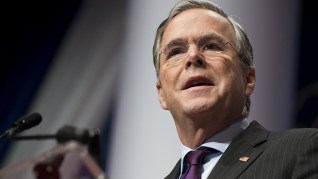
Calling Donald Trump “a hater” and a “narcissistic BULLYionaire,” Jeb Bush’s biggest donor has decided on his own to take out full page ads trashing the Republican poll leader in newspapers in Miami, Las Vegas and Des Moines.
Mike Fernandez, a billionaire who has contributed more than $3 million to elect Bush, announced his decision Friday after a CNN poll showed Trump dominating the GOP field with 36 percent of the vote while Bush has fallen to 3 percent.
Fernandez said he decided to make the ads on his own out of frustration with Trump and his supporters, whom he describes as “a segment of the electorate who have come to think of Trump as a god, when in fact he is worse than the devil himself.”
Wendell Castle Remastered [is] the first museum exhibition to examine the digitally crafted works of Wendell Castle, acclaimed figure of the American art furniture movement. A master furniture maker, designer, sculptor, and educator, Castle is now in the sixth decade of a prolific career that began in 1958—one that parallels the emergence and growth of the American studio craft movement.
In this solo exhibition, Castle casts a critical eye toward the first decade of his own artistic production by creating a new body of work that revisits his groundbreaking achievements of the 1960s through a contemporary lens.
Representative sample (Table-Chair-Stool, 1968):
A total hoot.
Ditto for Ebony G. Patterson’s Dead Treez (through April 3), which “[incorporates] mixed-media installations and jacquard photo tapestries.”
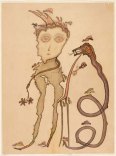
Art Brut in America: The Incursion of Jean Dubuffet is the first major U.S. exhibition to explore the introduction of art brut to America. The nearly two hundred works of art on view, by both canonical and lesser-known art brut figures, were amassed and identified as art brut by French artist Jean Dubuffet, beginning in 1945. The selection is drawn exclusively from the renowned Collection de l’Art Brut in Lausanne, Switzerland, where Dubuffet donated his collection in 1971.
Beyond that, “[t]he presentation highlights Dubuffet’s passionate belief in a new art paradigm that was non-Western and non-hierarchical, and that championed creators who are ‘uncontaminated by artistic culture.'”
Not really sure what that means, but the exhibit was very . . . Dubuffetish.
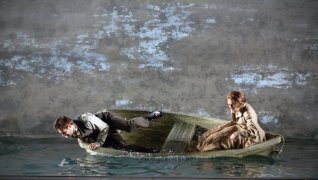
Eventually we hied ourselves to Studio 54 to see the Roundabout Theatre Company’s production of Thérèse Raquin with Keira Knightley in the title role based on Émile Zola’s buzzkill novel.
About the show (through January 3):
Interesting that Ms. Knightley does not contribute to the trailer, but here’s some footage of her in the play.
New York Times theater critic Ben Brantley found Ms. Knightley – well, let him tell it.
In ‘Thérèse Raquin,’ Keira Knightley as a Baleful Adulteress
From the moment we first set eyes on the title character of “Thérèse Raquin,” the bleak literary melodrama that opened on Thursday night at Studio 54, we know without a doubt that she is doomed, doomed, doomed. Portrayed with a dedicated and joyless intensity by the film star Keira Knightleyin her Broadway debut, she makes her entrance in the play’s opening seconds in stern, silhouetted profile, carrying a bowl of water and a heap of bad karma.
Her gait is laboriously slow and measured, as if she were leading a funeral procession for all her hopes and dreams. And though you may assume, dear innocent theatergoer, that things can only lighten up for this poor blighted creature, she will continue to march in lock step with an unforgiving destiny for the succeeding two and a half hours.
Happiness is never in the cards in this tale of murder and adultery. And that’s as true for audiences at this Roundabout Theater Company production, directed by Evan Cabnet, as it is for our gal Thérèse.
Then again, we’re not as smart as Ben Brantley, so we liked it.
Saturday
Bright and (way too) early, we headed out to the Museum of Modern Art to see the blockbuster Picasso Sculpture exhibit.
And, man, Picasso is the man.
Picasso Sculpture is a sweeping survey of Pablo Picasso’s innovative and influential work in three dimensions. This will be the first such museum exhibition in the United States in nearly half a century.
Over the course of his long career, Picasso devoted himself to sculpture wholeheartedly, if episodically, using both traditional and unconventional materials and techniques. Unlike painting, in which he was formally trained and through which he made his living, sculpture occupied a uniquely personal and experimental status for Picasso. He approached the medium with the freedom of a self-taught artist, ready to break all the rules. This attitude led him to develop a deep fondness for his sculptures, to which the many photographs of his studios and homes bear witness. Treating them almost as members of his household, he cherished the sculptures’ company and enjoyed re-creating them in a variety of materials and situations. Picasso kept the majority in his private possession during his lifetime. It was only in 1966, through the large Paris retrospective Hommage à Picasso, that the public became fully aware of this side of his work. Following that exhibition, in 1967 The Museum of Modern Art organized The Sculpture of Picasso, which until now was the first and only exhibition on this continent to display a large number of the artist’s sculptures.
Whatever.
After almost two hours we staggered out of the staggering exhibit, which you should definitely catch (through February 7).
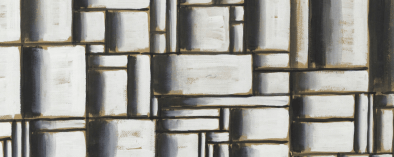
This major retrospective of Joaquín Torres-García (Uruguayan, 1874–1949) features works ranging from the late 19th century to the 1940s, including drawings, paintings, objects, sculptures, and original artist notebooks and rare publications. The exhibition combines a chronological display with a thematic approach, structured in a series of major chapters in the artist’s career, with emphasis on two key moments: the period from 1923 to 1933, when Torres-García participated in various European early modern avant-garde movements while establishing his own signature pictographic/Constructivist style; and 1935 to 1943, when, having returned to Uruguay, he produced one of the most striking repertoires of synthetic abstraction.
Not to mention becoming involved movements from Catalan Noucentismo to Cubism, Ultraism-Vibrationism, and Neo-Plasticism.
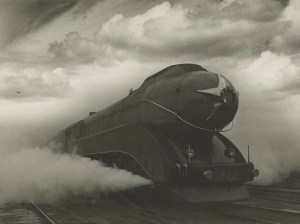
From early vanguard constructivist works by Alexander Rodchenko and El Lissitzky, to the modernist images of Arkady Shaikhet and Max Penson, Soviet photographers played a pivotal role in the history of photography. Covering the period from the 1917 Bolshevik Revolution through the 1930s, this exhibition explores how early modernist photography influenced a new Soviet style while energizing and expanding the nature of the medium — and how photography, film, and poster art were later harnessed to disseminate Communist ideology. The Power of Pictures revisits this moment in history when artists acted as engines of social change and radical political engagement, so that art and politics went hand in hand.
The photography was riveting, as was the screening of Aelita: Queen of Mars, which we watched for 45 headscratching minutes.
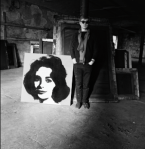
The public personas of Elizabeth Taylor and Marilyn Monroe were constructed, but when they converted to Judaism, the change for both women was personal and profound. Becoming Jewish: Warhol’s Liz and Marilyn draws parallels between the actresses’ identities as Jewish women and Warhol’s exploration of their celebrity through his image-making.
As our excellent niece Emily once said (at age 6) about something (we don’t remember what): Interesting . . . but irrelevant.
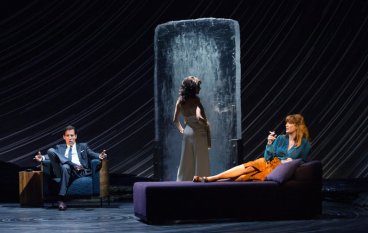
Deeley and his wife Kate are visited by Anna, a mysterious friend of Kate’s from long ago. What begins as a trip down memory lane quickly becomes something more, as long-simmering feelings of fear and jealousy begin to fuel the trio’s passions, sparking a seductive battle for power.
Academy Award® nominee Clive Owen (Closer) makes his Broadway debut alongside Tony Award® nominee Eve Best (The Homecoming) and Kelly Reilly (“True Detective”), also making her Broadway debut, in Old Times, written by Nobel Laureate Harold Pinter. Thom Yorke, singer and principal songwriter for Radiohead, provides incidental music.
Tony Award winner Douglas Hodge (La Cage aux Folles, Roundabout’s Cyrano de Bergerac), a frequent performer and director of Pinter’s works, directs this provocative revival of the haunting and passionate play, which has not been seen on Broadway in over 40 years.
The set was fairly hallucinogenic: A bee-hived dome with horizontal striations, constantly pulsating, strobing, circling – just like the characters constantly circling each other, and the play constantly circling itself, and the entire set constantly circling sometimes quickly sometimes slowly . . .
It was altogether dizzying. And quite exhilarating.
This “Old Times,” too, might be described as an example of Pinter for the Hard of Understanding (i.e., Americans), or for audiences who might otherwise be bored by dialogue in which characters seldom say — or know — what they mean, and spend a lot of time saying nothing at all. Those celebrated Pinter pauses, which classically loom like a purpose-devouring black hole, are in this version plugged with electronic music by Radiohead’s Thom Yorke . . .
This is Pinter with apocalyptic special effects, “Old Times: Armageddon.” And at 70 minutes, it’s far shorter than your average end-of-the-world movie.
Not to get technical about it, but the play ran more like 60 minutes, which means the Missus and I paid $1.50 a minute to be thoroughly confounded by this – yes – Pinteresque curlicue of a drama.
Then again, the folks sitting next to us paid $2 a minute for the same experience, so we didn’t feel quite so bad in the end.
(Speaking of the end – sorry, the run is over.)
Sunday
Bright and (not so) early we were off to the Metropolitan Museum of Art, where we first visited Jacqueline de Ribes: The Art of Style (through February 21).
Talk about interesting but irrelevant . . .
A muse to haute couture designers, de Ribes had at her disposal their drapers, cutters, and fitters in acknowledgment of their esteem for her taste and originality. Ultimately, she used this talent and experience to create her own successful design business, which she directed from 1982 to 1995. While the exhibition focuses on her taste and style, extensive documentation from her personal archives illustrates the range of her professional life, including her roles as theatrical impresario, television producer, interior designer, and director and organizer of international charity events.
Countess de Ribe said she just wanted to be comfortable when she was backstage organizing ballets and charity events and TV shows and . . . whatever.
This exhibition explores the relationship between the artistry of the exterior form of European timekeepers and the brilliantly conceived technology that they contain. Drawn from the Museum’s distinguished collection of German, French, English, and Swiss horology from the sixteenth through the nineteenth century, the extraordinary objects on view show how clocks and watches were made into lavish furniture or exquisite jewelry.
The creation of timekeepers required that clockmakers work with cabinetmakers, goldsmiths and silversmiths, enamelers, chasers and gilders, engravers, and even those working in sculpture and porcelain. These craftsmen were tasked with accommodating internal mechanisms by producing cases that, in both shape and function, adapted to timekeeping technologies. Their exteriors are often as complicated as the movements they house. Examining the dialogue between inside and out, adornment and ingenuity, The Luxury of Time reveals the complex evolution of European clockmaking and the central place of timekeepers in the history of decorative arts.
Check the link for very cool videos of the clocks in motion.
Our personal favorite? The African Princess clock, created by Jean-Baptiste-André Furet (French, ca. 1720–1807).
This bust of an African princess is one of the most remarkable clocks in the Museum’s collection. The marble plinth contains a musical movement: a tiny pipe organ. On the hour, music would play and the figure’s eyes would open, showing the hour in roman numerals in her right eye and the minutes in arabic numerals in her left. By pulling her left earring, her eyes could be opened at any time—a feature that remains functional today.
The terrorist attacks on Paris earlier this month have unleashed a predictable raft of TV spots from Republican presidential candidates trying to out-tough each other on homeland security.
The common denominator? Terrorists with rocket launchers in pickup trucks.
That image is mentioned no less than three times in Nick Corasaniti’s New York Times piece over the weekend.
Paris Attacks Darken Tone of G.O.P. Campaign Ads
The terrorist attacks in Paris immediately changed the course of the presidential race as national security and foreign policy rose to the top of stump speeches and television interviews.
Now, the campaigns and outside groups are starting to feel comfortable running political advertisements about the attacks, darkening the holiday-season tone of commercial breaks in early voting states with messages tinged with fear and images of terrorist camps and Islamic State recruits.
It is a delicate line, one that the campaigns are aware of as they navigate politicizing a tragedy. But in a Republican race dominated by two outsider candidates, Donald J. Trump and Ben Carson, a tragedy like the attacks in Paris is giving candidates who have experience in public office an opening to highlight their national security credentials.
Call the roll, starting with low-energy, high-spending Jeb Bush . . .
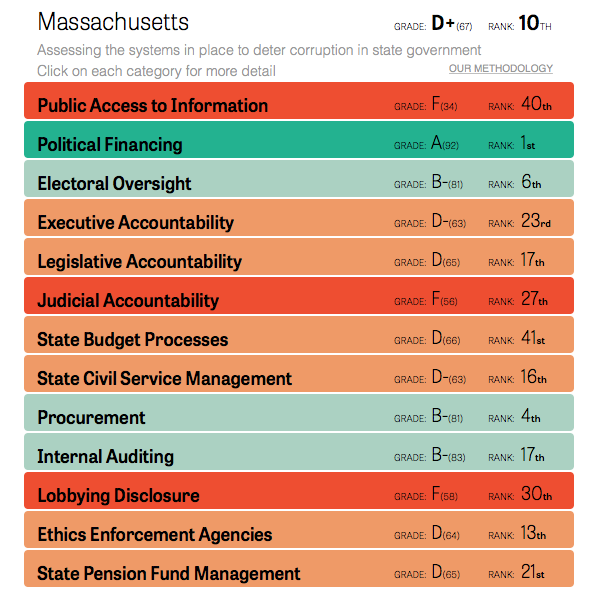
The Center for Public Integrity has released its State Integrity 2015 scorecard (tip o’ the pixel to AlterNet), “a comprehensive assessment of state government accountability and transparency done in partnership with Global Integrity.”
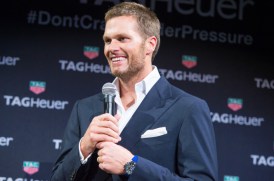
Insulted photographers stage walkout at Tom Brady event
A group of deflated New York photographers rebelled and stormed out en masse from an event where Tom Brady appeared to launch a new $5,450 watch on Tuesday night.
A source claimed that 11 of the hard-working lensmen who showed up at Spring Studios for “brand ambassador” Brady’s TAG Heuer event bolted before the Patriots quarterback ever appeared for pics, after they were made to wait for his appearance. The grumbling started when a group of invited paps claimed one of the LVMH event’s fashionable organizers insulted their threads as they arrived.
“They said, ‘Where are you people coming from?’ — like we should be in a jacket and tie,” one shutterbug fumed. “We’re not the best dressed, but one guy came from a court stakeout. Nobody was in shorts and muscle shirts.”
Even worse was this: “Then, while the fotogs waited for Brady, some sympathetic servers offered hors d’oeuvres to the hungry camera crew — who were then chastised for eating them. ‘They were like, ‘The food is not for you, don’t eat the food!” our source alleged. ‘For two hours we were forced to remain stacked on a 2-foot riser that several people fell off.'”
And Sullivan’s latest post is especially diligent.
As Print Fades, Part 4: Native Advertising on The Rise
Since the first piece of native advertising appeared in The Times almost two years ago, Meredith Kopit Levien, the chief revenue officer, has tried to walk a fine line: aggressively tapping into a promising new revenue source without breaching the wall between advertising and journalism.
On the revenue side, native advertising – which mimics the form and appearance of news content – has proven a winner. New as it is, it nevertheless accounted for 18 percent of digital advertising revenue in the third quarter this year or about $9 million; that is up from 10 percent in the second quarter. (The dollar figure is my rough calculation; The Times doesn’t break numbers out that way publicly.)
The vast majority of readers apparently find it unobjectionable.
As the hardworking staff has noted previously (see here and here), the new New Republic is pretty much a reverse Potemkin magazine: all town and no facade.
Exhibit Umpteen: The current issue of The Nude Republic, which features three – count ’em, three – ads in toto: Inside front cover (Nuclear Matters), inside back cover (World Food Programme), back cover (Columbia University).
Hell, that’s just the cover charge for any publication’s print edition.
Speaking of which, the New Republic’s home page contains zero links to its print edition. Ditto for the Menu page.
In the interest of full disclosure, we should state right off that the dustupping staff dipped in and out of last night’s Republican Presidential Pillowfight on the Fox Business network, mostly because it was mostly boring.
But that certainly won’t keep us from itemizing a few deductions . . .
Item: Sen. Lindsey Graham was – and wasn’t – at the debate
Poor Lindsey Graham. The senior senator from South Carolina couldn’t even make the kids table debate last night in Milwaukee. So the Super PAC supporting him, Security Is Strength, ran an ad pointing out that Graham is the only military veteran in the GOP presidential field, and he was excluded from both debates held on the eve of Veterans Day . . .













 Campaign Outsider