
Second in what we expect will be a long-running series
Here’s the cover of the latest edition of WWD.
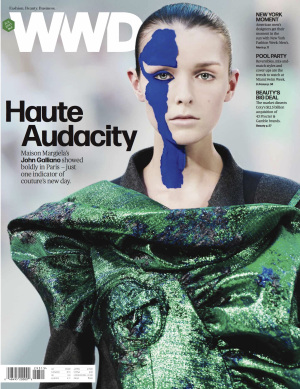
And here, WWD editors, is what the headline should have been:
The Audacity of Haute
You’re welcome.
Second in what we expect will be a long-running series
Here’s the cover of the latest edition of WWD.
And here, WWD editors, is what the headline should have been:
The Audacity of Haute
You’re welcome.
First in what we expect will be a long-running series
Boston Globe columnist Scot Lehigh had a smart column on yesterday’s op-ed page.

Except – all due respect, Editorial Page Editor Ellen Clegg – here’s what the headline should have been:
The Donald and the damage done
Cue the Neil Young classic.
So, to recap:
We’ve seen the Donald and the damage done.
A little part of it in everyone.
But every flunkie’s like a settin’ sun uh-huh.
As the hardtrundling staff noted the other day, the Missus and I thoroughly enjoyed the excellent Hershey Felder as Irving Berlin production at the Cutler Majestic Theatre.
What we derelictly failed to note was Felder’s moving performance of Suppertime, the song Berlin wrote in 1933 for Ethel Waters in the wake of two dozen lynchings of black men in the south.
Irving Berlin was a lot more than God Bless America.
The New York Times, which has gone all in with its native advertising factory T Brand Studio, continues to double up its print and native ads.
Earlier this year the Times played footsie with the Weinstein Company in promoting The Imitation Game. Right before that, the Times initiated its print/native combo platter with a campaign for Shell, as Digiday noted at the time.
The New York Times has been producing increasingly elaborate native ads online, and now it has gone a step further by extending the format to print for the first time.
The ad, for Shell, is set to appear in print and online Wednesday, and it’s a far cry from the advertorials of days past. First, the size: The print component is an eight-page section that’s wrapped around home-delivered copies. (In the case of newsstand copies, the ad wraps the business section.) The top sheet is opaque vellum, for extra effect. The print creative extends the Web version, with infographics that show the urbanization of the world’s population. In what the Times called “icing on the cake,” the print ads are enhanced by augmented reality, so that people using the Blippar app can initiate a video by holding their phone over the page.
Now comes the latest version, via Sunday’s New York Times . . .
Read the rest at Sneak Adtack.
Well the Missus and I trundled downtown to catch Hershey Felder As Irving Berlin at Emerson’s Cutler Majestic Theatre (which really is majestic) and, say, it was . . . Swell! Swell!
(Your Ethel Merman impersonation goes here.)
Hershey Felder – who wrote and performs the show – does a terrific Ethel Merman. Not to mention a terrific Irving Berlin.
From the website:
Heralded as “the greatest songwriter that has ever lived,” by George Gershwin, Irving Berlin is known for innumerable American classics such as “White Christmas,” “God Bless America,” “Anything You Can Do,” and “Top Hat, White Tie and Tails.” Songwriter Jerome Kern said it all: “Irving Berlin…IS
American music.” In this tour de force performance by award winning showman Hershey Felder (George Gershwin Alone and Maestro: Leonard Bernstein), the remarkable story of “America’s Composer” comes to life. We’re taken from the depths of anti-Semitism in Czarist Russia to New York’s Lower East Side—and ultimately all of America and the world. Featuring the composer’s most popular and enduring songs and beyond, Hershey Felder’s masterful creation of character and musical performance makes this evening with Irving Berlin an unforgettable journey that epitomizes the American dream.
Sure, some of the production is hokey, but so was Berlin. Over all, though, it’s an illuminating review of a Great American Songwriter.
(Fun fact to know and tell: The slang designation for Italians in the early 20th century – wop – stands for “with out papers.”)
Chronological list of Berlin’s songs via (God forgive us) Wikipedia.
Not surprisingly, the Boston Globe’s redoubtable theater critic Don Aucoin can give you a better sense of the production than we ever could.
But we do say this: Catch Hershey Felder’s performance. Through August 2.
The latest in our long-running series
For years Beatles disruptor Yoko Ono has been a habitué of the New York Times advertising pages, and yesterday she added this to her portfolio.
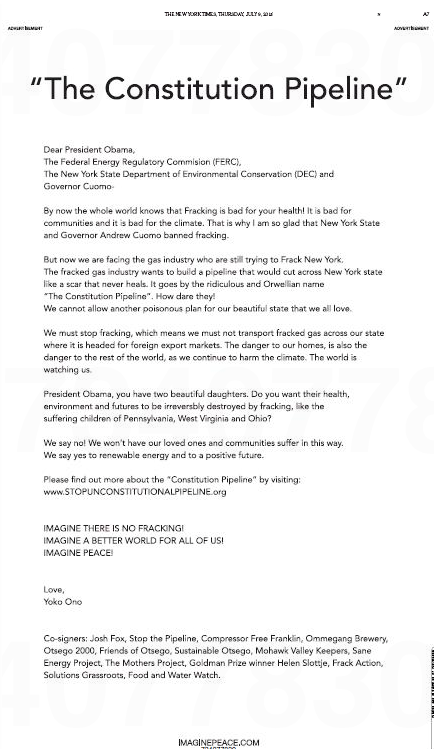
Drive Yoko nuts graf:

Mandatory website: StopUnconstitutionalPipeline.org.
(To be sure graf goes here)
To be sure, the Yoko-industrial complex has inveighed against fracking before, specifically in a 2012 Times ad.

Interestingly, that ad spotlighted the group Artists Against Fracking, which the current ad does not.

Regardless . . .
Imagine having that kind of money.
Okay, so this Minions Meet the Masthead story is all over the place today. Representative sample from KPCC:
Minions take over LA Times’ masthead; Critics cry foul
Sunday’s L.A. Times featured a trio of Twinkie-like characters meddling with the paper’s sober, storied masthead in an advertising first for the paper, L.A. Observed reports.
The promotion is part of Universal Studios’ campaign for its
“Minions” movie, featuring the popular characters from the ‘Despicable Me’ franchise.
The move immediately set off concerns on Twitter that leasing out the newspaper’s masthead impinged on its credibility as a source for news.
Except . . . that’s not the LA Times masthead. It’s the paper’s nameplate, or flag. The masthead, as the Glossary in the Newspaper Designer’s Handbook tells us, is “[a] block of information, including staff names and publication data, often printed on the editorial page.”
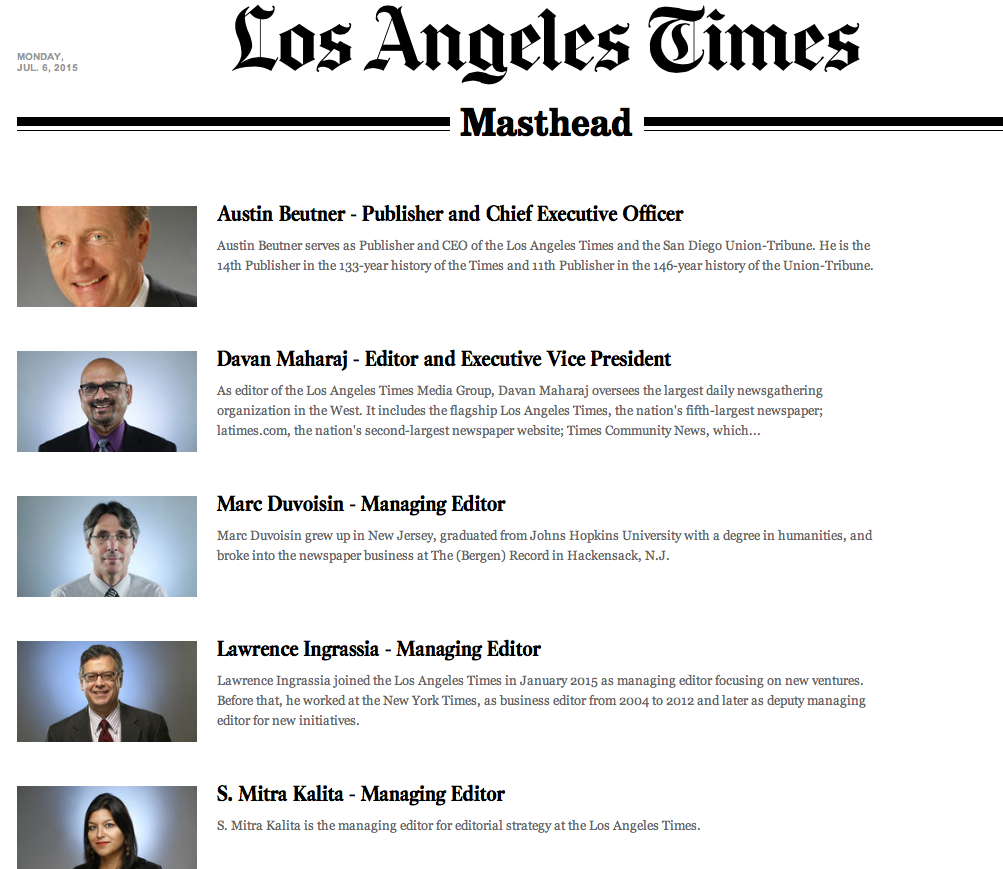
Not to get technical about it.
Well the Missus and I trundled out to the DeCordova Sculpture Park and Museum yesterday to catch the Walking Sculpture 1967-2015 exhibit and say, it was swell.
From the deCordova’s website:
Inspired by Michelangelo Pistoletto’s 1967 performance Walking Sculpture, in which the artist rolled a newspaper sphere through city streets in Turin, Italy, Walking Sculpture 1967–2015 features an international selection of artists who engage in walking as an autonomous form of art, as cartography, as an exploration of physical experience, and as social practice. Pistoletto’s walking performance was an act of dissonance against both traditional methods of art-making and behavioral norms. In the same spirit, Walking Sculpture 1967–2015 considers artists’ use of this elemental and often overlooked act as a poetic means for questioning established conventions of seeing and thinking.
Here’s a recreation of his Walking Sculpture that Pistoletto performed for a 2010 Philadelphia Museum of Art exhibit.
Another early work is Bruce Nauman’s “Walking in a Exaggerated Manner Around the Perimeter of a Square” from 1967-68.
We were lucky enough to have splendid tour guide Ellen Sturtevant walk us through the exhibit, which made our visit much more enjoyable (not to mention understandable).
The exhibit features sculpture, video, photography, and performance art. One of our favorites was the artist kanarinka’s work, It takes 156,000 breaths to evacuate Boston.
From her website:
In Spring 2007, kanarinka ran the entire evacuation route system in Boston and measured its distance in breaths. The project is an attempt to measure our post-9/11 collective fear in the individual breaths that it takes to traverse these new
geographies of insecurity.
The $827,500 Boston emergency evacuation system was installed in 2006 to demonstrate the city’s preparedness for evacuating people in snowstorms, hurricanes, infrastructure failures, fires and/or terrorist attacks.
It takes 154,000 breaths to evacuate Boston consists of a series of running performances in public space (2007), a web podcast of breaths (2007), and a gallery installation of the archive of breaths (2008).
You really have to see (and hear) it.
The deCordova is closed tomorrow for the Fourth, but it’s open Sunday, with a museum tour at 2.
If Ellen Sturtevant is leading it, tell her we say hi.
Since roughly 1969, one question has vexed every Boston mayor:
What the hell to do with City Hall Plaza?
And the answer that has routinely come back:
Damned if we know.
Regardless, the latest chapter of this ongoing saga is unfolding at this very minute, as our hardreading cousins at Two-Daily Town recently noted.
But relief is in site. From the current issue of The Atlantic:
Reclaiming the Public Square
Cleveland is the latest city to call on James Corner, the landscape architect behind New York’s High Line, to revive an urban park.
To hear Clevelanders talk, Public Square is a place you pass through to reach somewhere else. When Moses Cleaveland laid out the town in 1796, he imagined the open area at its center as a New England–style commons: a gathering space for settlers, a grazing area for livestock. But its natural position as a transit hub—first for stagecoaches and streetcars, later for buses and automobiles—steadily intruded on that civic purpose. Despite efforts by some residents to preserve it as a park, including a decade-long stretch in the 19th century when it was fenced off to horse-drawn wagons, roads and traffic triumphed over people and place.
“Over the years, it just turned into more like a series of big traffic islands,” says the landscape architect James Corner . . . [Of] the square’s 10 acres, more than six are paved over with concrete or asphalt.
Sound familiar?
Corner, as Eric Jaffe’s Atlantic piece notes, “has been called a landscape ‘rock star’ and mentioned as a modern successor to Frederick Law Olmsted, the visionary behind Central Park.”
Not to mention the visionary behind Boston’s Emerald Necklace.
So how about it, Marty?
You can reach James Corner Fields Operations at 212-433-1450.
Make the call, wouldya?
And end the City Hall Pathetic Redesign Project once and for all.
The New York Times Sunday sports section is topped by this Nicholas Dawidoff piece about the origins of the triangle offense that Phil Jackson rode to 11 NBA championships but that the current New York Knicks just can’t get.
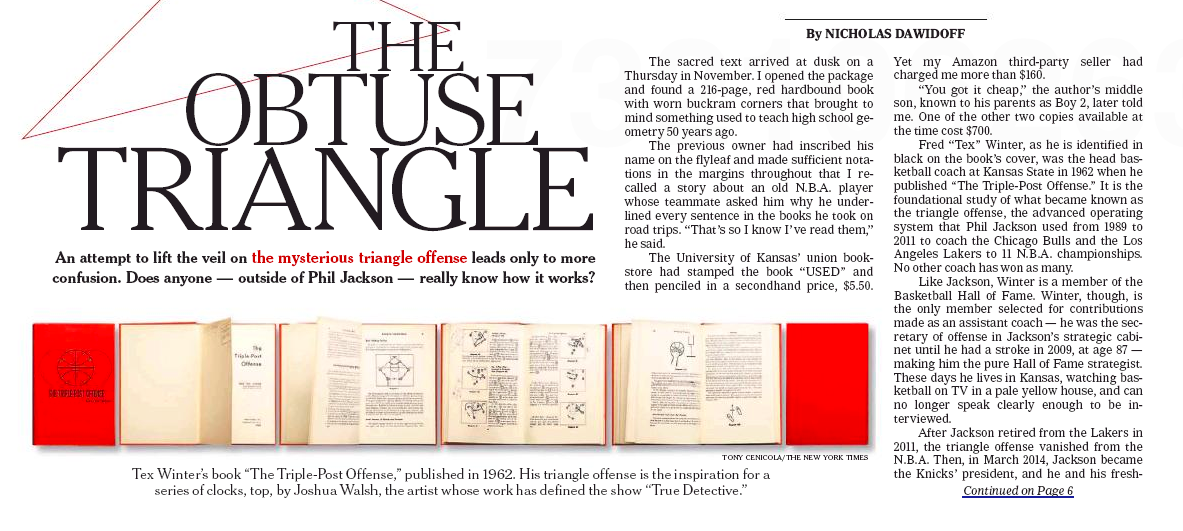
Full disclosure: The hardworking staff has not yet read the piece, which occupies almost four full pages of valuable Times real estate.
In fact, we might never read it.
But we’re damn impressed it’s there.
P.S. The web version is even cooler than the print one.
 Click to subscribe to RSS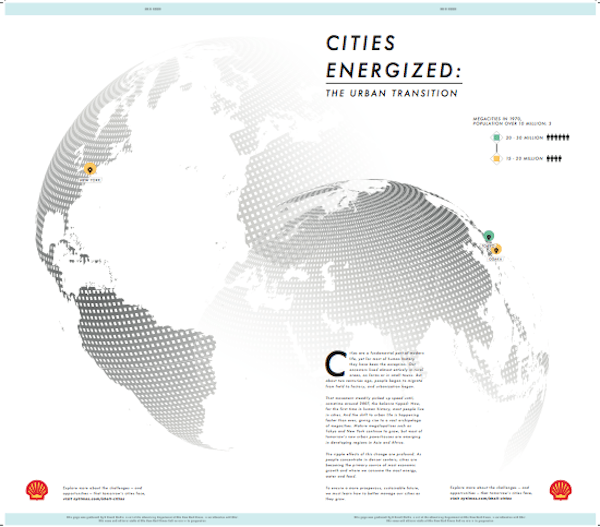


 Campaign Outsider