New York Times homepage, Thursday morning one o’clock:
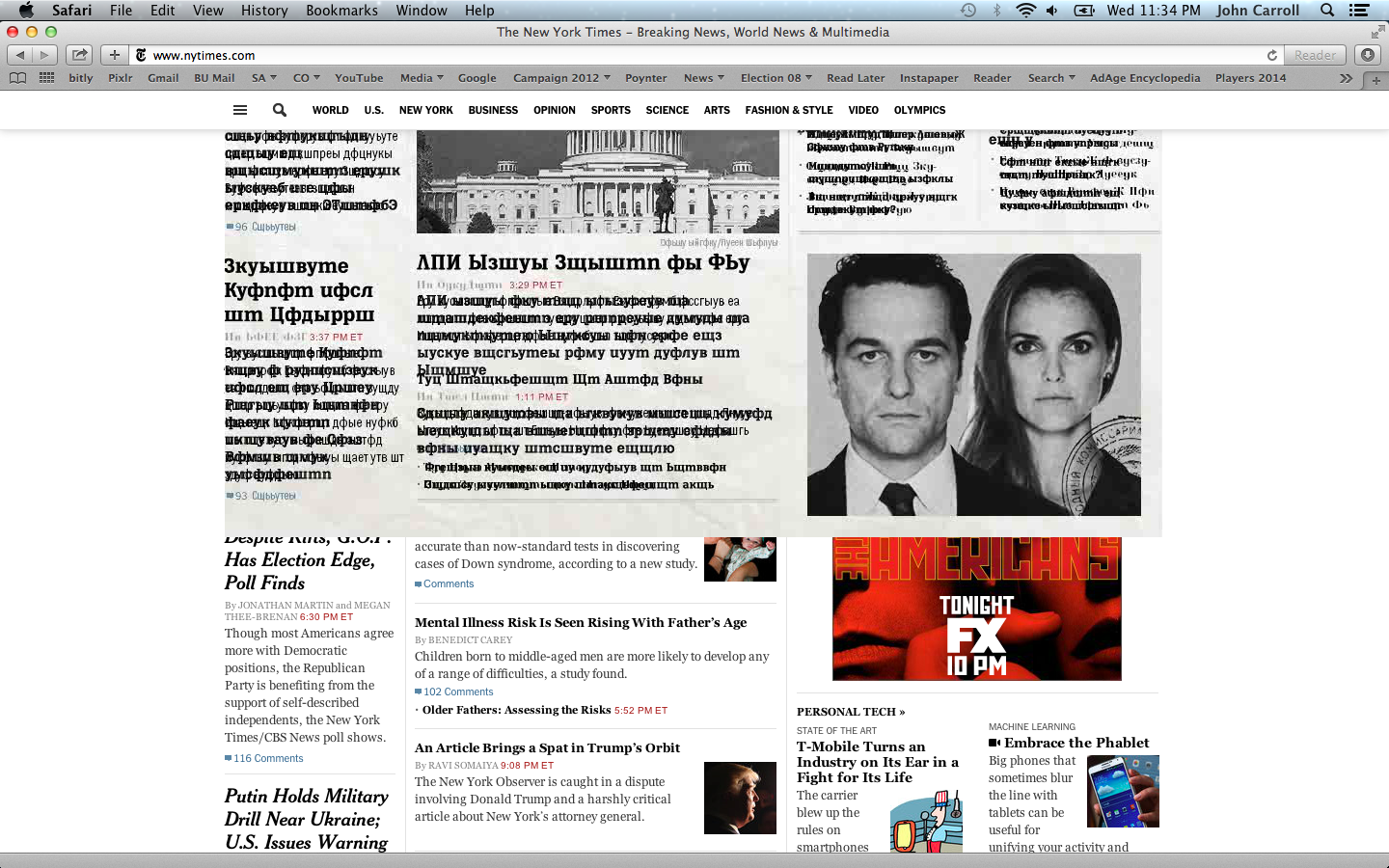
Truth is, it’s not really the Russians (The Americans Division) who’ve overrun the Times website.
It’s the Hessians (Advertising Battalion).
New York Times homepage, Thursday morning one o’clock:
Truth is, it’s not really the Russians (The Americans Division) who’ve overrun the Times website.
It’s the Hessians (Advertising Battalion).
 Well the Doc opened up the old mailbag today and here’s what poured out.
Dear Dr. Ads,
There I was, minding my own business and reading Wednesday’s New York Times, when I came across this.
So, wait a second: The National Enquirer has set up a foundation because they got a story wrong? Don’t they get all their stories wrong?
Whiskey tango foxtrot, yeah Doc?
– Elvis
Dear Elvis,
Hard to believe, isn’t it?
First off, let’s highlight the text for the tiny-type impaired . . .
Read the rest at Ask Dr. Ads.
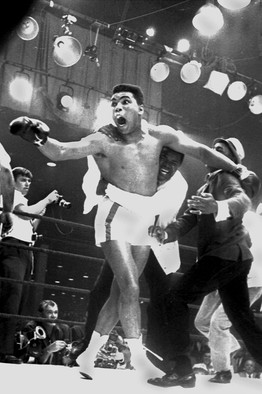
Swell piece in Tuesday’s Wall Street Journal recapping the classic 1964 heavyweight bout between Cassius Clay and Sonny Liston.
Clay-Liston: The Fight That Made Muhammad Ali
A Half Century Ago, a Brash Youngster Named Cassius Clay Beat Sonny Liston and Started His Legend
Fifty years ago Tuesday, Cassius Clay shocked Sonny Liston to
win the heavyweight title.
In the decades afterward, the man later known as Muhammad Ali would politicize sports and transform the art of boxing into theater. He also would beat Liston again in a famously short meeting a year later. But this first fight, the one in Miami Beach, was the one that made it all possible.
And it was a corker.
Love the roll call of boxing greats: Joe Louis, Rocky Marciano, and Sugar Ray Robinson.
But love even more the fight itself.
Liston was a 7-1 favorite. About 90% of the press picked Clay to be picking himself off the canvas at night’s end . . .
From the first bell, Clay danced constantly, circling left and
right. As though on tracks, Liston came straight ahead, landing some jabs but unable to cut off the ring. When Liston did close the gap, Clay would grab him, hold and then spin out.
As Dundee had predicted, Liston was easy to hit. Clay tattooed him in the third round, opening up a gash under Liston’s left eye. Clay took a sabbatical in the fourth, but at the end of the round he trudged back to the corner complaining that he couldn’t see.
The rest is history.
(Spoiler alert: Liston quit before the seventh round began.)
Read the Journal piece for details.
It’s a corker.
So the hardworking staff hied us to the International House of Politics last night to catch A Special Event with Democratic Candidates for Massachusetts Governor, which was  definitely not a debate featuring Joseph Avellone, Donald Berwick, Martha Coakley, Steven Grossman, and Juliette Kayyem. (Daniel Ki was the moderator.)
We arrived fashionably late, as is our wont, so we missed the opening statements of Grossman and Kayyem. But we caught the rest, which was interesting in a boring sort of way.
Random observations:
• If you picked “universal pre-K” for your drinking game, you were knee-walking by 8:36
• Mirtha Coakley hasn’t progressed all that much as a candidate since 2010
• Donald Berwick will dine out forever on Glenn Beck’s calling him the second most dangerous man in America
• Joseph Avellone loves Massachusetts and wants to give something back
• Steven Grossman will likely raise your taxes
• Juliette Kayyem will take money from the criminal justice system to fund – wait for it – universal pre-K
• During the Q&A section of the not-debate, Berwick persistently called the questioners by name
• Coakley talked about her brother’s suicide in discussing mental health services
• Grossman said he’ll likely raise your taxes
• Avellone said 40% of state’s budget goes to healthcare costs
• Berwick said 42%!!
• Kayyem said she’s been to 44 states and 50 other countries
• Grossman said he’ll likely raise your taxes
• Everyone is in favor of jobs, affordable healthcare, increased mental healthcare, teachers (not the problem – the solution), substance abuse treatment, and – yes! – universal pre-K
• Everyone said “What he/she said”
• The whole thing was like Nerf Groundhog Day (R.I.P Harold Ramis, aka the Steven Spielberg of comedy)
That’s all, folks.
Northeastern University – the Little College That Could . . . Jack Up Its Cost to $55,000 per annum – has gone full-page boogie in a new advertising campaign.
From Monday’s Boston Globe:

The same ad ran in Monday’s New York Times national (!) edition and Monday’s Wall Street Journal.
The hardsearching staff hasn’t found any more information about the campaign on the Googletron, so we’ll make a phone call to the Northeastern folks later today.
Meanwhile, be impressed.
Be very impressed.
The New York Times is a past master at reporting FWPs (First-World-Problems).
Exhibit Umpteen from Sunday’s edition:
A Forensic Approach to a Sidewalk Nuisance
Naples, Using DNA Left at the Scene, Cracks Down on Dog Waste
NAPLES, Italy — Problems? Yes, conceded Tommaso Sodano, the vice mayor here, Naples has problems. Unpaid debts have reportedly topped $2 billion. Many streets are pocked with potholes. The police department is underfunded, organized crime operates like a shadow state, and illegal dumps are scattered around what is still a grittily beautiful port city.
And then there is what dogs leave behind on the sidewalks.
Naples has no shortage of that, either. Yet to the surprise of some people, including more than a few Neapolitans, the municipal administration is trying to stake out a reputation as a civic innovator by positioning Naples at the cutting edge of dog-waste eradication. By taking DNA samples. Of dogs.
“I know some people find it funny,” Mr. Sodano said, smiling, “that with all the problems the city has, we would focus on dog poop. I know that.”
And we know this: The Times will leave no poop unturd – sorry, unturned – in seeking out the big international stories.
No matter how small they might be.
As the hardwalking staff headed home last night, we heard this report by Ashley Milne-Tyte on APM’s Marketplace.
Is it getting easier to show emotions at work?
We all spend a lot of time at work. Sometimes stuff happens
that drives us nuts, and maybe we lose our tempers or shed a tear or two. We’re human.
But traditionally, strong emotions and the workplace do not go together. Research shows women in particular are judged when they emote at the office, and it may affect their career progress.
Later, we read this Shirley Leung column in Friday’s Boston Globe.
Big girls do cry, and that’s OK
Is it OK for big girls to cry?
Last week I cringed when Jean Yang, the executive director of the Massachusetts Health Connector, made headlines for openly weeping during a board meeting. She was frustrated by a broken website that had demoralized her staff and potentially left thousands of people in insurance limbo.
I cringed for her, for her Harvard MBA, and for working women everywhere. There are so few of us at the top, that when one wails we wonder if the whole movement has been set back.
Nut graf:
Big girls have been taught never to let the boys see you cry. Even though I work with some of the nicest people around, one of my biggest fears is that they will drive me to tears. And they have.
But I am starting to wonder if it’s time to wipe away our fear of tears.
To cry or not to cry in the workplace.
That is the question.
Got any answers?
Page Six of Thursday’s Boston Herald:

C’mon, Heraldniks: We know you don’t like Mirtha, but really – was it necessary to roll out the PoreCam this early?
Why not keep your powder dry for a while?
(Meanwhile, memo to Martha: More powder?)
Well the Doc opened up the old mailbag today and here’s what poured out.
Dear Dr. Ads,
I’m a big fan of the annual Sports Illustrated Swimsuit Edition (hey – I read it for the articles), so imagine my surprise when Barbie® turned up as one of the Barbies featured in this year’s model.
Then I saw this full-page ad in the New York Times.
What is this, Doc – some sorta Hall of Vanity Mirrors?
– Ken
Dear Ken,
That doesn’t capture the half of it . . .
Read the rest at Ask Dr. Ads.
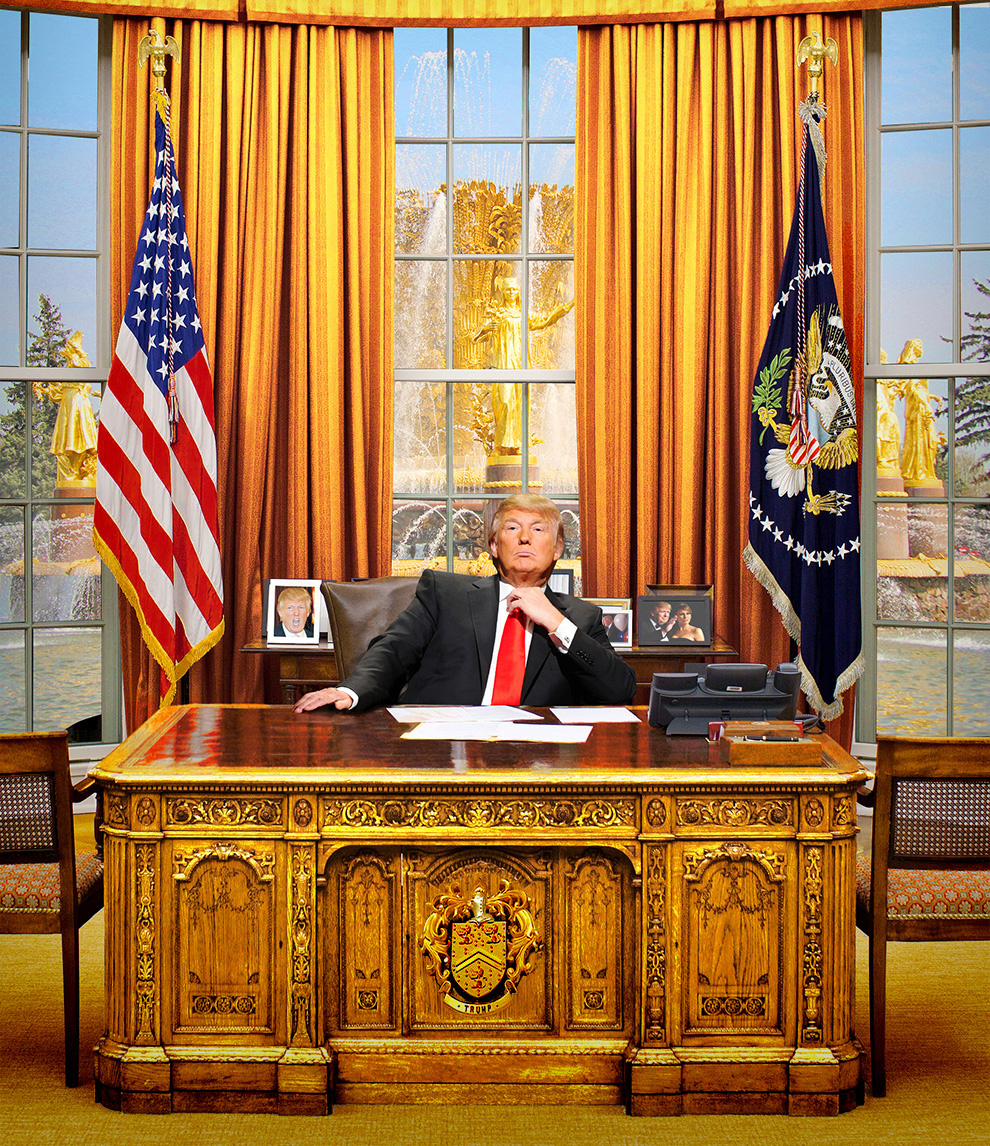
The Donald got blowtorched by BuzzFeed last week and, man, it was sweet.
Nut graf:
[Donald] Trump can no longer escape the fact that his political
“career” — a long con that the blustery billionaire has perpetrated on the country for 25 years by repeatedly pretending to consider various runs for office, only to bail out after generating hundreds of headlines — finally appears to be on the brink of collapse.
The reason: Nobody seems to believe him anymore.
Believe this, though: Trump was livid about the BuzzFeed facial.
From Politico Playbook:
TRUMP FIRES AIDE OVER BUZZFEED DISS – N.Y. Post p. 15, “TRUMP: HE AXED FOR IT! Political aide out,” by Fredric U. Dicker and Frank Rosario: “Donald Trump couldn’t pass up the opportunity to say, ‘You’re fired’ to an underling — even when the man offered to resign. Furious over a snarky Buzzfeed article about his political aspirations, the developer … booted the adviser who had urged him to do the interview. ‘I told [Trump] when he fired me, “Sir, I’m willing to offer you my resignation.” He didn’t accept that,’ 32-year-old political consultant Sam Nunberg told The Post. But ‘this is not unfair, honestly … I failed Mr. Trump, and that’s the long and short of it.’
“Trump, 67, told The Post that he had first been approached by Buzzfeed writer McKay Coppins about possibly doing a sit-down interview … when the mogul was in New Hampshire. … ‘Sam said to me, “This guy is a friend of mine. It’s going to be a great story” … I said to Sam, “If this guy writes a fair story, that’s fine. But if he writes a wise-guy story, you’ll be fired.” And I said to Sam, “OK?” And Sam said, “OK.”’ Coppins’ scathingly critical story appeared last week under the title, ‘36 hours on the Fake Campaign Trail with Donald Trump.’ After the article appeared, … ‘I called [Nunberg] in and said, “Sam, you’re fired!”’” http://goo.gl/CYbKuB
The thing is, Coppins provides absolutely no evidence that he’s any kind of friend to Nunberg. Throughout the piece Coppins refers to Nunberg as a Trump “yes man,” and he includes this kneecapping bio:
But it’s Nunberg, a solidly built Manhattan native who wears well-tailored suits and Trumpian ties, who seems to perfectly embody the Donald’s mischief-making brand of politics. His first foray into presidential campaigning came in 2007 when he worked as a volunteer for the Romney campaign while attending law school on Long Island. He was put in charge of organizing turnout for the New York City GOP straw poll; with a little bit of hustle and political voodoo, he managed to pull off an upset win for Romney over hometown hero Rudy Giuliani. (According to one source with knowledge of the incident, Nunberg paid voters cash to show up and vote for Mitt; Nunberg declined to comment.)
Nunberg went on to work as an opposition researcher, digging up dirt on the backers of the so-called “Ground Zero Mosque” in 2010. One day, while sitting in class, someone emailed him a Weekly Standard profile of the notorious Republican operative Roger Stone. The article described Stone as a “Nixon-era trickster” who blackmailed reporters [and] lied constantly to everybody . . . Nunberg had found his mentor — he now works for Stone’s consulting firm, which counts Trump among its clients.
Hey – with friends like Coppins, who needs Trump?
 Click to subscribe to RSS