Correction o’ the Day (NYT Killer Cellphones Edition)

First came this Nick Bilton Disruptions column in Thursday’s New York Times.

New Gadgets, New Health Worries

19DISRUPTIONS-master675

In 1946, a new advertising campaign appeared in magazines with a picture of a doctor in a lab coat holding a cigarette and the slogan, “More doctors smoke Camels than any other cigarette.” No, this wasn’t a spoof. Back then, doctors were not aware that smoking could cause cancer, heart disease and lung disease.

In a similar vein, some researchers and consumers are now asking whether wearable computers will be considered harmful in several decades’ time.

We have long suspected that cellphones, which give off low levels of radiation, could lead to brain tumors, cancer, disturbed blood rhythms and other health problems if held too close to the body for extended periods.

Then came this Editors’ Note in Saturday’s Times.

STYLES

The Disruptions column in the Styles section on Thursday, discussing possible health concerns related to wearable technology, gave an inadequate account of the status of research about cellphone radiation and cancer risk.

Neither epidemiological nor laboratory studies have found reliable evidence of such risks, and there is no widely accepted theory as to how they might arise. According to the World Health Organization, “To date, no adverse health effects have been established as being caused by mobile phone use.” The American Cancer Society, the National Cancer Institute, the Food and Drug Administration and the Centers for Disease Control and Prevention have all said there is no convincing evidence for a causal relationship. While researchers are continuing to study possible risks, the column should have included more of this background for balance.

In addition, one source quoted in the article, Dr. Joseph Mercola, has been widely criticized by experts for his claims about disease risks and treatments. More of that background should have been included, or he should not have been cited as a source.

An early version of the headline for the article online — “Could Wearable Computers Be as Harmful as Cigarettes?” — also went too far in suggesting any such comparison.

Ya think? Call our cellphone if you disagree.

Posted in Uncategorized | Tagged , , , , , , , , , , , , | 2 Comments

Hey! NYC’s MTA Sucks Just Like Boston’s T!

The hardworking staff has long held that the MBTA – Boston’s public (not to be confused with rapid) transit system – is like someone’s hobby.

But it’s not just our system that’s the modern-day equivalent of a swayback mare.

From Emma G. Fitzsimmon’s piece in yesterday’s New York Times:

Delays and Costs Agitate Riders in a System ‘Bursting at the Seams’

Big Repairs Needed For City’s Subways

20subway-1-master675

Fares are about to go up. Delays are driving riders to distraction. And on a recent evening, Ian Nolan’s train was out of service.

Widespread problems across the subway system in recent weeks have left weary commuters waiting on crowded platforms, stranded inside stalled cars and scrambling to find alternate routes. With a fare increase set to go into effect on Sunday, riders across New York City are complaining of having to pay more when service is worse.

But transit experts and advocates say conditions will not improve unless the Metropolitan Transportation Authority invests heavily in upgrading and expanding the system’s infrastructure — the tracks, the trains and the tunnels that power the city’s daily transit miracle, except when they don’t.

Sound familiar?

Big Town straphangers driven nuts graf:

In the past month, Lisamarie Green, 26, a skin care specialist who lives in Astoria, Queens, said she had to take taxis home from her job in Midtown at least three times because of train problems on the E, M and R trains — the lines she usually takes.

Also sound familiar?

Misery may love company, but it makes for a funky ride home, yo.

Posted in Uncategorized | Tagged , , , , , , , , | Leave a comment

Don’t Free the Pete Rose One!

Full disclosure: In another life, the hardworking staff did seven years in Ohio.

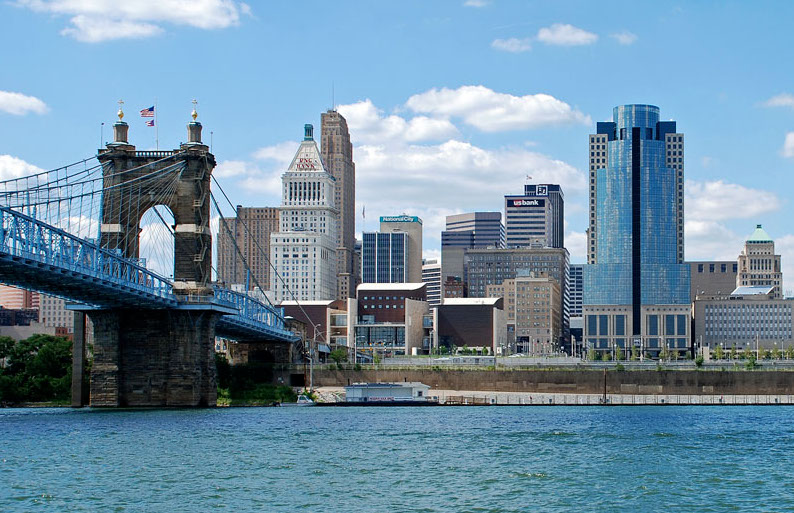
Specifically, we were in Cincinnati from 1967 to 1974, and the one thing that kept us sane was this miniature Brooklyn Bridge across the Ohio River to Kentucky.


Cincinnati-skyline3


It’s known as the Singing Bridge because of the hum you hear as you drive across its metal grid roadbed. More important, it was John Roebling’s starter bridge before he (and his son and – especially – his daughter-in-law) built its lookalike in Brooklyn in the waning years of the 19th century. The Brooklyn Bridge was, at its opening in 1883, the tallest structure in the Western hemisphere and the longest span in the world: 1,600 feet from tower to tower.

(Fun fact to know and tell: On May 17, 1884, P. T. Barnum led 21 elephants over the Brooklyn Bridge to prove that it was stable. For the whole fascinating story, read The Great Bridge by David McCullough, who was once described as “the Herodotus of Hydraulics.”)

Rudely transplanted to the Queen City from 89th and 3rd, we spent roughly two years sitting on the banks of the Ohio River and staring at the Singing Bridge.

But we digress.

The absolute worst thing about living in Cincy back then was The Big Red Machine, the insufferable Cincinnati Reds of the 1970s.

From the Encyclopaedia Britannica:

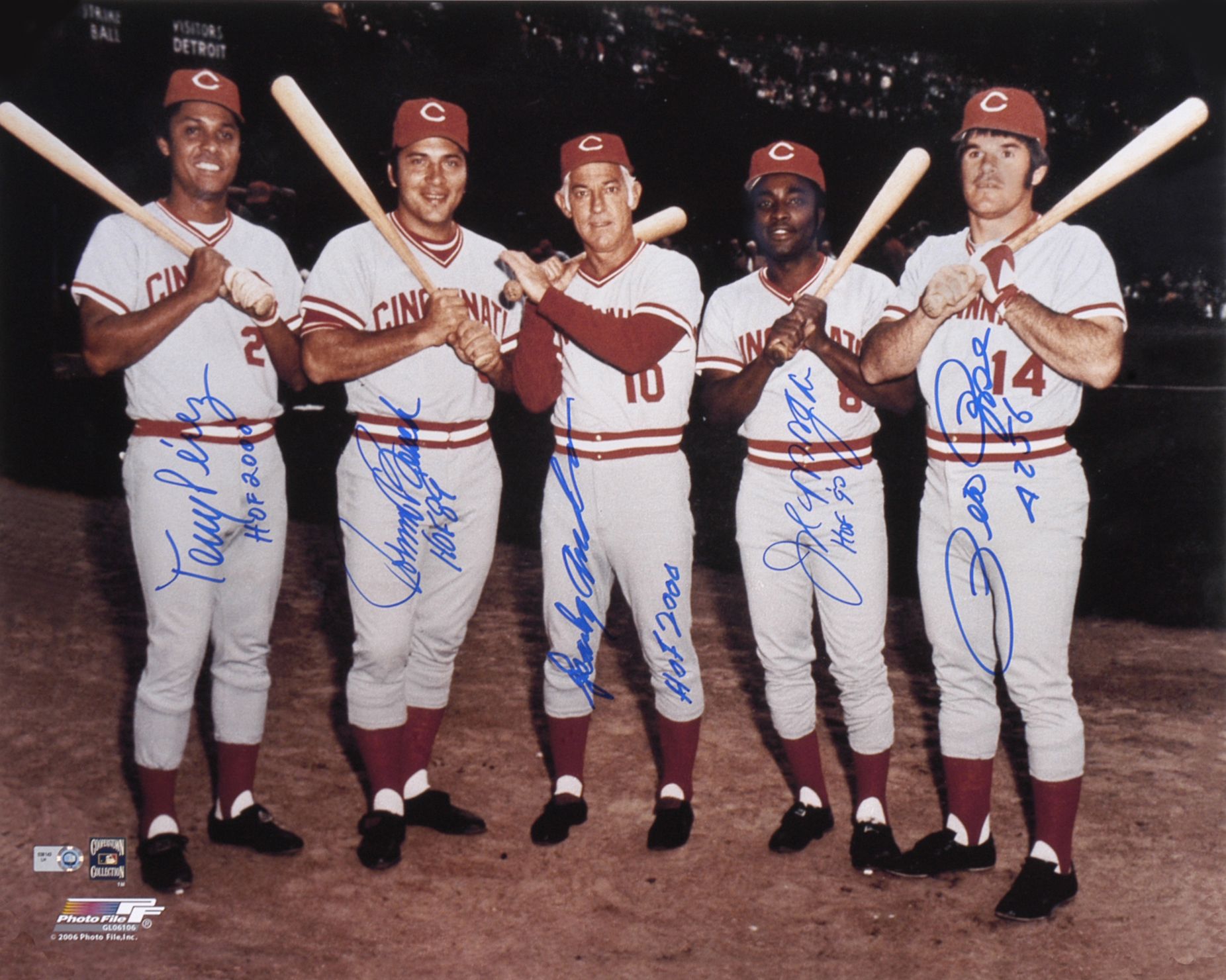
Baseball in the 1970s was dominated by Cincinnati teams known as the “Big Red Machine,” which had left behind Crosley Field, with its distinctive left field terrace, for a new home, Riverfront Stadium. Boasting a regular lineup that featured three future Hall of Famers (catcher Johnny Bench, second baseman Joe Morgan, and first baseman Tony Pérez) as well as all-time major league hits leader Pete Rose, the Big Red Machine175a_lg—under the guidance of manager Sparky Anderson—won five division titles in the first seven years of the decade. The Machine’s first two trips to the World Series ended in disappointment, however, as it lost to Robinson’s Orioles in 1970 and the Oakland Athletics in 1972, which was followed by a surprising loss to the underdog New York Mets in the 1973 NL Championship Series. The years of frustration ended in 1975, when the Reds won a remarkable 108 games and beat the Boston Red Sox for the franchise’s first World Series title in 35 years. While the 1976 Reds won six fewer games than their 1975 counterparts, they led major league baseball in all the major offensive statistical categories and swept both teams they faced in the postseason en route to a second consecutive championship, leading a number of baseball historians to claim that they were the second greatest team ever, after the famed 1927 Yankees.

Which, of course, is a bunch of baloney because the second greatest team ever, after the famed 1927 Yankees, is the famed 1961 Yankees.

Whatever.

The point is, the Cincinnati Reds player most hateful of all to this Made Yankee Fan was the reptilian Pete Rose, who was rightfully banned from the Baseball Hall of Fame for betting on baseball games.

Until, maybe, now.

From NBCSports Hardball Talk:

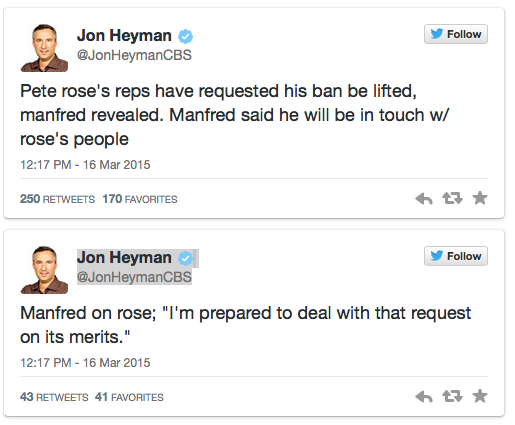
Pete Rose has applied for reinstatement; Rob Manfred is considering it

This is not the most surprising news in the world, but the Commissioner taking it seriously and commenting on it is at least somewhat notable compared to how Bud Selig handled it for 20 years (i.e. with almost complete silence):

Screen Shot 2015-03-20 at 1.35.12 AM

As I wrote recently, it’d be a pure act of charity for Major League Baseball to even listen to his case because, really, it doesn’t have to. Indeed, we’re to a point in time where “the merits” aren’t as likely as big an issue with Major League Baseball as the fact that, at some point, Rose is just too damn old to be a nuisance anymore and the league can afford to show some mercy if it wants to.

No.

It shouldn’t.

Period.

Posted in Uncategorized | Tagged , , , , , , , , , , , , , , , , , , , | 8 Comments

The 13th – and Final – Tommy Ashton Basketball Tournament

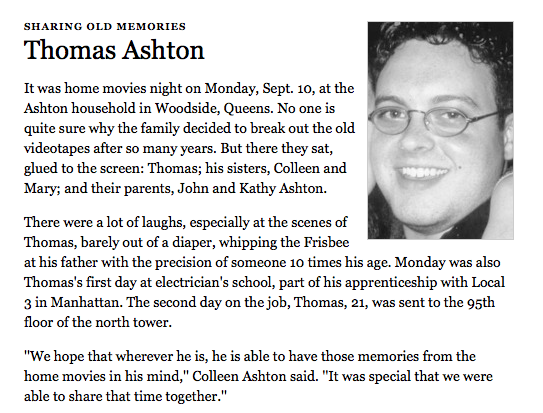
My cousin Tommy Ashton was murdered in the 9/11 attacks on the World Trade Center.

From the landmark New York Times Portraits of Grief:

Screen Shot 2015-03-17 at 1.18.55 AM

Saddest day ever.

Since then, Tommy’s sisters Colleen and Mary have shepherded the Thomas Ashton Foundation, which has an annual 3-on-3 Basketball Tournament and has donated over $285,000 to worthily charitable organizations and local projects (list of recipients here).

Remarkable.

Next month will see the final Tommy Ashton 3-on-3 Basketball Tournament at St. Sebastian Parish Center in Woodside, Queens, where the Ashtons have long resided.

It’s a great story. Here’s hoping one of the Big Town dailies picks it up.

(And yes – I’ll be contacting them to do just that.)

Posted in Uncategorized | Tagged , , , , , , , , , , , , , | Leave a comment

Sorry, We Just Really Like This

From the Boston Sunday Globe Comics page:


Screen Shot 2015-03-16 at 1.10.25 AM


Thank you, Dan Piraro.

Posted in Uncategorized | Tagged , , | Leave a comment

Dead Blogging ‘Gordon Parks: Back to Fort Scott’ at the MFA

Well the Missus and I trundled down to the Museum of Fine Arts the other day to catch Gordon Parks: Back to Fort Scott and, say, it was . . . stirring.

From the MFA website:

Gordon Parks, one of the most celebrated African American artists of his time, is the subject of this exhibition of groundbreaking photographs of Fort Scott, Kansas—focusing on the realities of life under segregation during the 1940s, but also relating to Parks’s own fascinating life story . . .

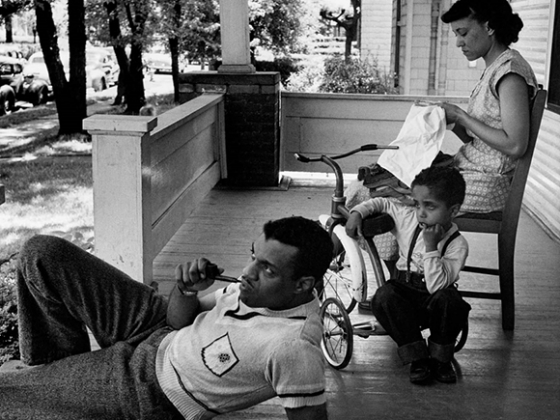
In 1950, Parks returned to his hometown in Kansas to make a Screen Shot 2015-03-14 at 1.10.53 AMseries of photographs meant to accompany an article that he planned to call “Back to Fort Scott.”

Fort Scott was the town that he had left more than 20 years earlier, when after his mother died, he found himself—a teenager and the youngest of 15 children—suddenly having to make his own way in the world. He used this assignment to revisit early memories of his birthplace, many involving serious racial discrimination, and to reconnect with childhood friends, all of whom had attended the same all-black grade school as Parks. One of the most visually rich and captivating of all his projects, Parks’s photographs, now owned by The Gordon Parks Foundation, were slated to appear in April 1951, but the photo essay was never published.

It’s available now, though. You should see these mesmerizing photos – and read all the labels – before they leave on September 13th.

Representative sample:


L-SE-1183.1.16-SC305432_4x3


P.S. The Missus and I also caught the Rothchild Family Treasures, Gustave Klimt’s Adam and Eve, and 100 Years of Ceramics while we were there. The hardlooking staff and others have had their issues with director Malcolm Rogers over his 20-year tenure, but there’s no denying he’s turned the MFA into something special.

Posted in Uncategorized | Tagged , , , , , , , , | 1 Comment

Quote o’ the Day (NYT Anonymouse Edition)

The (ab)use of anonymous quotes by the New York Times is closely followed not only by the Times Public Editor Margaret Sullivan, but also by former New York Sun managing editor Ira Stoll at his SmarterTimes blog.

Neither of them, however, has glommed onto this beauty in Scott Shane’s Times piece yesterday about Hillary Clinton’s total absence of classified emails during her four-year stint as secretary of state.

“I would assume that more than 50 percent of what the secretary of state dealt with was classified,” said [a former senior State Department] official, who would speak only on the condition of anonymity because he did not want to seem ungracious to Mrs. Clinton.

Really? Ungraciousness is now grounds for confidentiality?

O Timespora! O mores!

Posted in Uncategorized | Tagged , , , , , , , , , , , , | 1 Comment

Erik Larson on ‘The Maltese Falcon’: Best. Novel. Ever?

The Wall Street Journal’s Book Club has a real doozy this week: hardboiled author Eric Larson on the father of hardboiled fiction, Dashiell Hammett.

‘One of the Best Novels, Period’

There was a time when Erik Larson could recite from memory an entire speech from “The Maltese Falcon”—the final monologue in which hard-boiled detective Sam Spade explains the code by which he lives. The speech is the book’s final reveal, unveiling the moral compass of a character whose journey has left the reader dizzy with false clues and competing motives.

Mr. Larson’s best-selling books include the nonfiction thriller AR-AJ042_BOOKCL_12S_20150303164318“The Devil in the White City,” about a serial killer at the Chicago World’s Fair on the eve of the 20th century. When The Wall Street Journal asked him to select a title for the WSJ Book Club, he turned, once again, to “The Maltese Falcon,” Dashiell Hammett’s noir classic, which inspired the 1941 Humphrey Bogart film.

“It is the ultimate detective novel, and frankly not just detective novel,” Mr. Larson said. “I think it’s one of the best novels, period… Here’s this writer, here’s Hammett, who in 217 pages creates this world with four of the absolutely most vivid characters that literature, I think, has ever come up with.”

Wow. And the hardworking staff thought we loved the hard-boiled classic, which we’ve read at least three times since we first encountered it 40 years ago. Hammett’s brilliant gift for dialogue has stuck with us all the while.

Representative samples (via Goodreads):

Sam Spade to Brigid O’Shaughnessy: “You’ve got to convince me that you know what it’s all about, that you’re not simply fiddling around by guess and by God, hoping it’ll come out all right somehow in the end.”

Spade to Wilmer the Gunsel: “The cheaper the crook, the gaudier the patter.”

Joel Cairo: “You always have a very smooth explanation ready.”
Sam Spade: “What do you want me to do, learn to stutter?”

But Hammett’s achievement goes well beyond that, according to Larson. “He created a genre—the whole school of hard-boiled detective novels. And that in turn led to cinema noir. It’s a tremendous accomplishment.”

Ah, yes – the film version of The Maltese Falcon.

Larson:

The movie is one of those rare films that absolutely captured the underlying novel. To bring those characters to life, to capture them was really a tough job. I think John Huston, who was the director, and also wrote the screenplay, did an absolutely brilliant job. Humphrey Bogart as Sam Spade? Perfect. Broke the mold. Peter Lorre as Joel Cairo? Again, absolutely broke the mold. Sydney Greenstreet as Casper Gutman? No one will ever do that role better. John Huston actually took large portions of the book and just included that in the screenplay verbatim, including the final monologue.

Final monologue:


Love the elevator bars crossing Mary Astor’s face at the end.

WSJ Book Club coda:

We’ll be reading “The Maltese Falcon” over the next month, with weekly discussion questions on our blog, Speakeasy. Participate by visiting WSJ.com/bookclub, joining our Facebook page, or following on Twitter via #WSJbookclub. Mr. Larson, whose book, “Dead Wake: The Last Crossing of the Lusitania,” comes out next week, will answer readers’ questions in a live video chat at the end of March.

Sounds like fun. So, to recap:

The Maltese Falcon is the stuff that hard-boiled detective novels and cinema noir are made of.

Got that, angel?

P.S. The hardlyworking staff once wrote a college paper that posited Hammett as the hard-boiled Homer to Raymond Chandler’s Virgil. It got an A, but we were simply fiddling around by guess and by God.

Posted in Uncategorized | Tagged , , , , , , , , , , , , , , , , , , , , , | 6 Comments

More Brutal Treatment of Paul Rudolph’s Architecture

The hardworking staff has previously noted the beleaguered buildings designed by midcentury modernist architect Paul Rudolph, which include two local landmarks: the old Blue Cross Blue Shield building at 133 Federal Street and the Government Service Center.

Now comes the latest assault.

From Michael Kimmelman’s piece in Wednesday’s New York Times:

Landmark’s Last Hope For Rescue

This week, lawmakers in Goshen, N.Y., have a last chance to save an archetype of midcentury modernist architecture — and JPGOSHEN1-articleLargethemselves from going down as reckless stewards of the nation’s heritage.

The plan is to gut Paul Rudolph’s Orange County Government Center, strip away much of its distinctive, corrugated concrete and glass exterior and demolish one of its three pavilions, replacing it with a big, soulless glass box. Rudolph, who died in 1997, at 78, was a leading light of American architecture when this building, one of his best and most idealistic, opened nearly half a century ago. Like Rudolph, the center suffered abuse over the years but is now being championed by new fans that recognize his genius, and the latest plan as vandalism.

Then again, not everyone is a fan, as Julie V. Iovine notes in Thursday’s Wall Street Journal.

Not Easy to Love

BN-HF818_Brutal_J_20150304112606

Controversy has always surrounded the Orange County Government Center, a monumental complex 50 miles northwest of New York City. It was designed in 1966 in the Brutalist style by Paul Rudolph, the celebrated modern architect who studied with Walter Gropius and was chairman of the Yale School of Architecture from 1958 to 1965. But that simmering controversy has now come to a boil.

A plan is at the ready to alter beyond recognition the provocative-looking complex of three fluted-concrete buildings—made of stacked, extruded volumes with wall-size, eyelike windows suggesting a giant robotic insect.

Even more robotic is Steven Neuhaus, the Orange County executive who, Kimmelman says, “seems hell-bent on demolition” and has vetoed the possibility of a sale to Gene Kaufman, described by the Journal as “a New York architect who wanted to buy the complex and turn it into artists’ studios.”

The state legislature had until yesterday to override that veto. We’re guessing, sadly, it didn’t.

(Sadly, we guessed right.)

Posted in Uncategorized | Tagged , , , , , , , , , , , , , , , , , , , , , , , , | 2 Comments

Tom Mashberg Is Still Trying to Catch a Thief

From our Late to the Search Party desk

Former Boston Herald reporter Tom Mashberg has chased the Isabella Stewart Gardner Museum art snatch from March of 1990 to, well, three days ago.

From Sunday’s New York Times Arts section:

Still Missing After All These Years

Retracing the long trail back to the 1990 Gardner heist

01GARDNER1-articleLarge

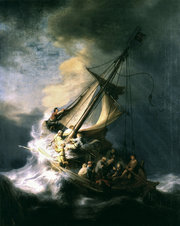
BOSTON — The hallway in the Brooklyn warehouse was dark, the space cramped. But soon there was a flashlight beam, and I was staring at one of the most sought-after stolen masterpieces in the world: Rembrandt’s “Christ in the Storm on the Sea of Galilee.”

Or was I?

My tour guide that night in August 1997 was a rogue antiques dealer who had been under surveillance by the F.B.I. for asserting he could secure return of the painting — for a $5 million reward. I was a reporter at The Boston Herald, consumed like many people before me and since with finding the “Storm,” a seascape with Jesus and the Apostles, and 12 other works, including a Vermeer and a Manet, stolen in March 1990 from the Isabella Stewart Gardner Museum, a cherished institution here.

The theft was big news then and remains so today as it nears its 25th anniversary. The stolen works are valued at $500 million, making the robbery the largest art theft in American history.

What follows is Mashberg’s long tale of chasing leads down blind alleys, coming agonizingly close (think: paint chips), and largely getting blown off by the self-styled “experts.”

I wrote a front-page article about the furtive unveiling for The Herald — with a headline that bellowed “We’ve Seen It!” — and 01GARDNER2-master180stood by for the happy ending.

It never came. Negotiations between investigators and the supposed art-nappers crumbled amid dislike and suspicion. Gardner officials did not dismiss my “viewing” out of hand, but the federal agents in charge back then portrayed me as a dupe. Eighteen years later, I still wonder whether what I saw that night was a masterpiece or a masterly effort to con an eager reporter.

From there, the story just gets more tangled. It’s well worth the read.

Posted in Uncategorized | Tagged , , , , , , , , , , , , , , , , , , , | 2 Comments