Remembering Boston’s Own Michael Kelly, Killed Covering War In Iraq

Wall Street Journal columnist Bret Stephens remembered the great Michael Kelly in his op-ed piece yesterday:

ED-AQ609_Glovie_D_20130401165015Michael Kelly had an uncharitable term for the column you are about to read: “The Nice Column.” Nice columns—about ancient enmities overcome and people pulling together for the greater good and models of estimable human conduct and other Helen Keller-type themes—are the ones nice people complain about not finding often enough in the papers. They don’t find them because journalists as a class, and columnists in particular, aren’t very nice. Or at least they affect not to be nice, even if, sometimes, they do nice things. Often in secret. Or by accident.

Anyway, Kelly had no patience for the nice column. To him, a column wasn’t some vial of holy water to sprinkle on the sinners and the saved alike. It wasn’t a spy plane flying at a high and safe altitude, snapping pictures that make everything below seem small, patterned and sociological. It certainly wasn’t a Henry James novel on the installment plan, written in prose so fine no idea could violate it.

Instead, Kelly treated a column as a sword, the obvious and most worthy purpose of which was to stab, slice, decapitate and—once he really got going—utterly disembowel the objects of his contempt.

Representative sample:

Take his view of Frank Sinatra. Everyone loved Old Blue Eyes and mourned him when he died in 1998. Everyone except Michael Kelly.

Kelly hated Frank because Frank had invented Cool, and Cool had replaced Smart. What was Smart? It was Humphrey Bogart in Casablanca: “He possesses an outward cynicism, but at his core he is a square. . . . He is willing to die for his beliefs, and his beliefs are, although he takes pains to hide it, old-fashioned. He believes in truth, justice, the American way, and love. . . . When there is a war, he goes to it. . . . He may be world weary, but he is not ironic.”

Cool was something else. “Cool said the old values were for suckers. . . . Cool didn’t go to war; Saps went to war, and anyway, cool had no beliefs he was willing to die for. Cool never, ever, got in a fight it might lose; cool had friends who could take care of that sort of thing.”

It never, ever would have occurred to me to make the distinction until I read Kelly’s column. And then I understood Sinatra.  And then I understood Kelly, too.

Michael Kelly died – tragically – ten years ago today covering the war in Iraq.  From Fox News:

American Journalist Michael Kelly Killed in Iraq

Well-known columnist and editor Michael Kelly was killed Thursday night while traveling with the Army’s 3rd Infantry Division in Iraq.

He was the first American journalist to die in the war.

Kelly is believed to have been traveling in a humvee when it suddenly veered off the road and fell off a cliff into the river below. The vehicle may have been fired upon by Iraqi military and possibly disabled before it fell.

“He was just an extraordinarily brilliant and capable guy,” Fox News Sunday anchor Tony Snow said Friday. “There aren’t many people who on a regular basis, when I’m reading their columns, I say ‘man, I wish I’d written that.'”

Calling him “one of the handful of editorial geniuses in our generation,” Snow described the tragedy as “an indescribable loss to the journalism profession.

At the time, Kelly was editor-at-large for the Atlantic Monthly and a columnist for the Washington Post.

Eleven years ago the hardworking staff (and the Missus) wound up attending one of Kelly’s legendary Fourth of July parties at his North Shore home.

We were nobody special, but Michael Kelly and his family were unfailingly gracious and welcoming to us.

His death was a great loss to journalism and to the Greater Boston community. Many thanks to Bret Stephens for remembering that.

Posted in Uncategorized | Tagged , , , , , , , , , | 1 Comment

Hark! The Herald! (Told You So Edition II)

From our Walt Whitman desk

As the hardreading staff predicted, the Boston Herald is feeling festive in today’s edition over yesterday’s Top Ten Front Pages coup in the Newseum’s daily bakeoff.

Putting on the pompoms:

Picture 1

Ready for its close-up . . .

Read the rest at It’s Good to Live in a Two-Daily Town.

Posted in Uncategorized | Tagged , , , , , | 1 Comment

Maria Menounos Is A Twitter Mole

Last week the hardtracking staff detailed the stealth marketing efforts of Maria Menounos (“American actress, journalist, television presenter and occasional professional wrestler”) for discount retailer Marshalls.

Now comes her sneaktweet for Nike (via the Boston Herald).

From Monday’s edition:

Menounos tweet . . .

Read the rest at Sneak Adtack.

Posted in Uncategorized | Tagged , , , , , , | 3 Comments

Hark! The Herald! (Preview Edition II)

From our Walt Whitman desk

The Boston Herald will be doing some celebrating itself and singing itself tomorrow, thanks to a return trip to The Newseum’s Top Ten Front Pages hit parade.

Opening Week

Look no further than today’s front pages to find out what time it is. Fields of dreams, players in action and the St. Louis Post-Dispatch‘s reliable weatherbird all provide the answer. For most papers, play ball means baseball. For the Press-Citizen, it means golf. The Daily Journal stands out not only for its baseball-themed nameplate, but for a cover story and graphic on growing old in prison.

Picture 3

Note that both New York tabloids were hits, which is more than the Yankees can say about their home opener. Can’t wait to see the Big Town tabs tomorrow.

Originally posted at It’s Good to Live in a Two-Daily Town.


Posted in Uncategorized | Tagged , , , , , , , , | Leave a comment

Yankee Double-Headline In NYT

From our Pinstripe Compare ‘n’ Contrast desk

Call it Yankee tradition vs. Yankee contrition.

First, the sad news, from Sunday’s New York Times:

31OBITTURLEY-articleLargeBob Turley, Pitcher With a Blazing Fastball, Dies at 82

Bob Turley, a Cy Young-winning, right-handed pitcher whose blazing fastball bore in on baffled hitters like a dissolving aspirin and lifted the Yankees to a come-from-behind victory over the Milwaukee Braves in the 1958 World Series, died in Atlanta on Saturday. He was 82 . . .

On a Casey Stengel team loaded with legends — including Mickey Mantle, Yogi Berra, Hank Bauer, Moose Skowron and Elston Howard — Turley was a mainstay of a pitching staff led by Whitey Ford and Don Larsen, whose perfect game in the 1956 World Series symbolized a golden era of Yankee dominion.

The hardrooting staff loved “Bullet Bob” in our youth, not least for his remarkable hurling in the 1958 World’s Serious (as the great Ring Lardner dubbed it):

To set the stage: The Milwaukee Braves were the defending world champions, having beaten the Yanks in the 1957 Series on the strength of three complete-game victories by Lew Burdette. The Yankees, winners of 7 of the previous 11 World Series, were burning for revenge. But besides Burdette, the Braves had Warren Spahn on the mound and the sluggers Henry Aaron, Eddie Mathews and Joe Adcock.

After four games, New York trailed 3 games to 1, and the Yankee prospects looked bleak. Only the 1925 Pittsburgh Pirates had come back from a 3-1 deficit to win a 7-game Series. With the Yankees just one game from elimination, Turley went to work. He threw a shutout in Game 5, picked up a 10th-inning save in Game 6 and won his second in three days in Game 7, giving up only two hits in 6 2/3 innings of shutout relief.

That’s clutch. And the exact opposite of Mr. September, Alex Rodriguez, who’s the subject of the sadder news on Sunday’s New York Time front page:

dog-jpCONTRACT2-articleLargeHitched to an Aging Star: Anatomy of a Deal, and Doubts

Yankees pitcher Mariano Rivera was convinced that Alex Rodriguez had made a colossal blunder.

Rodriguez, the Yankees’ standout third baseman, had created a public uproar and infuriated team officials by opting out of his contract, the richest in the history of baseball at the time, seemingly to pursue options with other teams.

“I told him he had to take responsibility and make it right,” Rivera said last week at spring training, recalling how he admonished his teammate in the fall of 2007 and urged him to reconcile with the Yankees. “He had to call them.”

Rivera’s stern telephone call set in motion a negotiation that led to a contract that stands as the largest ever in American sports: $275 million over 10 years.

And the largest albatross this side of The Rime of the Ancient Mariner.

But now, five years into the contract, that financial commitment hangs ominously over opening day, threatening to impose itself on virtually every decision the Yankees make and severely hampering management’s ability to cope with the shortcomings of an aging roster.

Regardless, the Yankees initially had high hopes for Rodriguez:

From 2005 to 2008, Rodriguez never played before fewer than 4 million fans at the old Yankee Stadium, and ratings on the team-owned YES Network soared.

There was also every expectation that Rodriguez, who had 518 career home runs at the time, would eventually pass Willie Mays, Babe Ruth, Hank Aaron and Barry Bonds to bring the title of home run king back to the Bronx. The ratings and marketing potential for that chase were considered extraordinary.

A-Roid never lived up to expectations, with one exception: In 2009, “he almost single-handedly led the team to the title . . . He hit 6 homers and drove in 18 runs in 15 games that postseason, and in the euphoric aftermath of that victory, few fretted over his contract.”

But the ballclub is certainly fretting now.

Posted in Uncategorized | Tagged , , , , , , , , , , , | 4 Comments

Herald Page One Ad No Cab-incidence

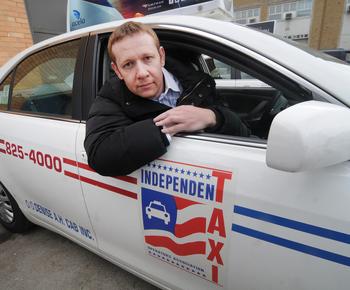
Both local dailies are living in Taxichusetts this week, as the hardworking staff noted yesterday. There’s Driven to the Edge, the Boston Globe’s massive three-part takeout on the Boston taxicab industry, which is the latest in a series of impressive in-depth reports by the stately local broadsheet. And the Boston Herald piped up with this piece yesterday:

DSC_0400.JPGCabbies battle app services

The taxicab and limousine industry has fired another salvo in its war on certain transportation apps by releasing a list of what its members call “rogue” services that endanger the public.

The report by the Taxicab, Limousine and Paratransit Association names three applications that operate in the Boston area: on-demand private-driver service Uber and ride-sharing apps SideCar and Tickengo.

“There’s nothing wrong with technology; it just needs to comply with the regulatory structure to ensure that it doesn’t take advantage of the public,” said Alfred LaGasse, the association’s CEO. “Some of these apps are basically 21st century hitchhiking.”

Yes, well, speaking of hitchhiking, look who flagged the Herald’s front page today:

Picture 1

Everybody appy now?

Originally posted at It’s Good to Live in a Two-Daily Town.


Posted in Uncategorized | Tagged , , , , , , , , , | Leave a comment

Which Globe Reporter Got A Hackney License?

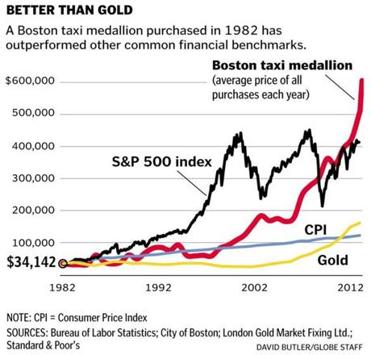
As the hardreading staff at It’s Good to Live in a Two-Daily Town reported yesterday, the Boston Globe debuted its fascinating and Pulitzer-seeking three-part series on the corrupt Boston taxicab industry in its Sunday edition, which included this helpful chart:

cabmedallion

And this intriguing note:

Just days after receiving his license to drive a city cab, a Spotlight Team reporter heard whispers of payoffs and then witnessed the bribes-for-keys scheme that is considered a common cost of daily commerce at Boston Cab, whose operator controls 372 — or 20 percent — of the city’s 1,825 taxi licenses, the city’s biggest fleet.

“This is like a Third World country,’’ one driver told the Globe reporter. “You need to give them money. That’s how they do business.’’

That is to say in a slipshod – read, self-serving – manner.

Exhibit Umpteen:

[W]hile this sounds like a small matter, it is not: Many cab companies routinely fail to provide drivers with legally required receipts for the payments of $100 or so they must make at the end of each 12-hour shift. With no receipt for these daily lease payments, drivers are defenseless if cab companies accuse them of paying less than the sum due — a regular occurrence in some garages.

“I’ve never seen a receipt,” said longtime cabbie Michael N. Holley.

The Globe reporter who drove eight nights for the city’s largest taxi owner also was never given this required proof of payment.

Police say they have no record of ever citing an owner for breaking this rule.

And we have no record of which Globe reporter testified to it.

The Spotlight Report did feature this forenote:

This article was reported by the Globe Spotlight Team: reporters Bob Hohler, Marcella Bombardieri, and Jonathan Saltzman and editor Thomas Farragher. It was written by Farragher and Hohler.

But it doesn’t specify which of them – if any – got the hackney license.

Inquiring minds want to know, yeah?

UPDATE: Splendid reader Ratty sent this, in which the Globe identifies the cabbie/reporter.

The Globe Spotlight Team spent nine months examining Boston’s $1 billion taxi industry. The team interviewed scores of drivers, owners, cabbie advocates, and specialists in the economics of the industry. In addition, reporters reviewed hundreds of court documents and other public records to compile a portrait of the city’s largest fleet owner, Edward J. Tutunjian. One team member, reporter Bob Hohler, who worked as a taxi driver in the 1970s, obtained a city-issued license and drove eight shifts for the city’s largest fleet owner. The team, in its three-part series, has chronicled an industry in which cab drivers are routinely exploited, subjected to petty bribes and commonly overcharged by cab owners. Moreover, the series demonstrates the Boston Police Department fails in many ways to do its job. It intensely regulates drivers but almost never imposes discipline on owners who disobey city regulations with impunity. And Hohler’s work behind the wheel of a city cab gives readers a front-seat view of what it’s like to work in this gritty industry.

In the hardworking staff’s defense, the above did not appear in Sunday’s print edition.

Posted in Uncategorized | Tagged , , , , , , , | 4 Comments

The Essential Difference Between The Boston Globe And The Boston Herald

Both Sunday dailies have reports on the Boston taxicab industry, and the difference between them tells you all you need to know about the two news organizations.

Boston Globe:

Picture 1


 Read the rest at It’s Good to Live in a Two-Daily Town.

Posted in Uncategorized | Tagged , , , , , , , , | 3 Comments

Boston Herald: NOT Your Zumba Hooker Headquarters

From our Bitter Disappointment desk

For months the Boston Herald has been the hardreading staff’s Zumba Hooker Headquarters.

But no more.

When Alexis Wright, the pride of Maine’s hooker community, pled guilty to 20 counts of prostitution and etc. on Friday, it was only the Boston Globe that recorded it.

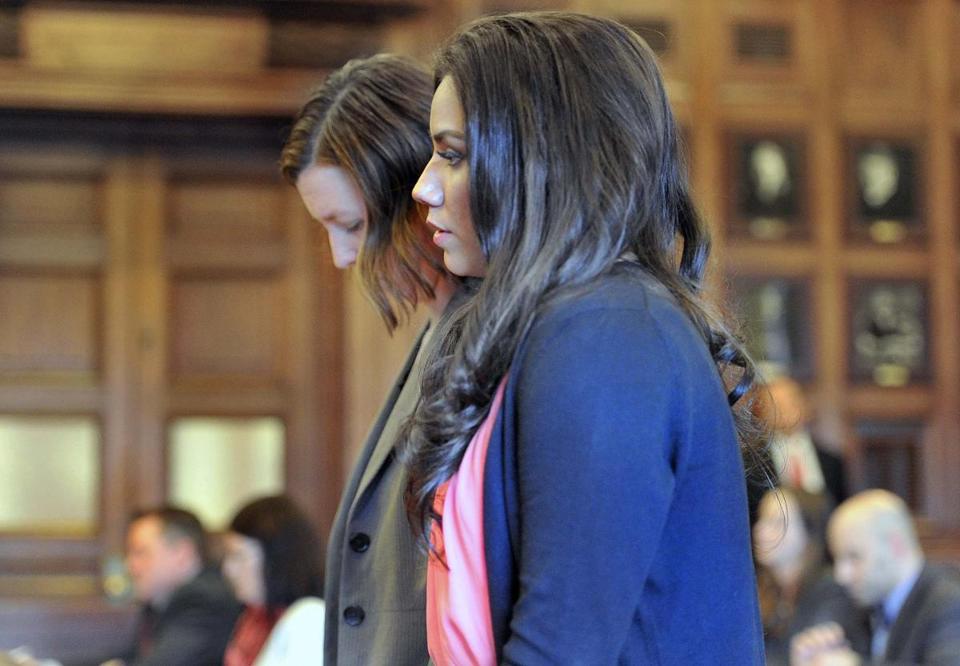
750fedc0aa5d4c698ce20acc98ee4ce0-2423a21f4c1e46ea9179716b559e2593-1Maine Zumba instructor pleads guilty to prostitution

PORTLAND, Maine — A dance instructor accused of using her Zumba fitness studio as a front for prostitution pleaded guilty Friday to 20 counts in a scandal that captivated a quiet seaside town . .

Read the rest at It’s Good to Live in a Two-Daily Town.

Posted in Uncategorized | Tagged , , , , , | 2 Comments

WSJ Beats NYT On CDC Antismoking Ads

The U.S. Food and Drug Administration has officially abandoned its effort to require tobacco companies to print graphic Australian-style warnings on cigarette packs.

But that doesn’t mean the federal government has ended its sporadic antismoking effort.

From Friday’s Wall Street Journal:

NA-BV690_SMOKE_DV_20130328170623Graphic New Antismoking Ads Unveiled

The U.S. government unveiled a series of graphic new antismoking advertisements Thursday, showing how despite a recent setback it isn’t giving up on its ambition of using explicit images and messages to persuade Americans to quit.

The new ads, the second wave of a campaign begun last year called “Tips from Former Smokers,” depict people who lost limbs, kidneys and loved ones from smoking—as well as a man who developed lung damage after exposure to secondhand smoke.

The ads come just a few days after the government gave up on a planned series of graphic warning labels for cigarette packs that would also have featured gruesome effects of smoking. Those labels were successfully challenged in court by the tobacco industry, and the Food and Drug Administration said it would go back to the drawing board and develop new labels . . .

Posted in Uncategorized | Tagged , , , , , , , , | Leave a comment