My Soirée With Napoleon, Madame Curie & Other Luminaries

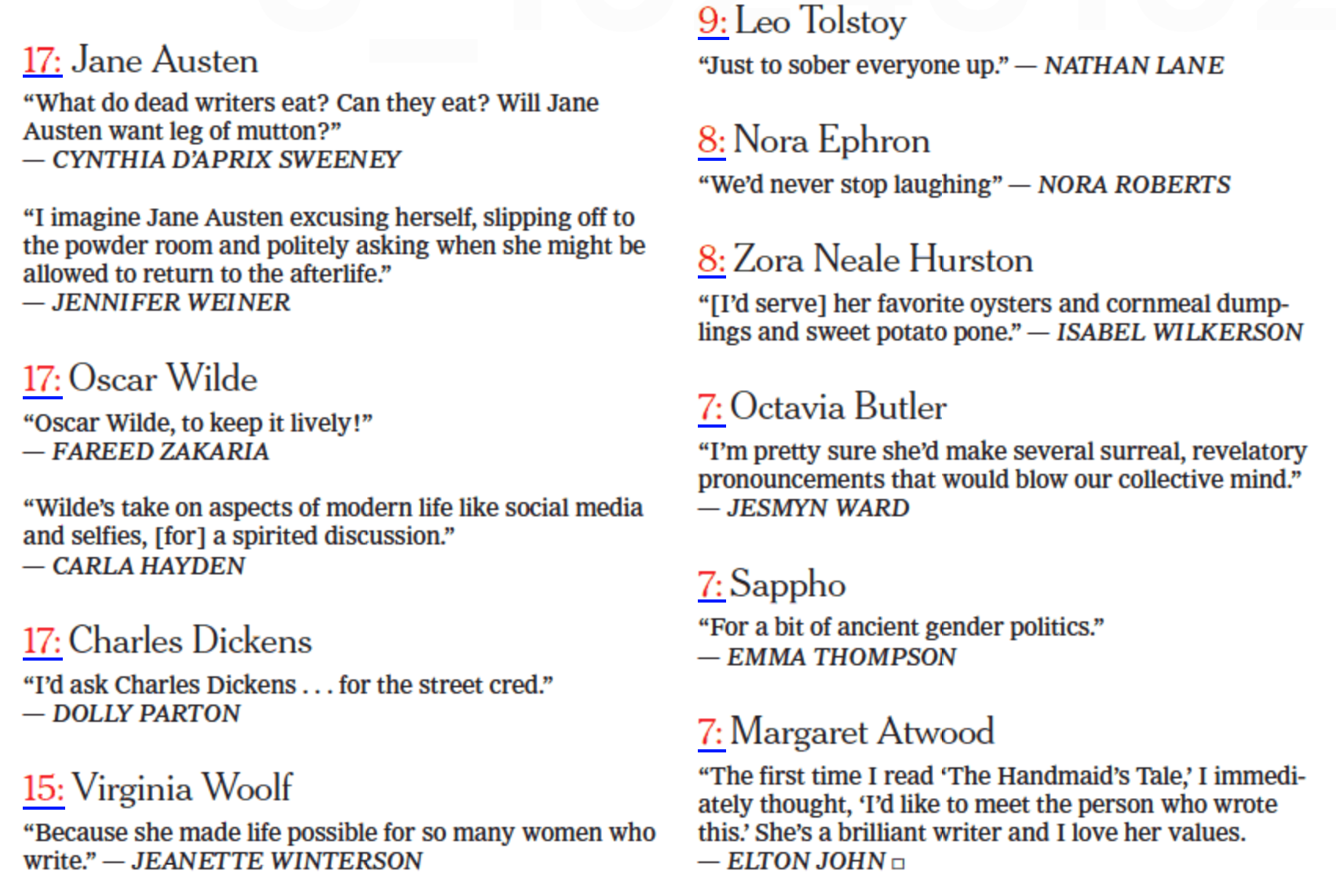
So I was leafing through the New York Times Book Review the other day when I came across this piece about The Dinner Party Writers Dream Of.

This year, our By the Book series of author interviews turned 10 — the feature made its debut in the April 15, 2012, issue, with David Sedaris in the hot seat — so to celebrate, we thought we would throw an end-of-year party. A dinner party, to be precise, since one of our recurring questions almost from the start has been: “You’re organizing a literary dinner party. Which three writers, dead or alive, do you invite?”

By design, the answers favor a certain kind of writer (witty, gregarious, charming, engaged) and, also by design, they tend to reveal a fair amount about the hosts: not only their reading habits but their social lives. “I can’t imagine myself hosting a literary dinner party,” Anne Tyler said in 2015. “What on earth would a bunch of writers talk about? I’d rather just curl up with a sandwich and read some favorite book over again on my own.”

We hear you, Anne. Still, plenty of participants have ventured to imagine what a bunch of writers might talk about, and have assembled their dream guest lists for us. Here are the 20 writers invited most often over the years, along with a sampling of quotes explaining their picks. Bon appétit.

Here are the dining companions most in demand among the glitterati over the past decade.

Seriously? Shakespeare, Baldwin, Twain, Morrison, Austen? Dickens? Tolstoy?  Proust? Outside of Octavia Butler and Sappho, pretty unimaginative dinner parties, all due respect.

Forty years ago I was creative director at a small Boston ad agency among whose clients was a real estate developer looking to convert the Brook House – a 700-unit gated community on the Boston/Brookline border – from apartments to condominiums.

The developer told me, “Make something that everyone will be talking about.”

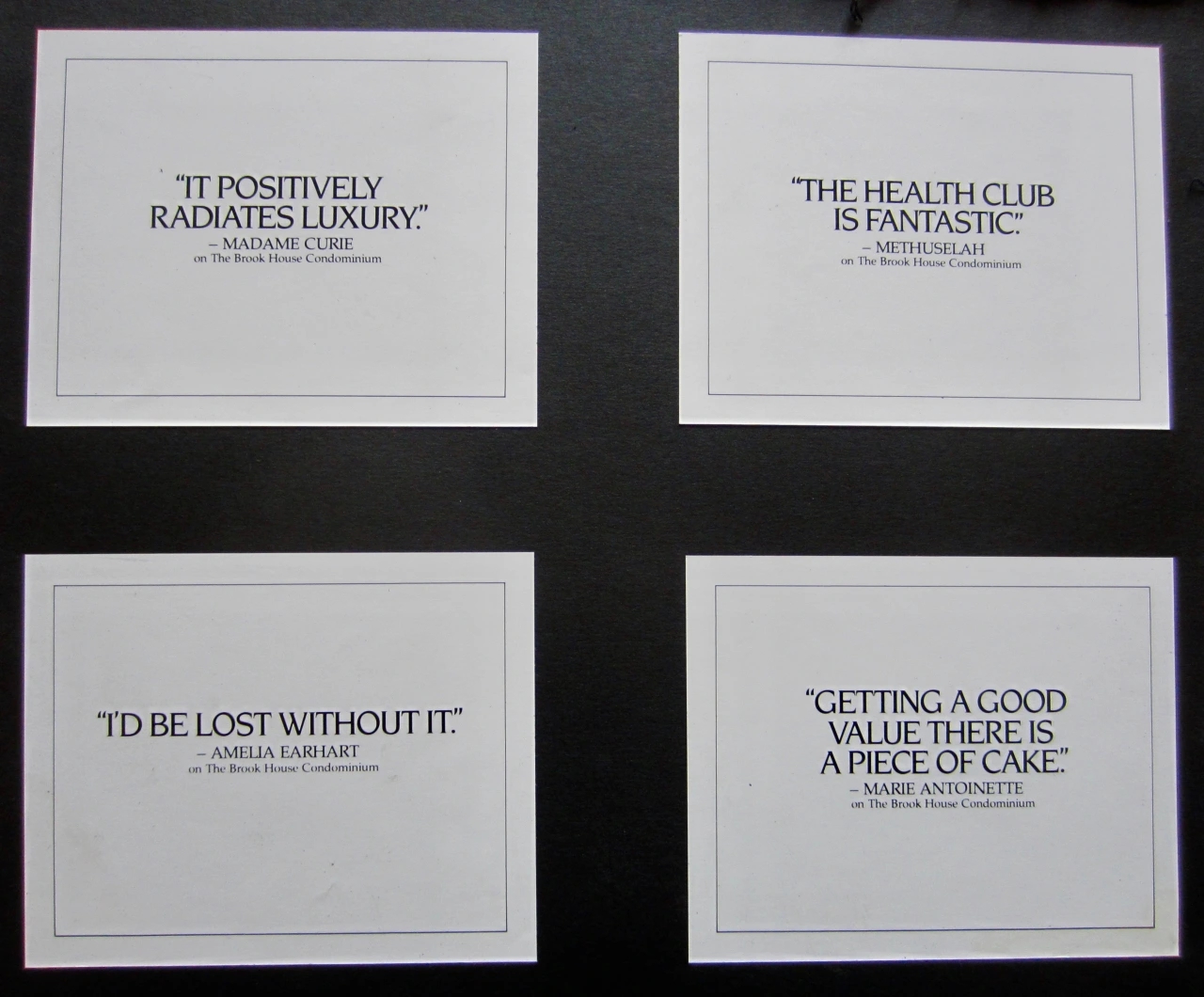
So I decided to host a Soirée for the Ages that would appear as an ad campaign in the real estate pages of the Boston Sunday Globe.

RSVPs came in the form of these teaser ads the first week.
The following Sunday, this full-page ad ran in the Globe.
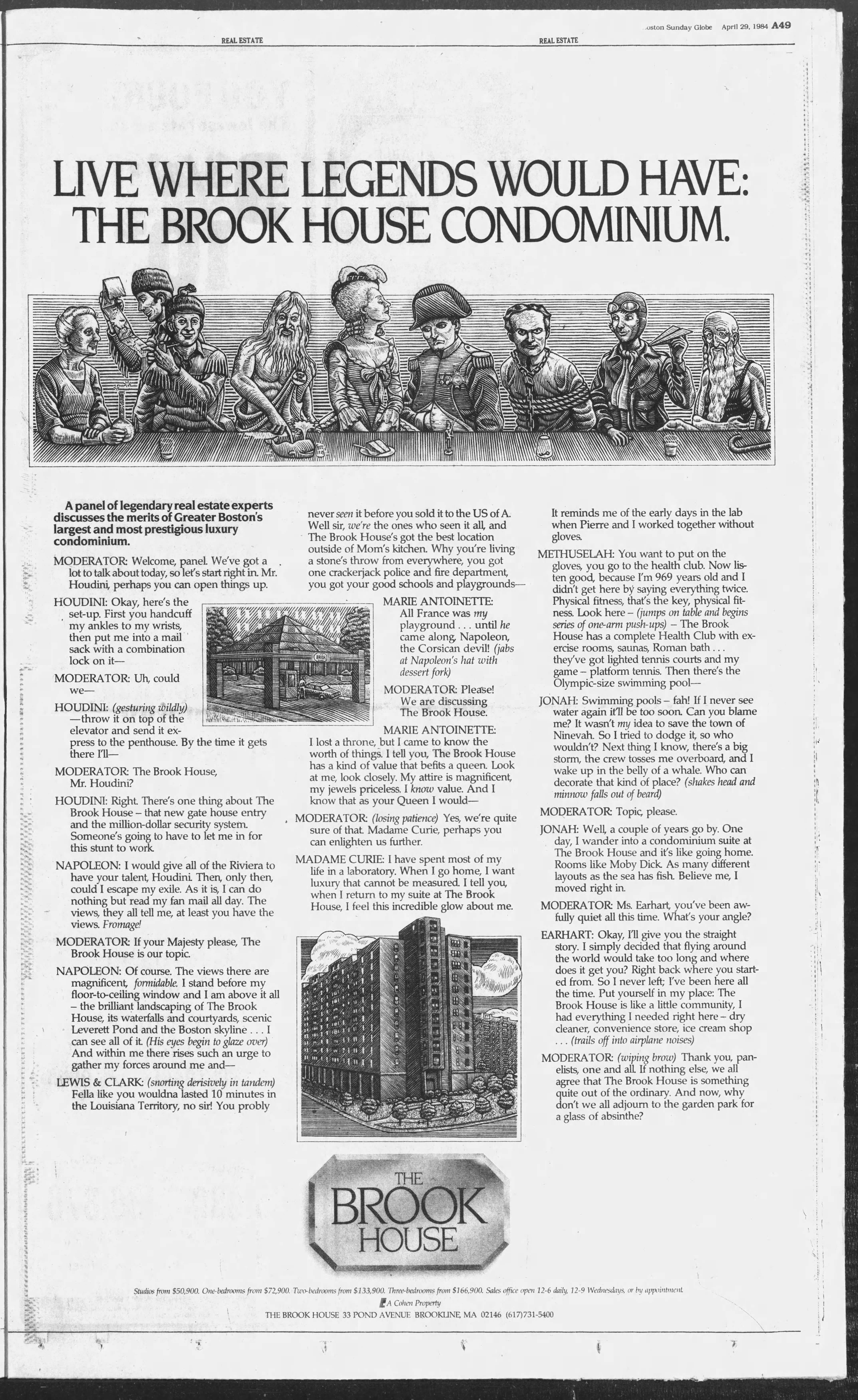
Here’s a slightly more readable version, for those of you keeping score at home.
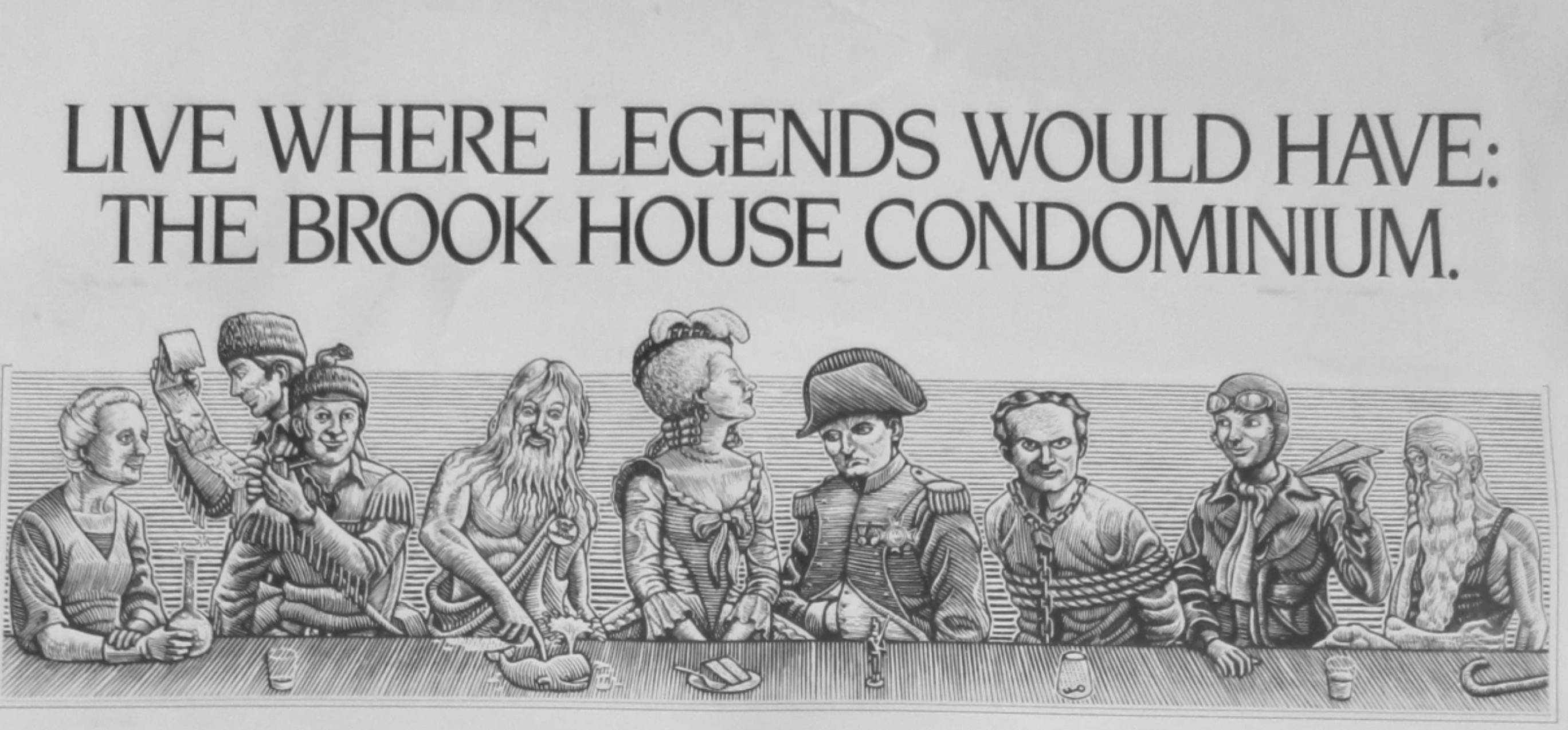
I’ve never claimed that my little get-together sold a single condo at the Brook House, but a whole bunch of people did talk about it. Maybe because it wasn’t just a bunch of the usual fantasy dinner-party suspects.

Eat your hearts out, Times glitterati.

Posted in Uncategorized | Tagged , , , , , , , , , , , , , , , , , , , | 2 Comments

Dead Blogging ‘Frank Bowling’s Americas’ at Boston’s MFA

Well the Missus and I trundled over to The Fens the other day to catch Frank Bowling’s Americas (through April 9) at the Museum of Fine Arts and say, it was swell.

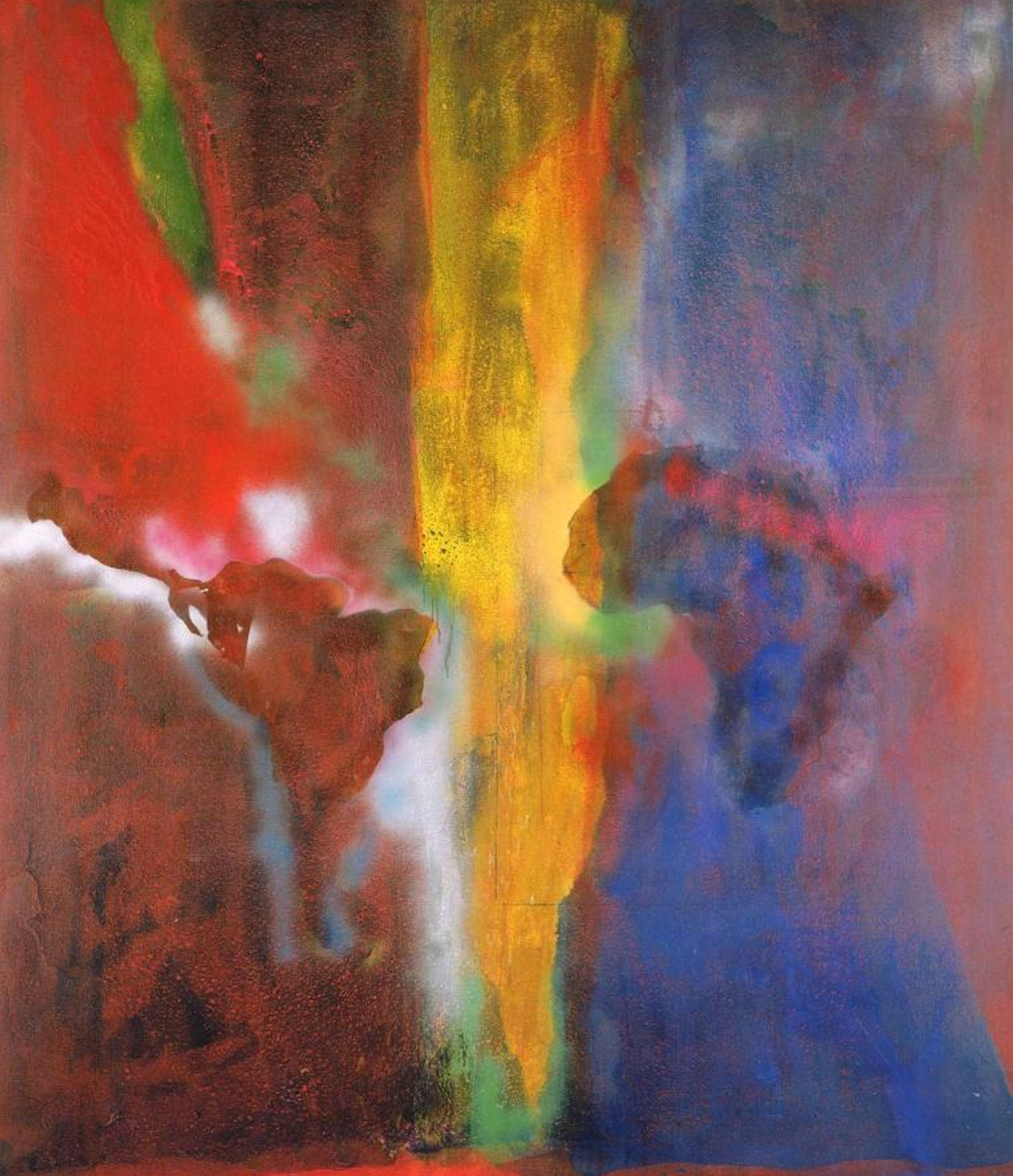
“Modernism belonged to me also.” So resolved British Guiana–born artist Frank Bowling in 1966, when he moved from London to New York City, impelled by ambition to make his mark on modern painting. “Frank Bowling’s Americas” is the first exhibition dedicated to the transformative years the artist spent in the US, and the first major survey of his work by an American institution in more than four decades.

Bowling’s primary residence was New York from 1966 to 1975. In that time he came into contact with a vibrant and tumultuous art scene, with abstract painting on an explosive rise, heated debates unfolding around Black cultural identity and artistic practice, and Stokely Carmichael’s slogan “Black Power” emanating from the South.

Much of Bowling’s work at the time, on the other hand, emanated from South America and Africa, as these paintings illustrate.

The MFA website features a short Meet Frank Bowling video, but this profile of the artist and his work in New York is a lot richer.

Sir Frank Bowling is still creating impressive art at age 88. You should go see it for yourself.

• • • • • • •

The Missus and I also stopped by Michaelina Wautier and ‘The Five Senses’, a new installation in the MFA’s Center for Netherlandish Art, which was also totally swell.

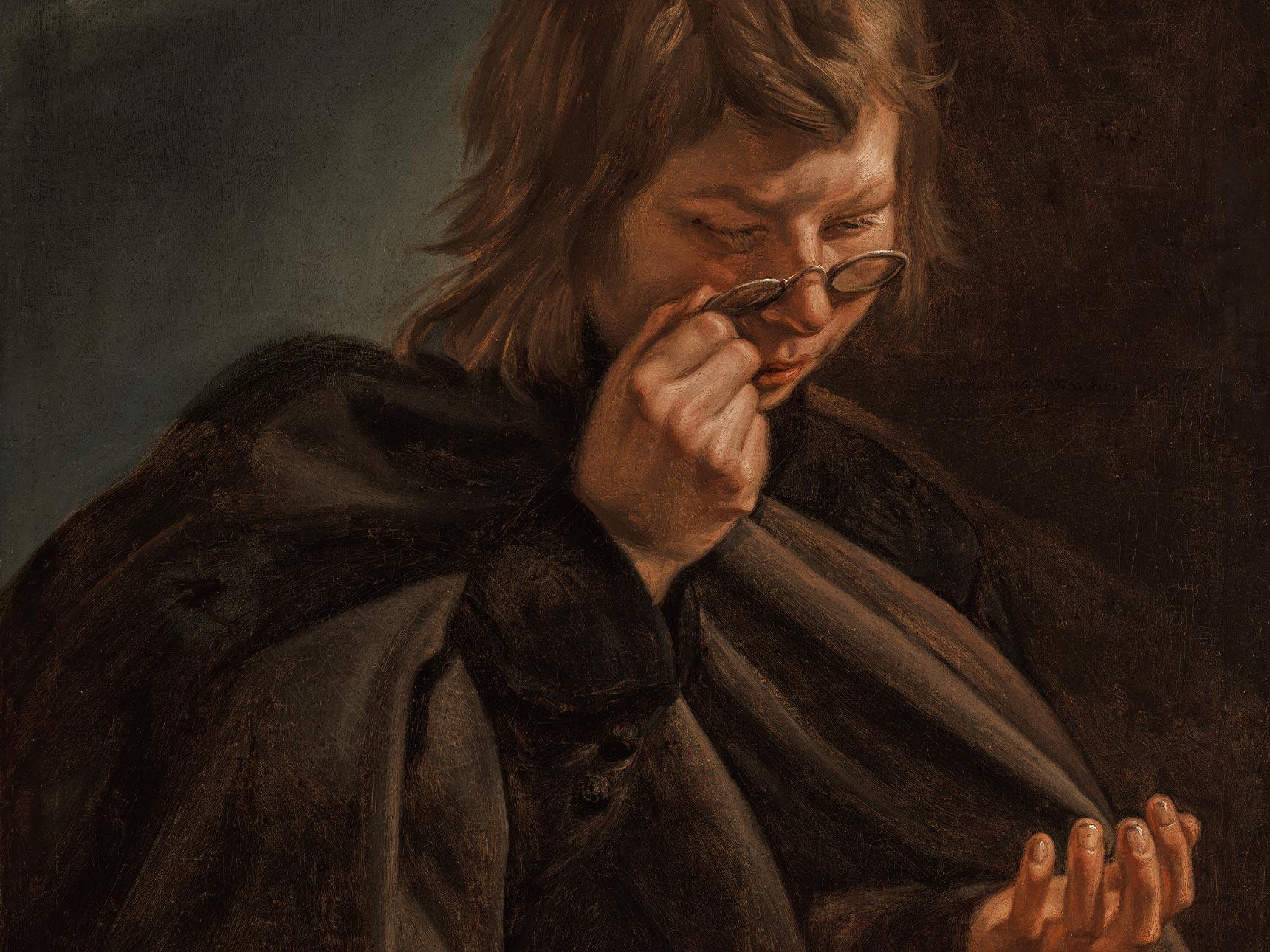
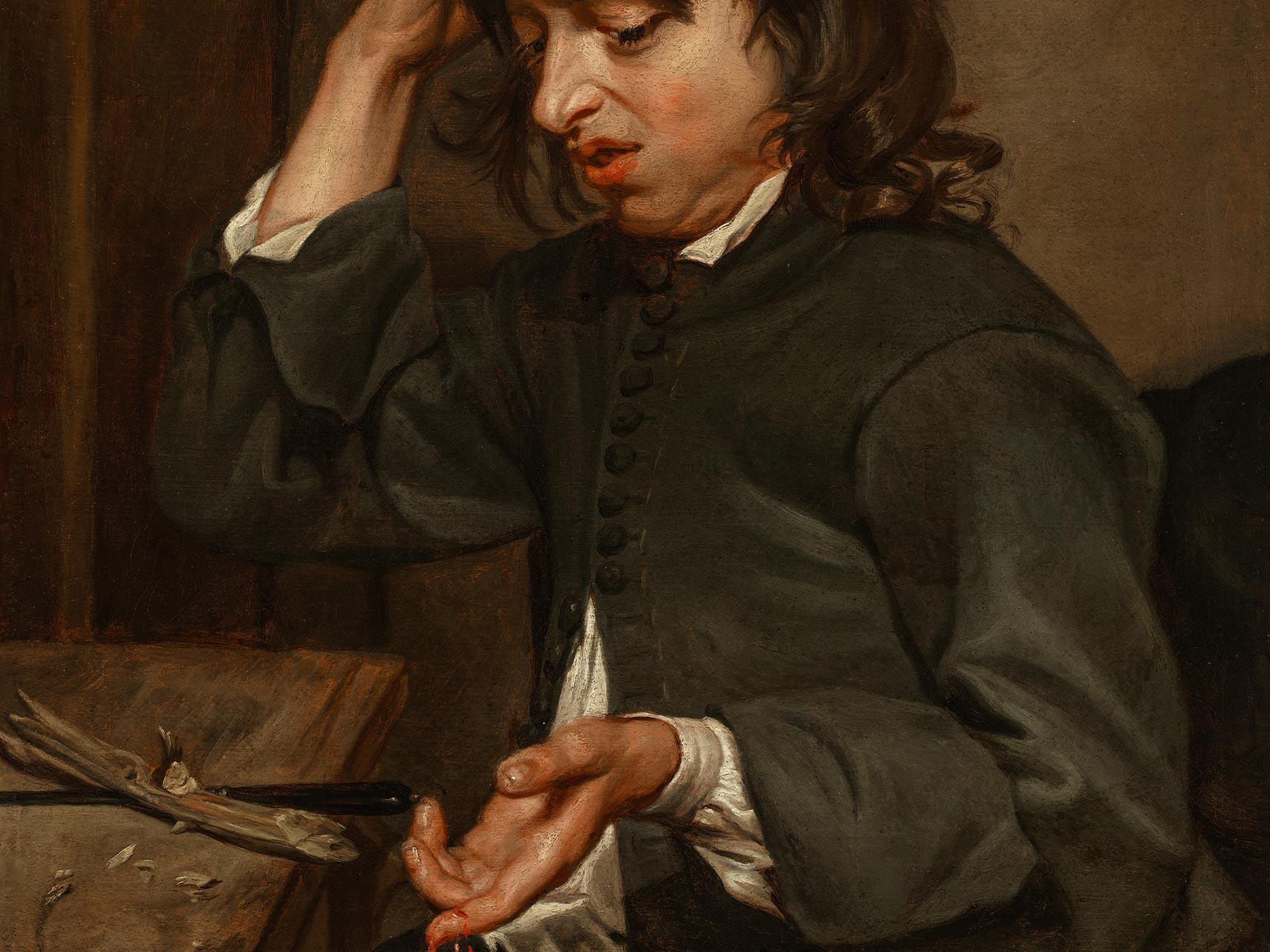
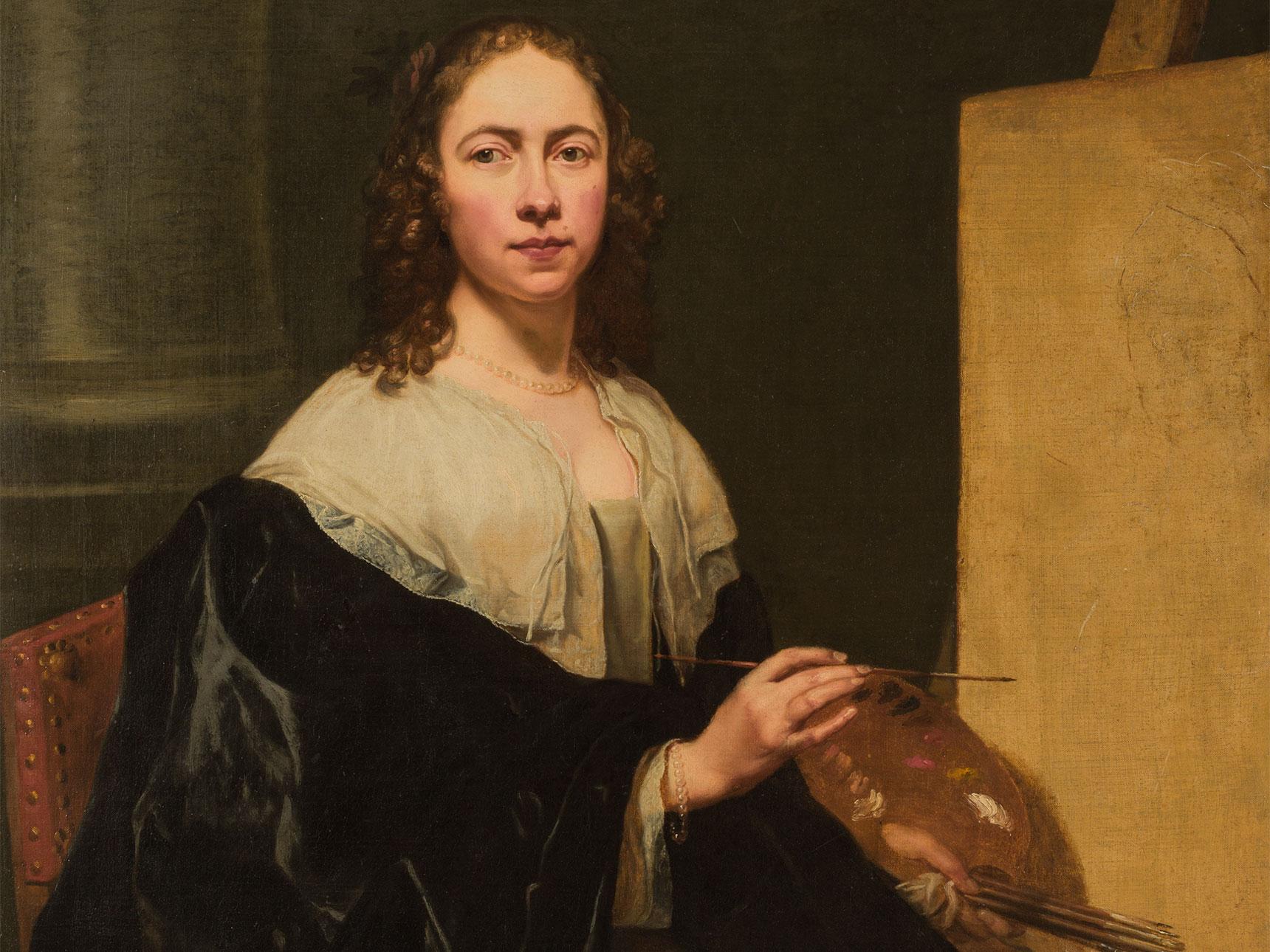
Centered around her rare series The Five Senses (1650), this is the first gallery space in the Americas dedicated to the art of Michaelina Wautier (1614–1689), a painter from Brussels all but forgotten until the recent rediscovery of her work. The set of five pictures was virtually unknown until it was acquired by Rose-Marie and Eijk van Otterloo and lent to the MFA in 2020. Here, it is joined by Wautier’s remarkable Self-Portrait (1645), on loan from a private collection and on public view in the US for the first time.

Here are Wautier’s Five Senses, which “[showcase] how she defied a convention at the time of depicting the senses as experienced by idealized women.”

And here’s that self-portrait.

As with the Frank Bowling exhibit, well worth a trundle.

Posted in Uncategorized | Tagged , , , , , | Leave a comment

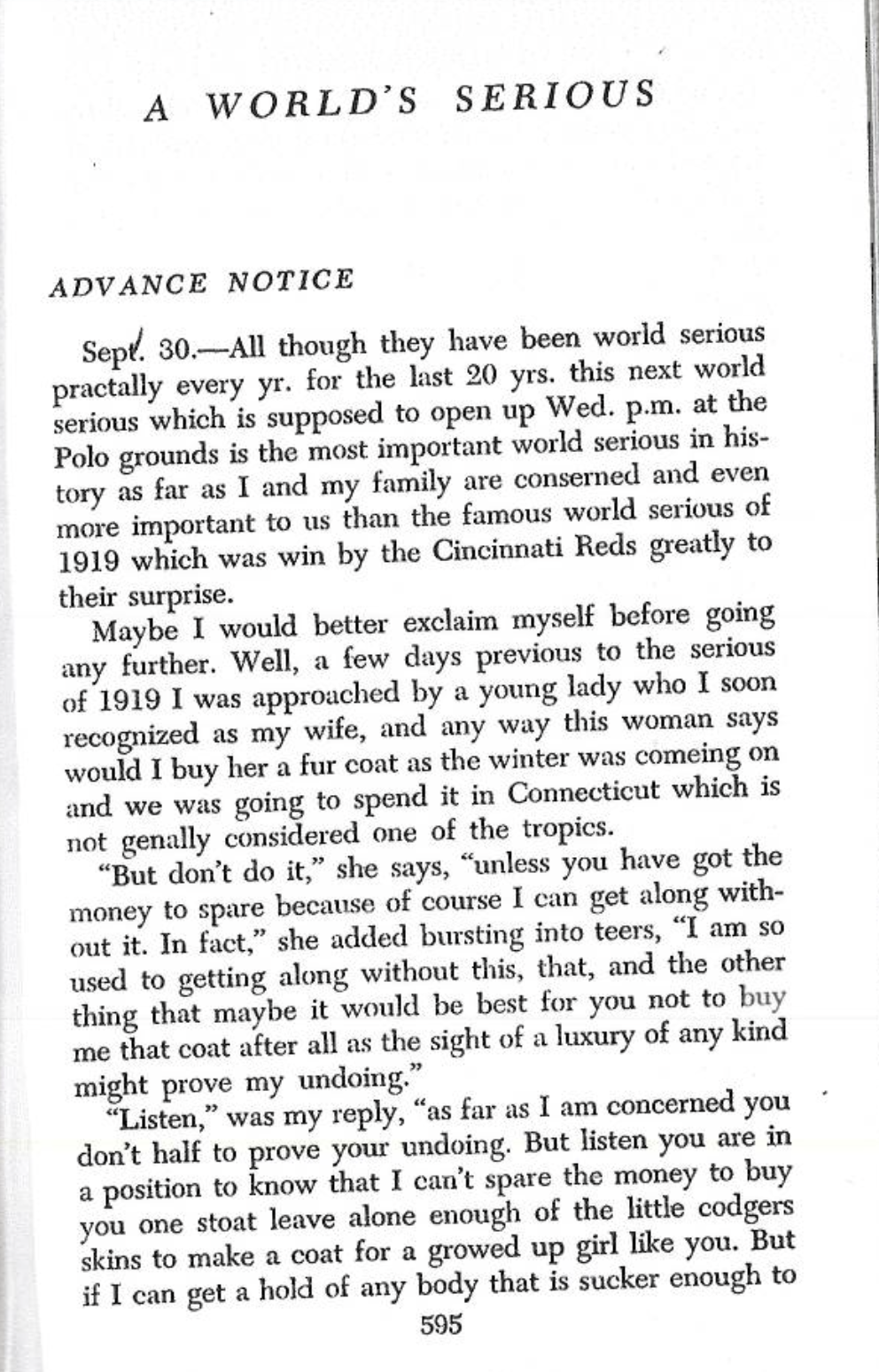
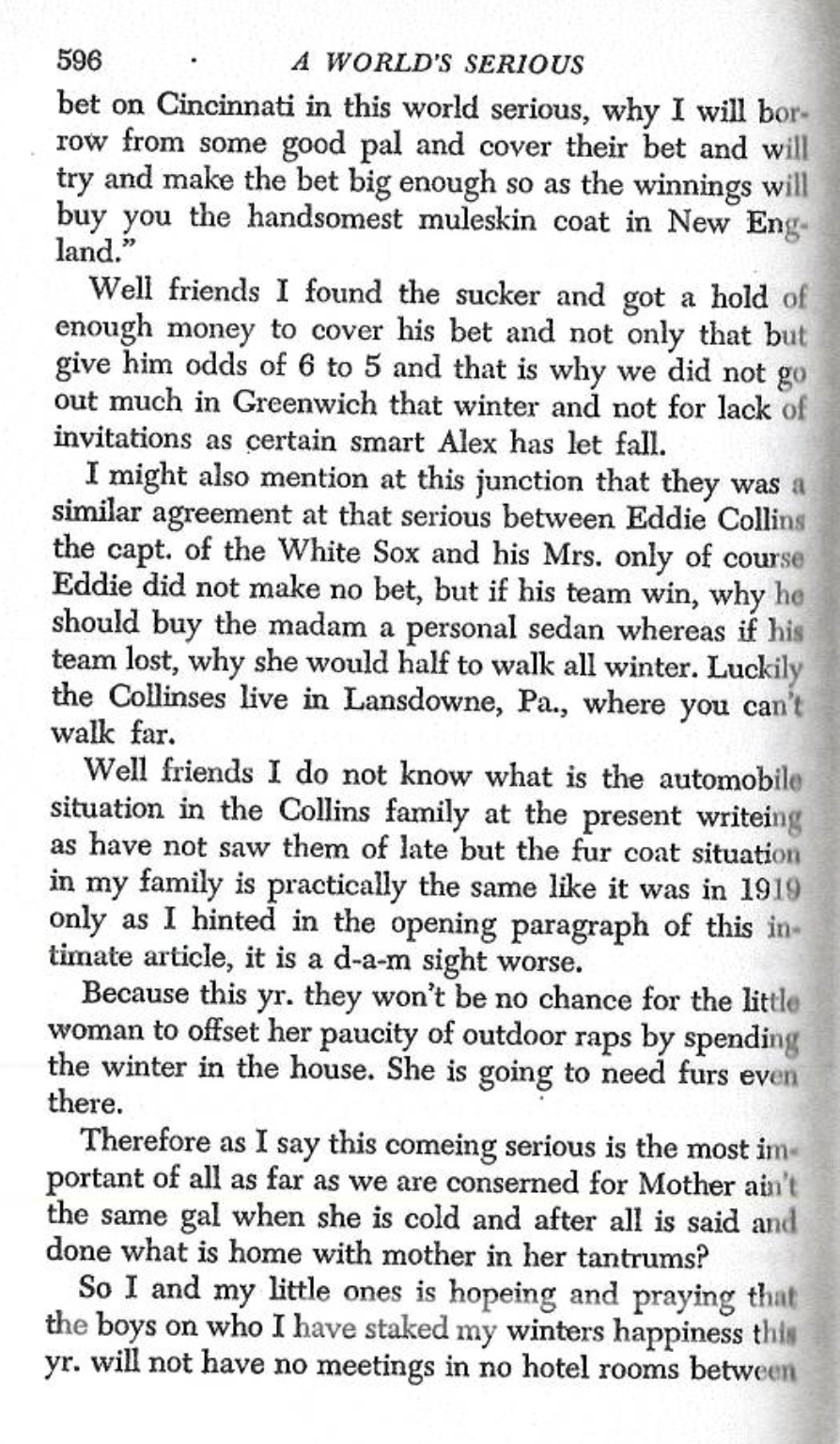
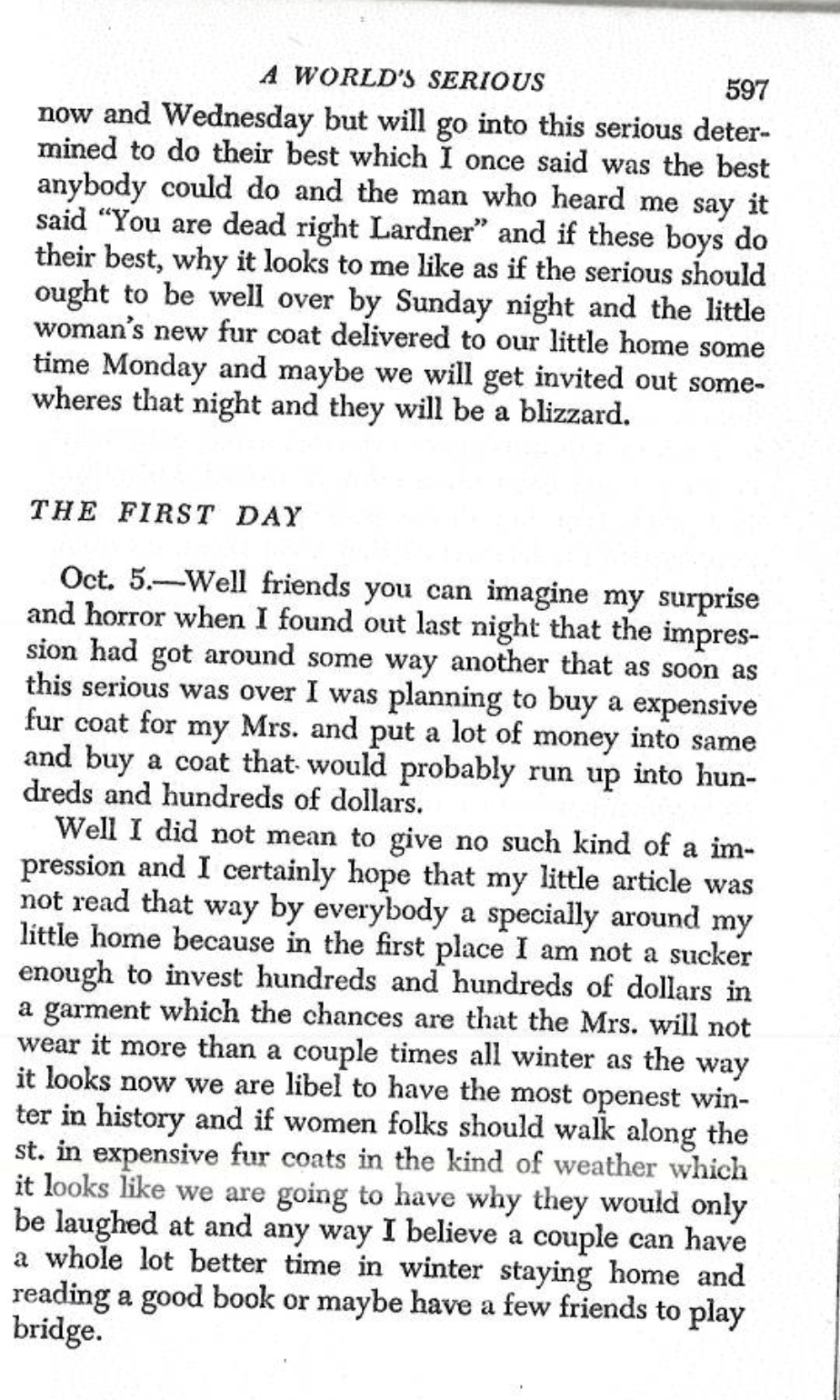
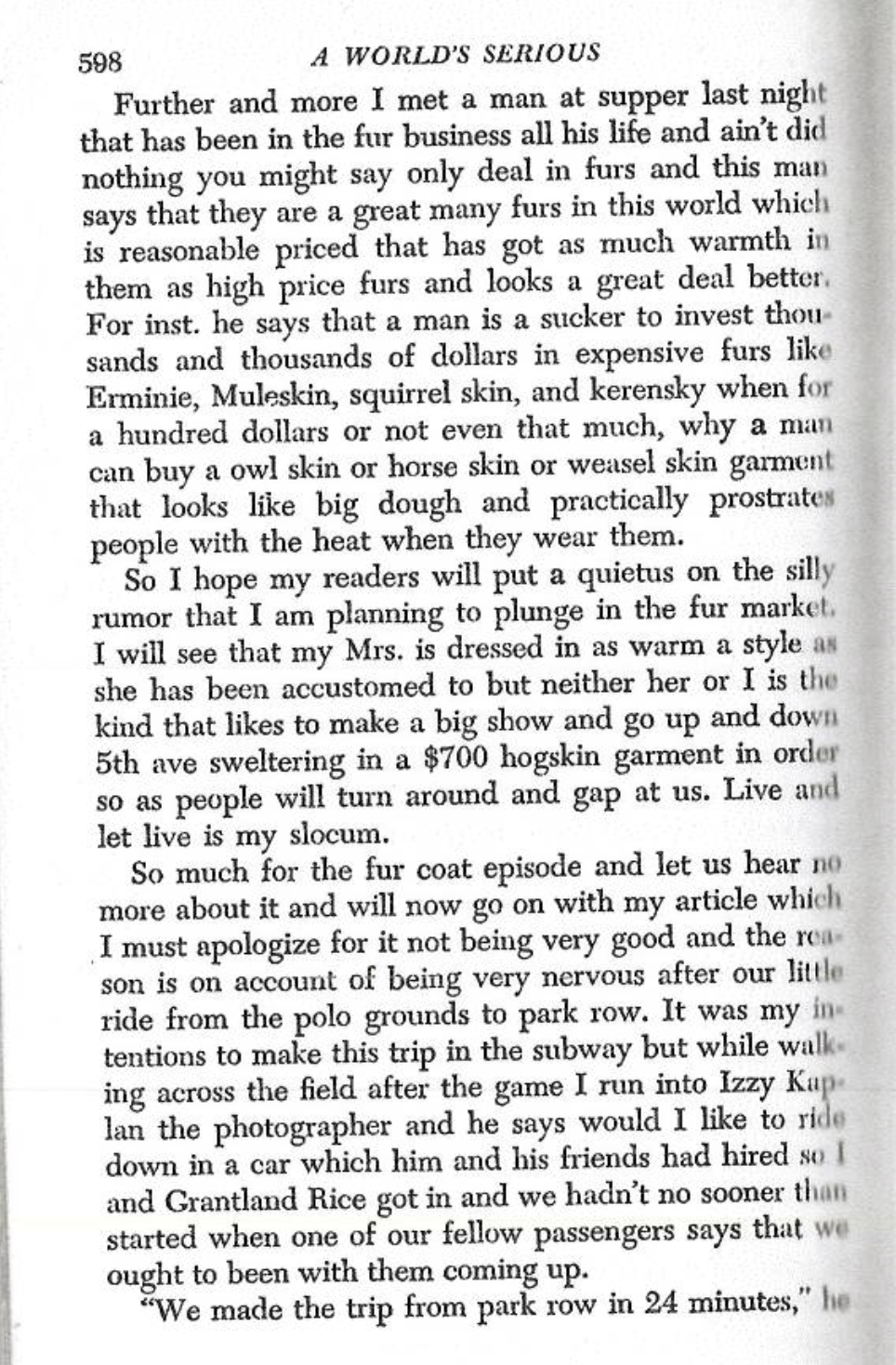
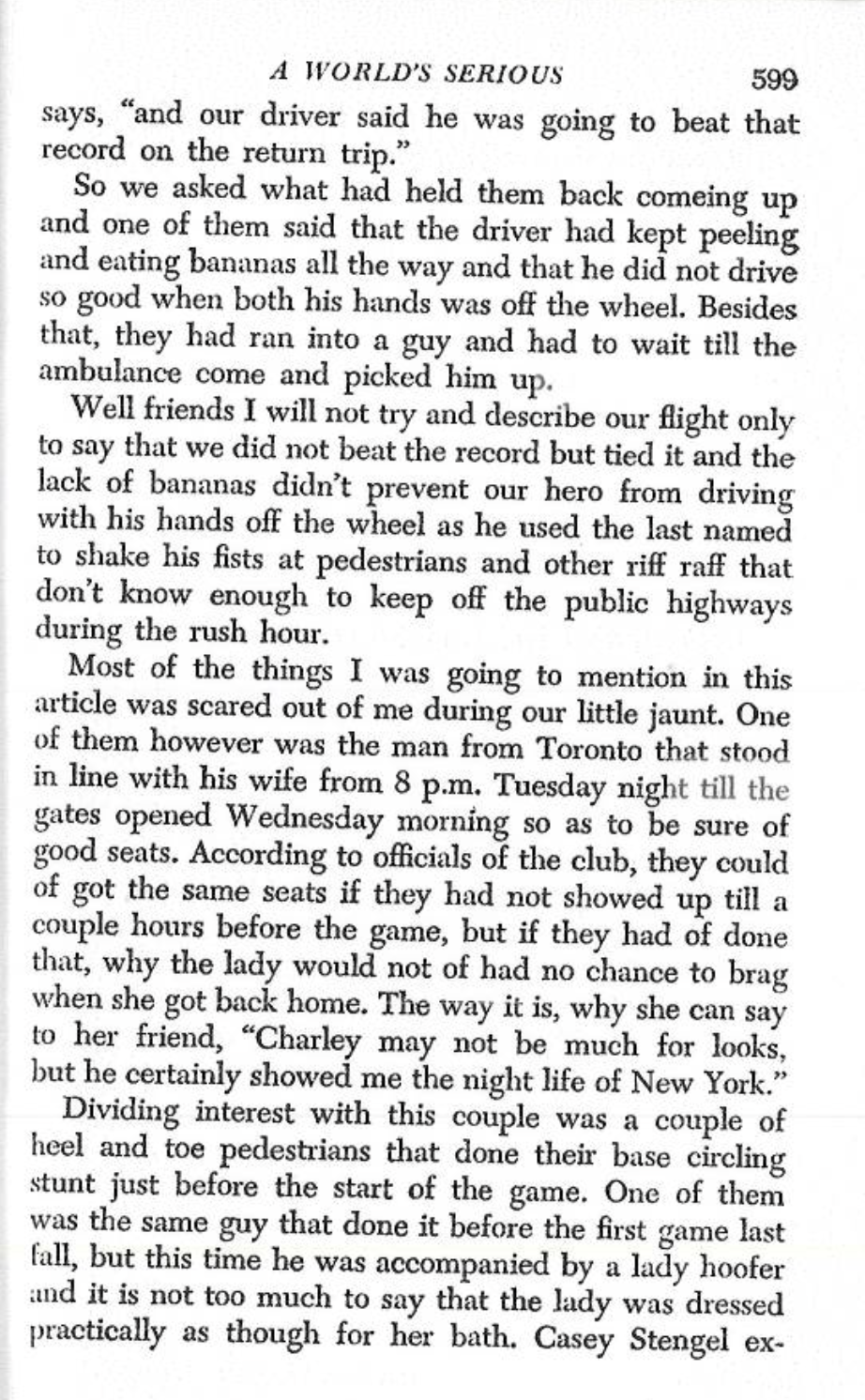
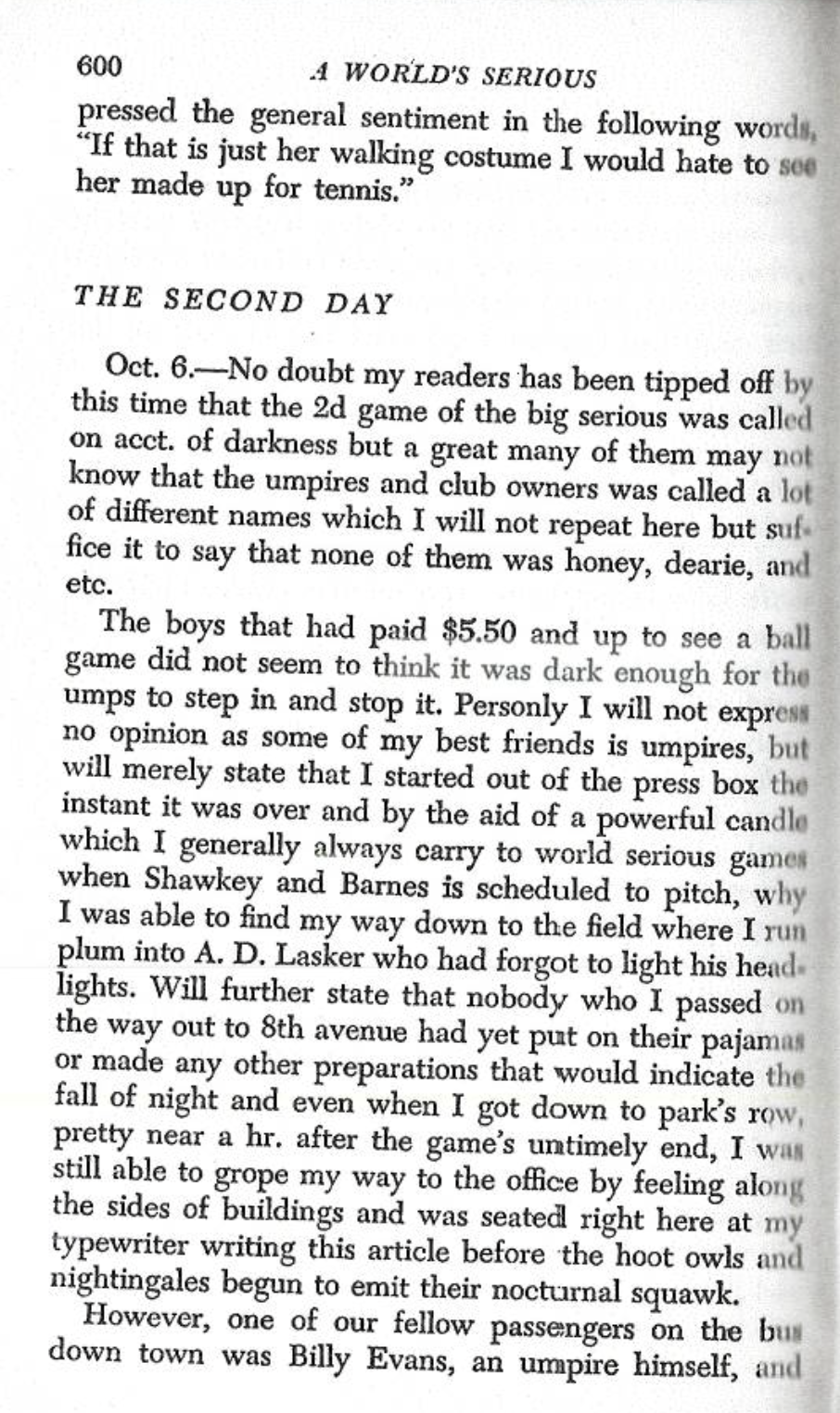
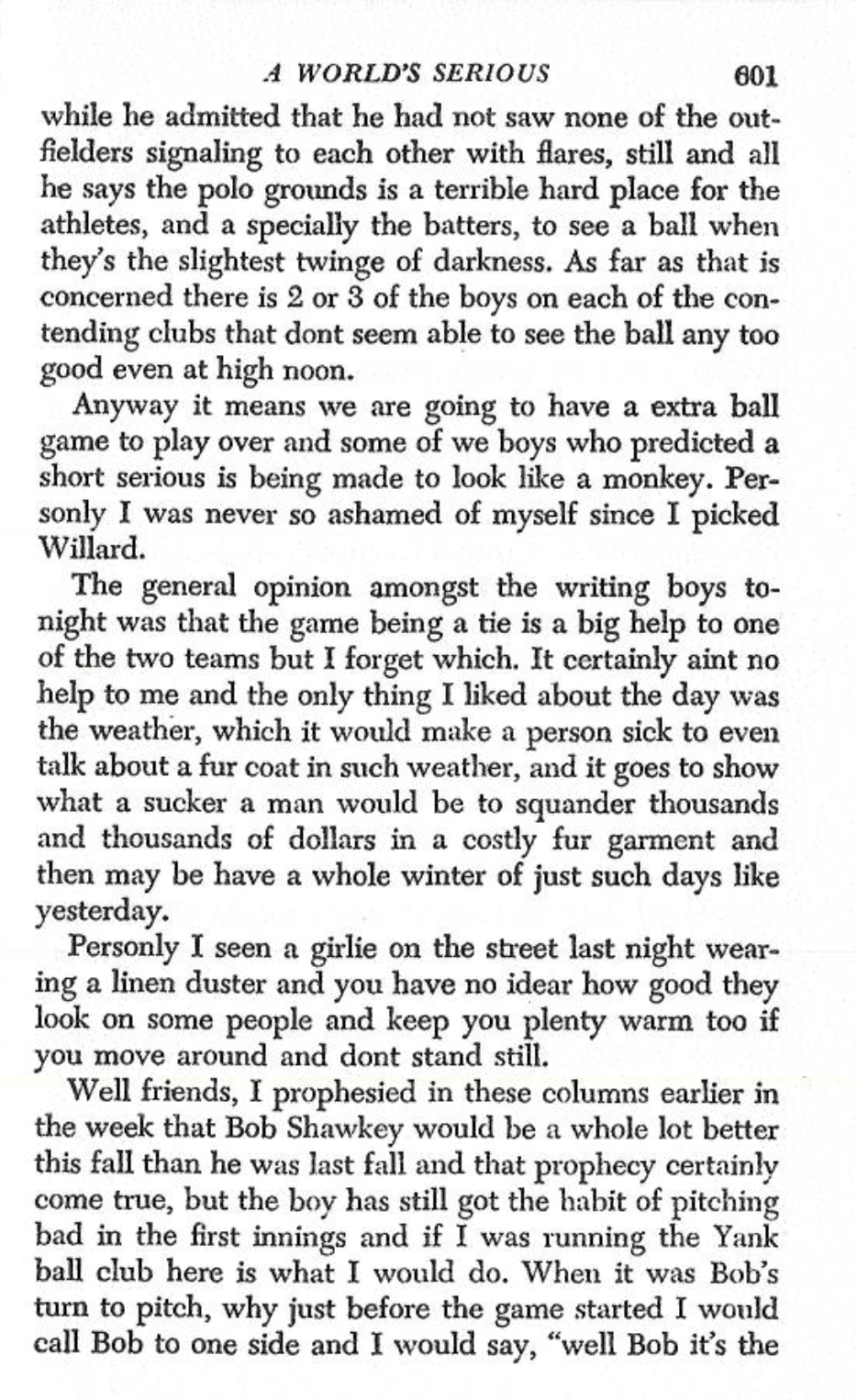
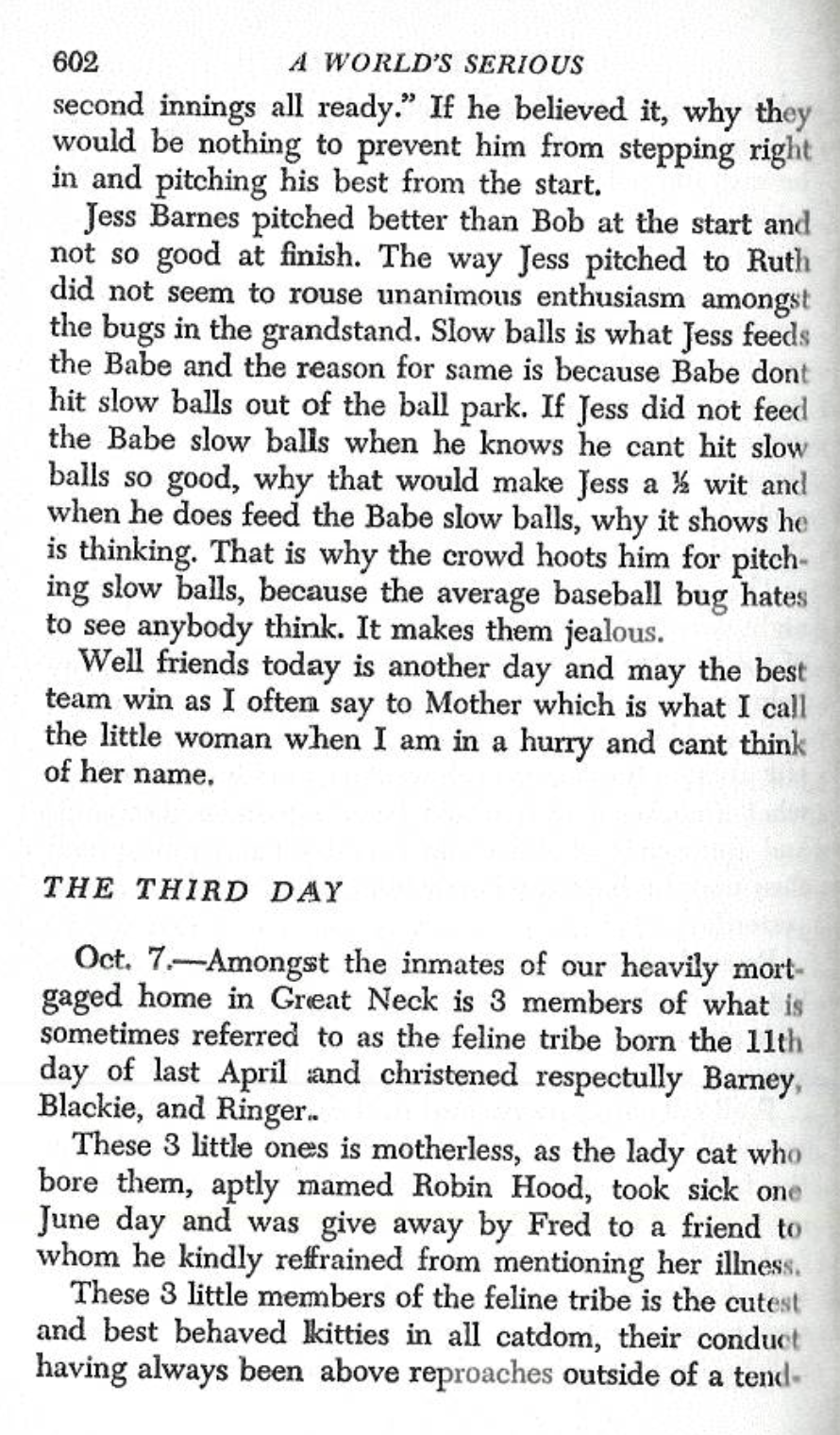
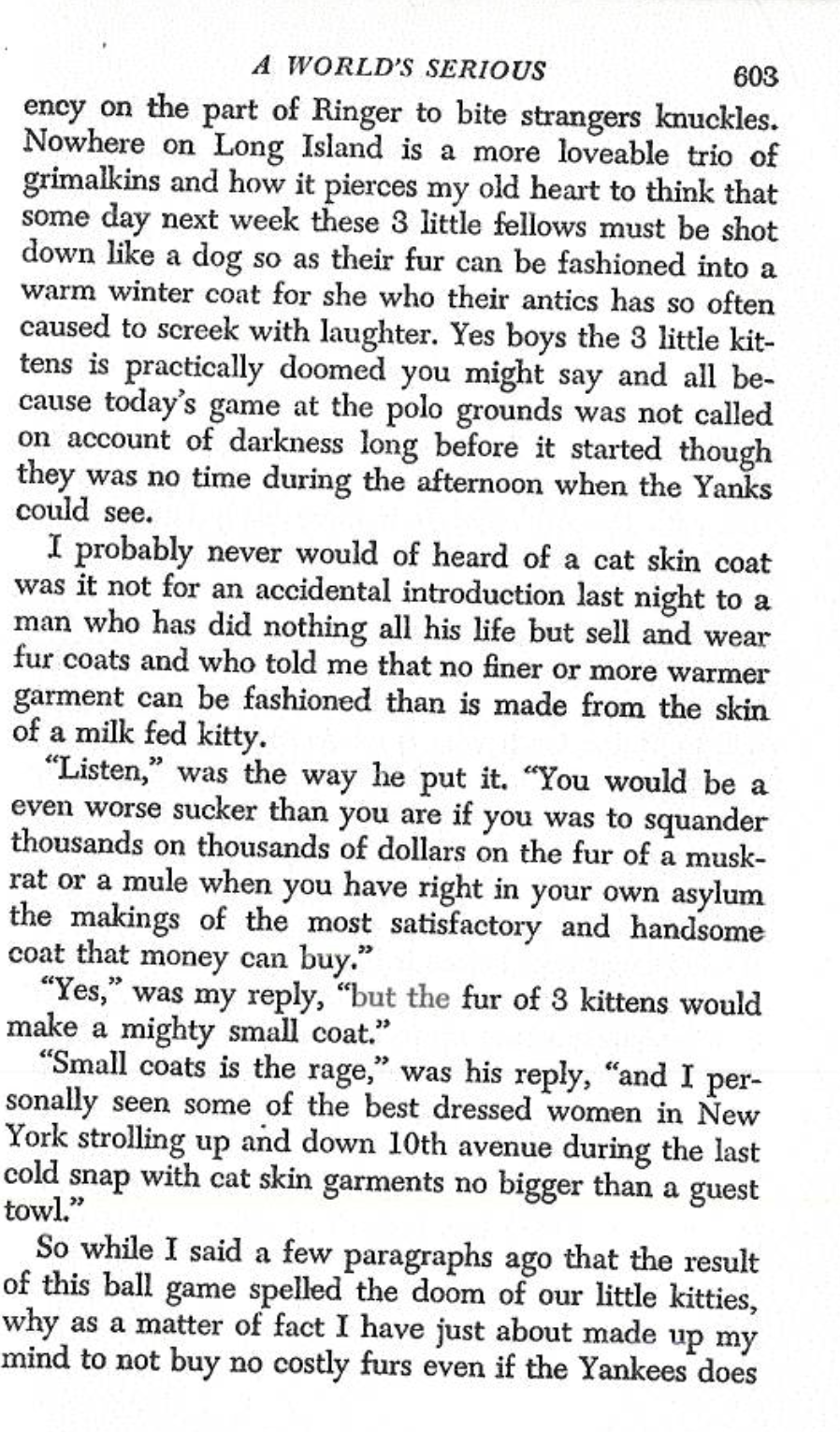
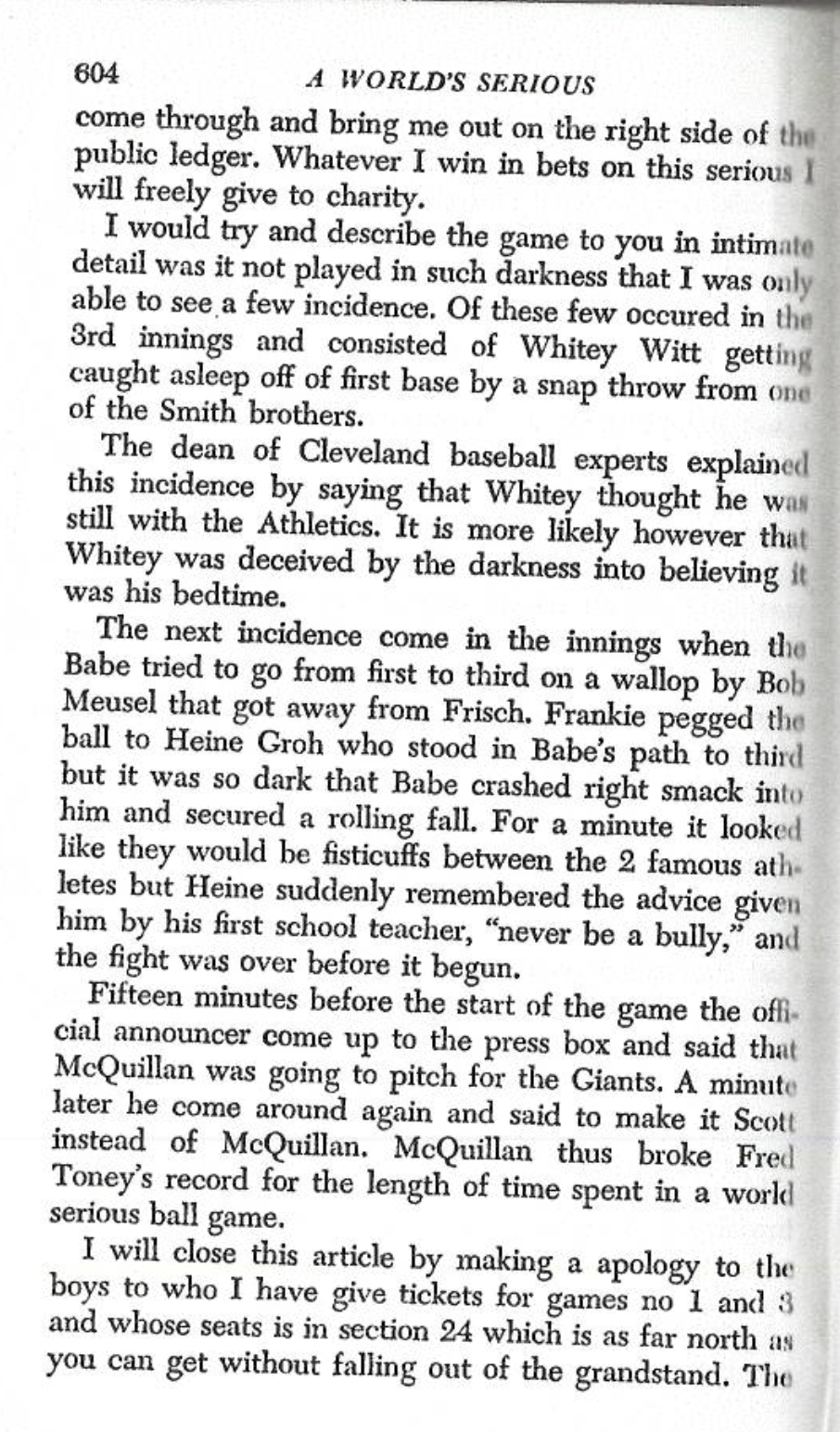
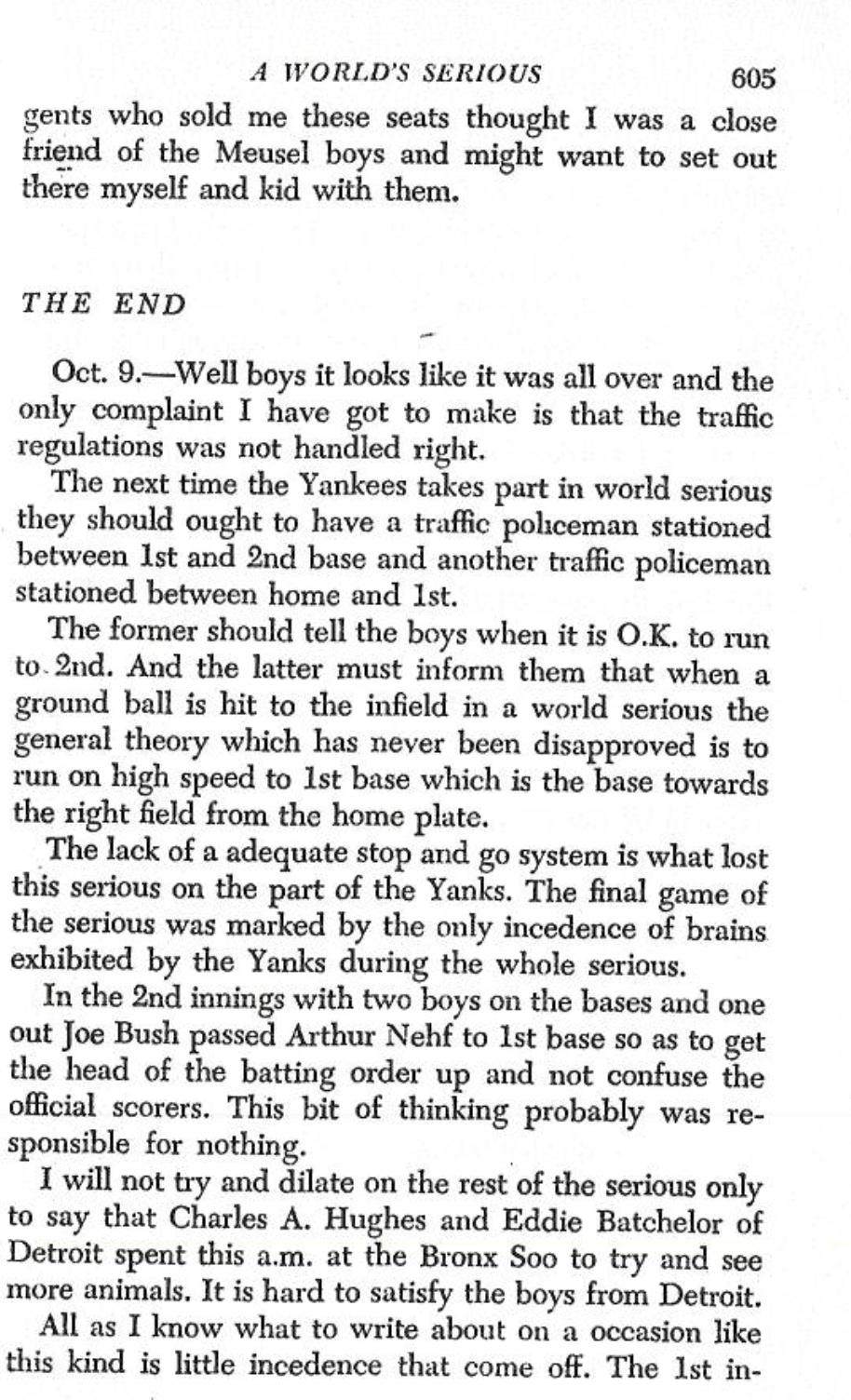
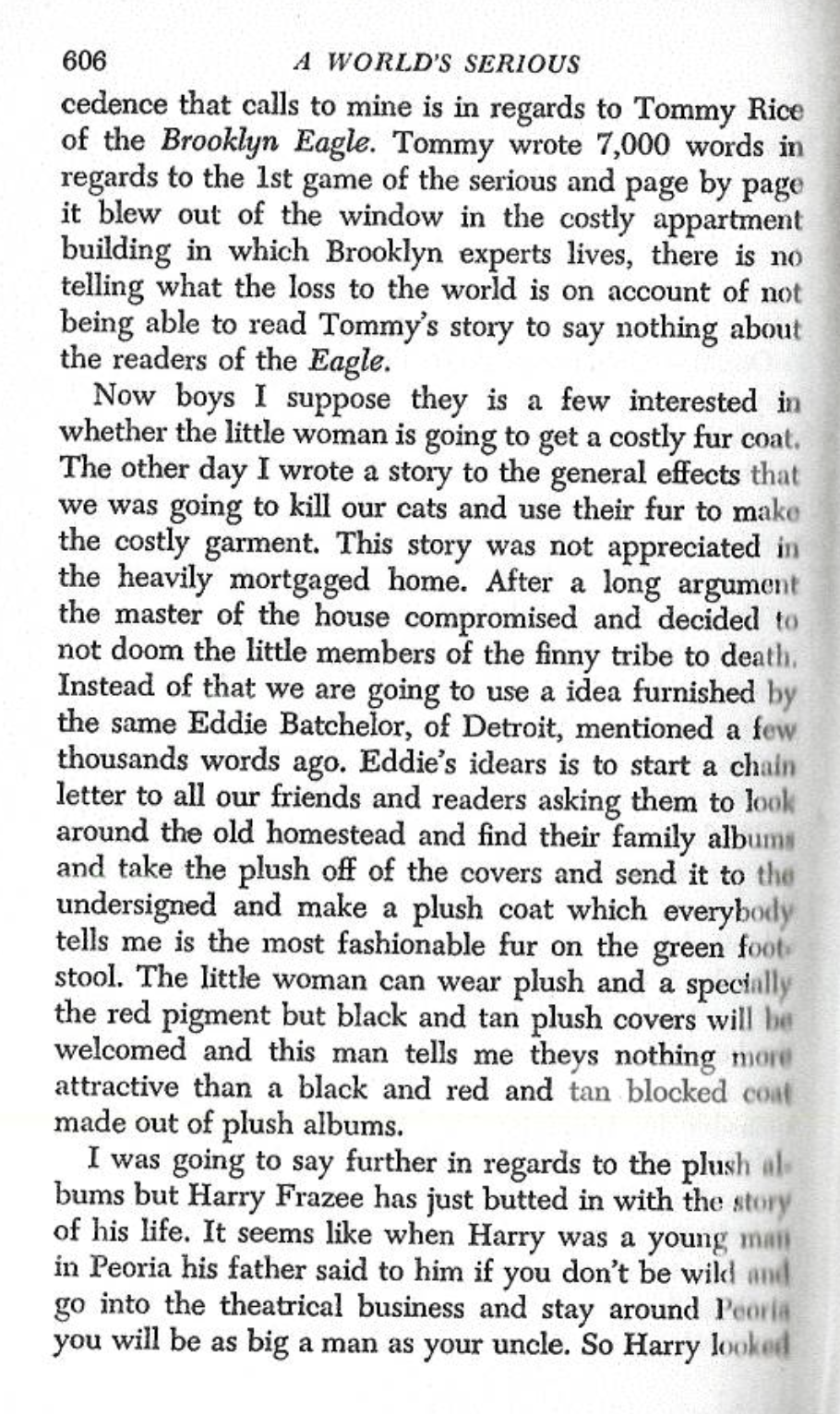
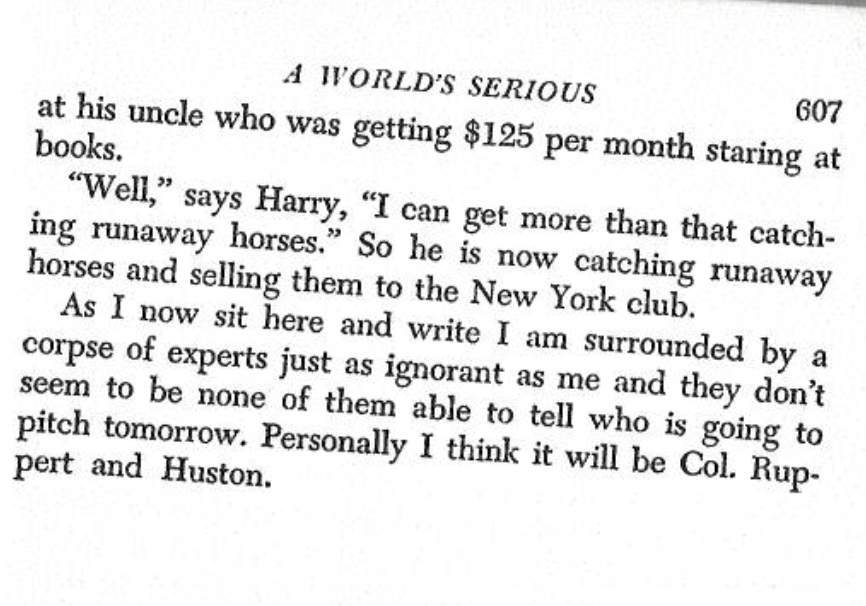
Ring Lardner’s Fall Classic, ‘A World’s Serious’

Since last night’s rainout of the Astros-Phillies game left the baseball-loving universe with nothing new to chew over for most of today, the hardwaiting staff thought it might be helpful to provide you with something old to chew over.

This piece originally appeared as a series of syndicated columns in the fall of 1921 and is pure Ring Lardner.

You’re welcome.

Posted in Uncategorized | Leave a comment

R.I.P. Angela Lansbury: The Missus & I Loved You on Broadway

As the Missus said last week, thank God Angela Lansbury didn’t pass away during – and I’m paraphrasing here – England’s Long Goodbye to QE II.

Then again, Angela Lansbury’s timing was always impeccable.

It allowed, for example, Daniel Lewis’s lovely obituary to run on Page One of the New York Times.

She was a Hollywood and Broadway sensation, but she captured the biggest audience of her career as the TV sleuth Jessica Fletcher.

Angela Lansbury, a formidable actress who captivated Hollywood in her youth, became a Broadway musical sensation in middle age and then drew millions of fans as a widowed mystery writer on the long-running television series “Murder, She Wrote,” died on Tuesday at her home in Los Angeles. She was 96.

Her death was announced in a statement by her family.

Ms. Lansbury was the winner of five competitive Tony Awards for her starring performances on the New York stage, from “Mame” in 1966 to “Blithe Spirit” in 2009, when she was 83, a testament to her extraordinary stamina. She also received a special Tony for lifetime achievement at this year’s ceremony. Yet she appeared on Broadway only from time to time over a seven-decade career in film, theater and television in which there were also years when nothing seemed to be coming up roses.

The Times also published film critic Scott Tobias’s piece The Many Faces of Angela Lansbury and theater critic Jesse Green’s appraisal Angela Lansbury, Broadway’s Beloved Everywoman.

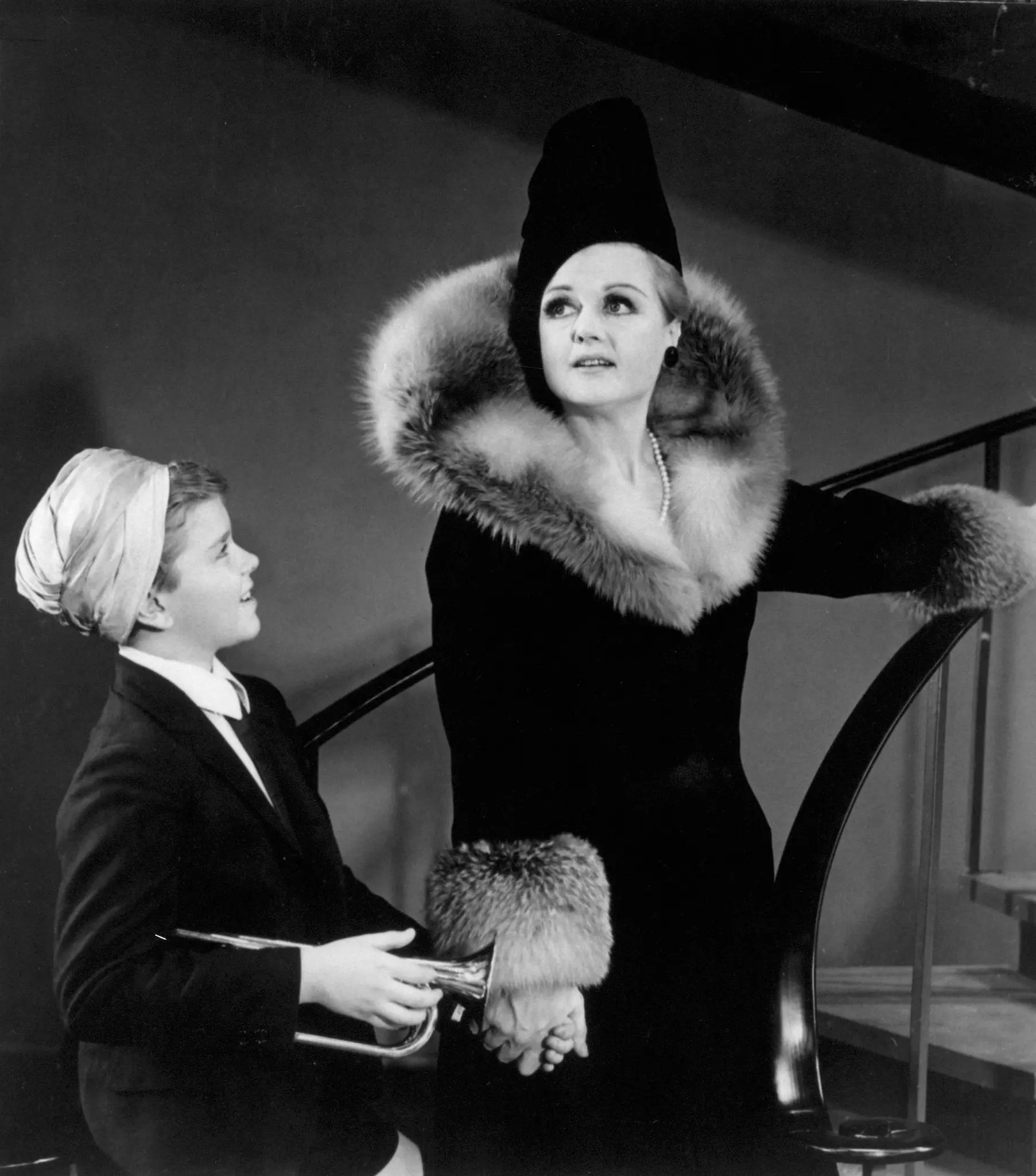
As luck would have it, the Missus and I saw just about every one of Angela Lansbury’s Broadway performances starting with her definitive portrayal of Mrs. Lovett (check out this Lansbury/LuPone/ Bonham Carter bakeoff for proof) in the 1979 production of Sweeney Todd, which she and Len Cariou reprised in 2005 for Stephen Sondheim’s 75th birthday concert.


(Full lyrics here for those of you keeping score at home.)

We waited quite a while  – insert “Murder, She Wrote’ (1984-1996) here – to see Angela Lansbury on Broadway again, this time in the 2007 production of Terrence McNally’s Deuce.

Here’s a CUNY Theater Talk interview with Lansbury and her Deuce co-star, the inimitable Marian Seldes.


Two years later we were mesmerized by Lansbury’s appearance as Madame Arcati in the Broadway revival of Noël Coward’s Blithe Spirit.

Once again, an interview on CUNY’s Theater Talk with Susan Haskins and Michael Riedel.


Amazingly, six months later Angela Lansbury was back on Broadway – along with Catherine Zeta-Jones – in a a revival of Stephen Sondheim’s A Little Night Music, in which she was quite wonderful in the role of Madame Armfeldt.


In 2012 Lansbury returned to Broadway (along with James Earl Jones, Candice Bergen, and John Larroquette) in Gore Vidal’s satirical play, The Best Man. Here’s her first scene.


In her final Broadway performance Angela Lansbury was, as always, pitch-perfect.

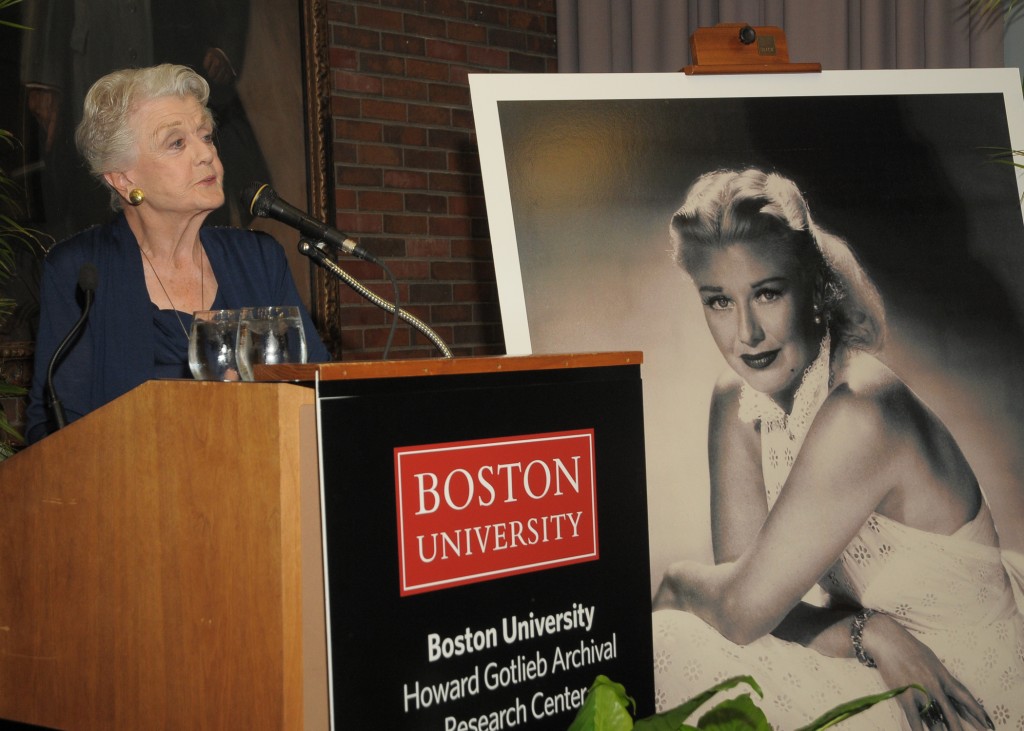
One final note: In 2011 Lansbury came to town for an event at Boston University’s Gotlieb Archival Center.

Ginger Rogers Century Exhibit comes to BU

On Monday October 24 the Howard Gotlieb Archival Research Center honored Ginger Rogers by debuting its newest collection of her memorabilia, the “Ginger Rogers Century Exhibition.” The iconic actress, dancer and singer would have turned 100 this year. Academy Award winning actress, Angela Lansbury introduced the collection, citing Ginger Rogers as her single, biggest inspiration.

After Lansbury’s opening remarks, guests were invited to view the archive, which was filled with movie posters, film clips, childhood photos and even Rogers’ Oscar.

Angela Lansbury’s opening remarks were written by . . . the Missus – a task that was one of the great joys of her professional career.

For those of you keeping score at home.
Posted in Uncategorized | Tagged , , , , , , , , , , , , , , , , , , , , , , , , , , , , , | 1 Comment

NYT’s ‘M*A*S*H’ Retrospective Lacks 20/20 Heinz Sight

Page One of yesterday’s Arts section in the New York Times featured James Poniewozik’s big takeout on the 5oth anniversary of the seminal television dramedy, “M*A*S*H.”

Five decades ago, “M*A*S*H” anticipated today’s TV dramedies, showing that a great comedy could be more than just funny.
The pilot episode of “M*A*S*H,” which aired on Sept. 17, 1972, on CBS, lets you know immediately where and when you are. Sort of. “KOREA 1950,” the opening titles read. “A HUNDRED YEARS AGO.”

The Korean War could indeed seem a century away from 1972, separated by a gulf of cultural change and social upheaval. But as a subject, it was also entirely current, given that America was then fighting another bloody war, in Vietnam. The covert operation “M*A*S*H” pulled off was to deliver a timely satire camouflaged as a period comedy.

The year before, CBS had premiered Norman Lear’s “All in the Family,” a battlefield dispatch from an American living room. But “M*A*S*H” was another level of escalation, sending up the lunacy of war even as Walter Cronkite was still reading the news about it. The caption acknowledged the risk by winking at it: Who, us, making topical commentary?

Poniewozik’s piece is a smart, in-depth lookback at a TV classic – with one glaring exception.

Here’s Poniewozik’s description of the genealogy of “M*A*S*H.”

[By] the early 1970s, even die-hard anticommunists saw Vietnam as a lost cause. Pop culture was changing, too, as evidenced by the success of “All in the Family” and of Robert Altman’s 1970 film “M*A*S*H,” based on a novel by Richard Hooker (the pseudonym of H. Richard Hornberger).

Poniewozik – and the Times 1997 obituary of Hornberger – both fail to mention that the novel was co-authored by the great W.C. Heinz, who was a distinguished World War II correspondent and became one of the finest American sportswriters of the 20th century.

For those of you keeping score at home, here’s how Heinz described his contribution to the novel in a 2004 interview with Nathan Ward for American Heritage (via MASH4077TV).

What happened was that a doctor named J. Maxwell Chamberlain helped me write my novel The Surgeon and, previous to that, a Life cover piece about a lung operation. Another doctor, H. Richard Hornberger, had studied under Chamberlain and sent him a letter saying, “That clown who wrote your book might be interested that I have a book I put together from my experiences in Korea.” Betty [Heinz’s wife] read it and enjoyed it, which let me know that it was funny – within the realm of decency, once I cleaned it up, since it was full of those jokes that doctors like to make about the body. So that’s the way we got together. Then it took quite a while, maybe a year, back and forth. I eventually tied everything together. As much as it got tied together; there isn’t a hell of a story line in MASH, just a succession of operations and techniques and humor. The only thing that holds it together is the characters and the familiarity that the reader comes to have with them.

RJ at MASH4077TV writes that “while not a co-author per se Heinz was responsible for threading together Hornberger’s storylines into a somewhat coherent narrative.” I dunno, pretty much sounds like a co-author to me.

Regardless, I’ve long kept a 20/20 Heinz Sight watch, mostly because he so rarely gets his due either as a novelist (Pete Hamill described The Professional as “one of the five best sports novels ever written”) or as a sportswriter (see What a Time It Was for some of his best work).

Heinz did get his due, however, in Jeff MacGregor’s 2008 Sports Illustrated obituary. Here’s part of it.

W.C. Heinz may have been the best pure sportswriter who ever lived. I had the privilege of writing a long profile of Bill for this magazine in September 2000. (It’s online at SI.com/heinz.) After which we became and remained friends. As precise as he was generous, he mentored me—as he did every younger writer who came to him—and was a stern advocate for simplicity and understatement. For an authentic, straightforward voice. He wanted all of us who did this work to bear those truths forward. So for what I’m about to write, he’d scold me. Too big, he’d say. Don’t go overboard.

W.C. Heinz was the Prometheus of modern American sportswriting. There is sportswriting before Heinz, and there is sportswriting after Heinz. He is the bridge between the ancients and the Jet Age. He gets us from Grantland Rice and the Four Horsemen to Tom Wolfe on Junior Johnson. The light he brought to us all, to those of us who read and write about sports, was the twofold fire of realism and literary merit.

Back then, I tried as well to give Heinz his due.

MacGregor also wrote this in his Heinz obit:”His 1949 column from the New York Sun, ‘Death of a Racehorse,’ is the Gettysburg Address of sportswriting.  A run of words so slender and moving that nothing can be added or taken from it . . .”

That column is here, and it’s every bit as fabulous as MacGregor says. Then again, W.C. Heinz wouldn’t want me to go overboard.

Posted in Uncategorized | Tagged , , , , , , , , , , , , , , , , , , , | Leave a comment

Dead Blogging ‘Patrick Kelly: Runway of Love’ at PEM

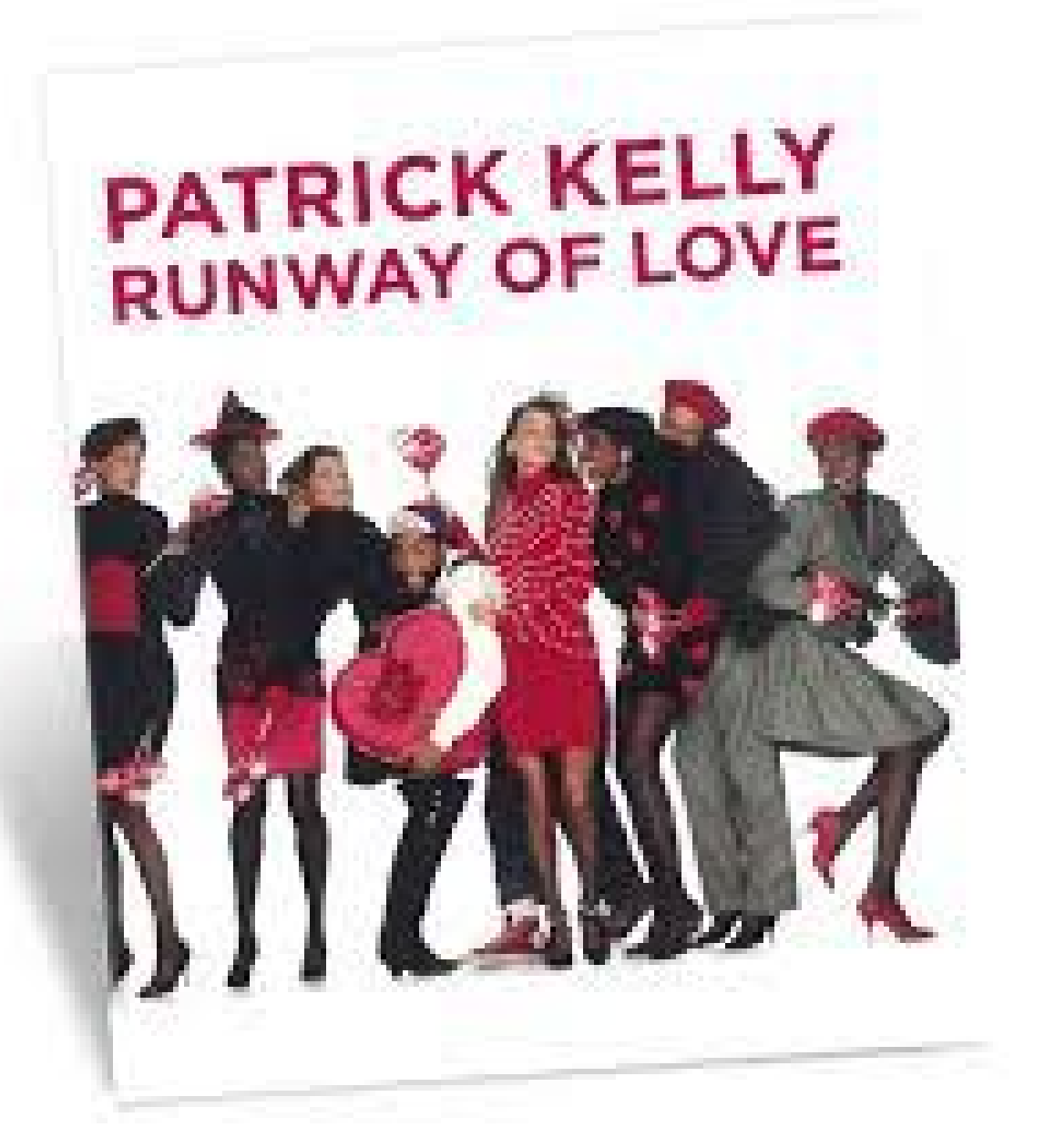
Well the Missus and I trundled up to Salem yesterday to catch the Patrick Kelly exhibit (through November 6) at the Peabody Essex Museum and say, it was swellegant.

Patrick Kelly: Runway of Love celebrates the career and legacy of fashion designer Patrick Kelly (born in Vicksburg, Mississippi, 1954–1990). Based in Paris from 1979, Kelly was primarily self-taught and fearlessly drew inspiration from his experiences growing up in the American South, his Black heritage, his days in the New York and Paris club scenes, and his personal muses. His light-hearted and sophisticated designs pushed racial and cultural boundaries, asserted Black empowerment, and were rooted in expressions of love and joy.

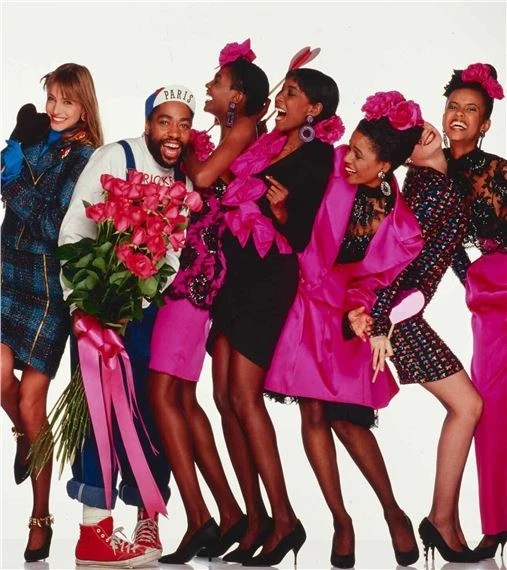
Joy was the through-line for Patrick Kelly’s fashion line, as these representative samples nicely illustrate.

Kelly channeled everyone from Chanel to Schiaparelli to St. Laurent to the legendary Madame Grès and yet, as the Missus – who knows about these things – noted, his designs from the 1980s all look so current. It’s really quite remarkable.

As was Patrick Kelly’s life, vividly documented in this film from the Fine Arts Museums of San Francisco.

Patrick Kelly’s story is sweet, stylish, and in the end, exceedingly sad.

Also, well worth a trundle up to Salem to experience.

Posted in Uncategorized | Tagged , , , , , , , | 2 Comments

Dead Blogging ‘The Art of Croquet’ at the Fuller Craft Museum

Well the Missus and I trundled down to Brockton the other day to check out the Fuller Craft Museum’s current exhibits and say, they were swell.

The main event is Interpreting Change: Weavers’ Guild of Boston – 1922 – 2022 (through October 16).

Interpreting Change: Weavers’ Guild of Boston – 1922-2022 is a juried exhibition produced as a collaborative effort between Fuller Craft Museum and Weavers’ Guild of Boston (WGB) – the oldest weaver’s guild in the U.S – to celebrate WGB’s centennial anniversary and its members creative accomplishments. These exquisite works were created specifically for this exhibition and highlight developments in materials, artistic taste, and the nature of process-oriented craft.

Much of the work is indeed exquisite, and virtually all of it’s engaging.

Ditto for Marilyn Pappas: A Retrospective (through August 28).

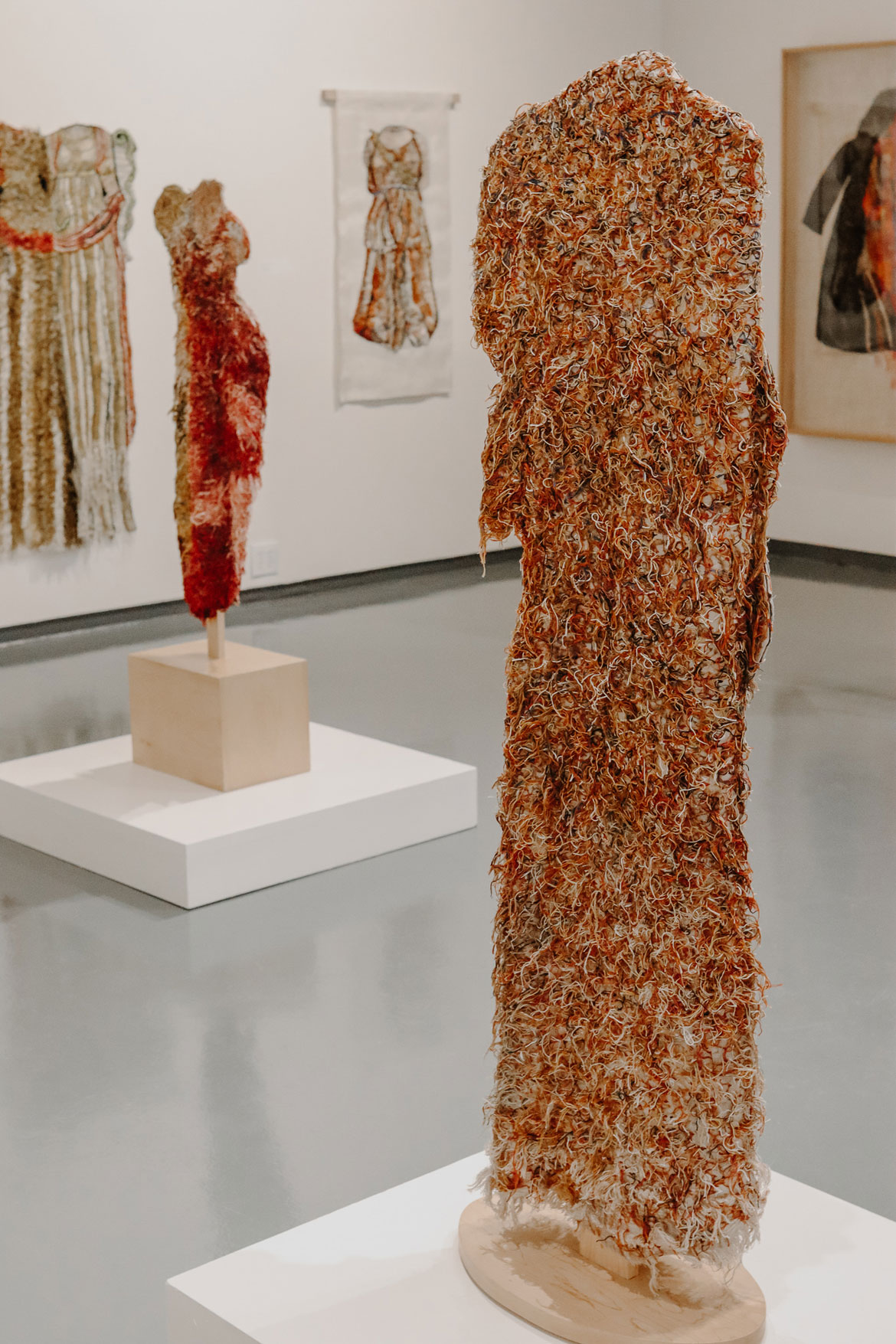
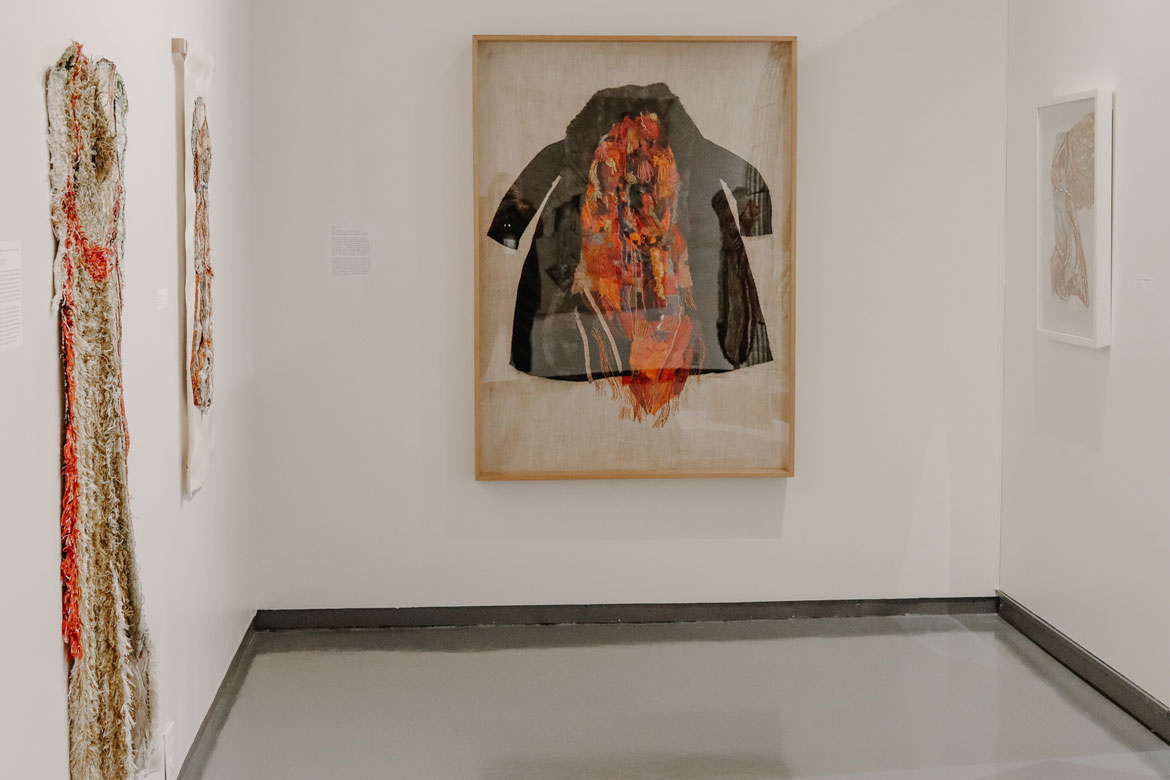
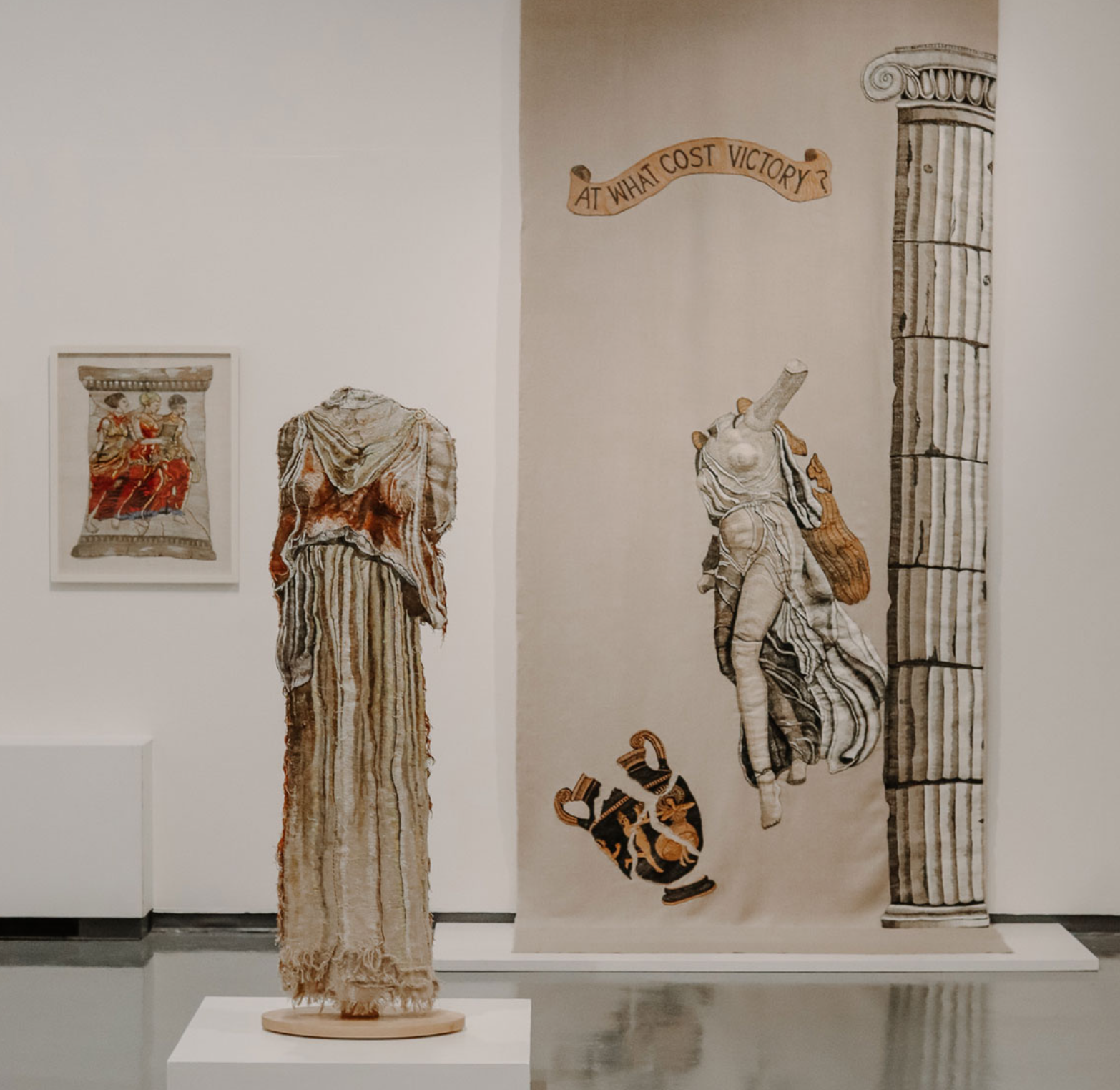
Fuller Craft Museum is proud to present the first museum retrospective of Somerville textile artist Marilyn Pappas. The exhibition features works from all stages of her 60-year career, from her socially minded, garment-based work of the 1960s to her travel-inspired collages to her outsized textiles depicting sculptures of ancient goddesses. At once timeless and highly relevant to today, Pappas’s forms chronicle the many stages of her life while offering powerful statements on the enduring strength, vibrancy, and resilience of women.

Representative samples:

Extremely impressive, especially given that Ms. Pappas has worked well into her 90s.

Our favorite exhibit, however, was decidedly more lighthearted: “Out of Bounds: The Art of Croquet [through November 6] is a striking exhibition of croquet mallets and balls made by 21 of the world’s leading wood artists, each exploring the function, form, and historic allure of the enduring sport.”

It’s a hoot. Here’s a video posted on YouTube a year ago by The Wharton Esherick Museum. It features a conversation with Jennifer-Navva Milliken, Artistic Director at the Center for Art in Wood in Philadelphia and the co-curator, along with artist Silas Kopf, of the exhibit.

The video is 50 minutes long – about the same amount of time it takes to drive from Brookline to Brockton.

Well worth the trundle, in our humble opinion.

Posted in Uncategorized | Tagged , , , , , , | Leave a comment

$10m for a Mickey Mantle Topps Card? Bid on *My* Autograph!

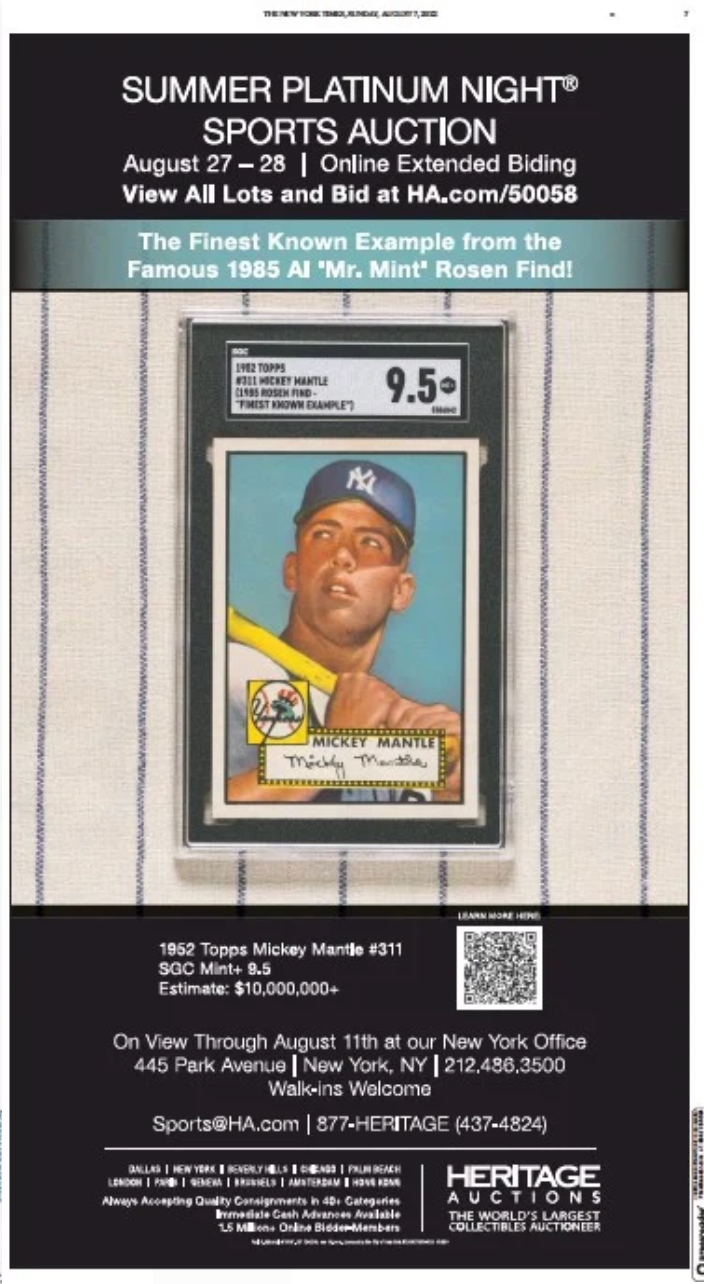
Last night, as I was working my way through the Sunday New York Times (there really should be a federal subsidy for doing that, don’t you think?), I came across this full-page ad in the A section.

Seriously – a mint-condition 1952 Topps Mickey Mantle card could go for $10 million?

Makes a person think.

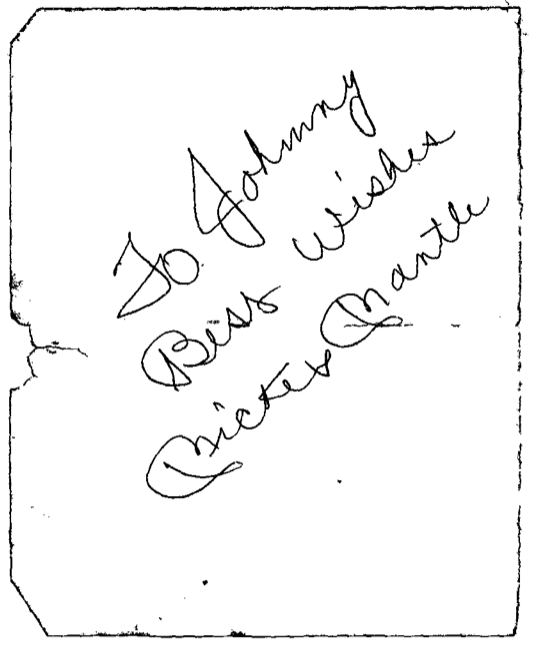
Specifically about this item I posted six years ago under the headline, The Night Mickey Mantle Called Me Johnny.

As I might have mentioned once or twice, I’ve been a Made Yankee Fan in Boston for over four decades.

But beyond that, I’ve been a Made Mickey Mantle Fan for almost 60 years. So the following episode was, well, major.

It was – I dunno – 1961, 1962 when my old man came home one night with a little something special.

He’d been at the Copacabana with some business associates and he ran into Mantle and Whitey Ford, who were out on one of their routine toots.

(I’ve always loved the way Mantle explained how he could hit with a hangover: “I see three baseballs,” he said. “But I only swing at the middle one.”)

Anyway, what the old man brought home that night was this (which I just recently came across).

In my youth, I had my differences – to put it mildly – with the old man (and Jackie’s Agnes was pissed he had gone to the Copa without her), but that night, he was almost as big as The Mick.

Now, I’m not saying I’d entertain any offers for that autograph. But I can’t deny I’m curious as to what those might be.

‘Nuf ced.

Posted in Uncategorized | Tagged , , , , , | Leave a comment

The Hardworking Staff Is Moonlighting At *Ask Doctor Ads*

As many of you splendid readers might (or might not, if we’re being realistic) have noticed, the hardworking staff has been largely AWOL from the Global Worldwide Headquarters in recent months.

We can explain.

Certain persons highly positioned in the blogosphere (whose identities we are not at liberty to disclose) recruited us to bring some order and sanity to the highly volatile site Ask Doctor Ads (Federally mandated warning: Dr. Ads is not a licensed physician).

Some fruits of our labors in that vineyard:

• Really? Americans Think Advertisers Are More Trustworthy Than the News Media?

Will John Fetterman Ever Stop Trolling Mehmet Oz in PA’s Senate Race?

Won’t Democrats Eventually Get Burned By Their Ads Boosting GOP Crazies?

Is NYC’s New Nuclear Preparedness PSA The Bomb – or a Dud?

• Really? An Ad Where Pubic Hairs Sing Out Against Body Shaming of Women?

And etc.

Our diagnosis? The Doc is good for what ails ya. Have him make a house call, yeah?

Posted in Uncategorized | Tagged , , , , , , , | Leave a comment

Dead Blogging ‘Regarding America’ at the Addison Gallery

Well the Missus and I trundled up to Andover yesterday to wander around Phillips Academy’s Addison Gallery of American Art and say, it was swell.

The major exhibit there right now is Regarding America: 19th-Century Art from the Permanent Collection (through July 31), which introduces itself with this poetic compare and contrast.

Centre of equal daughters, equal sons,
All, all alike endear’d, grown, ungrown, young or old,
Strong, ample, fair, enduring, capable, rich,
Perennial with the Earth, with Freedom, Law and Love,
A grand, sane, towering, seated Mother,
Chair’d in the adamant of Time.

— “America,” Walt Whitman, 1888

America, it is to thee,
Thou boasted land of liberty,—
It is to thee I raise my song,
Thou land of blood, and crime, and wrong.

— “America” (excerpt), James Monroe Whitfield, 1853

Talk about parallel universes . . .

The Addison website notes that “Walt Whitman, a White man, and James Monroe Whitfield, a Black man, renowned poets born only two years apart in the northeastern United States, experienced 19th-century America quite differently . . . Comprising paintings, prints, drawings, photographs, and sculptures drawn from the Addison’s acclaimed collection of 19th-century American art, this exhibition offers critical insight into this transformative and contradictory century.”

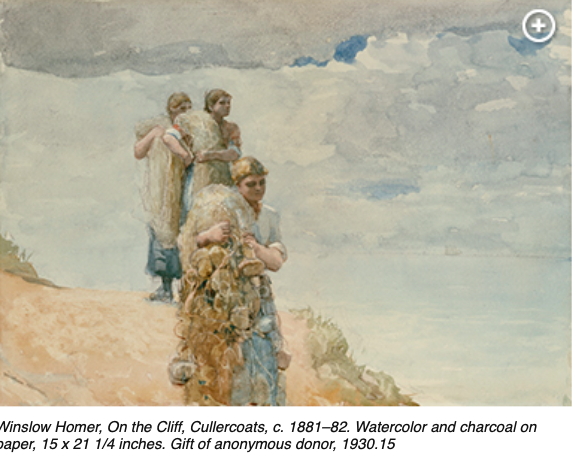
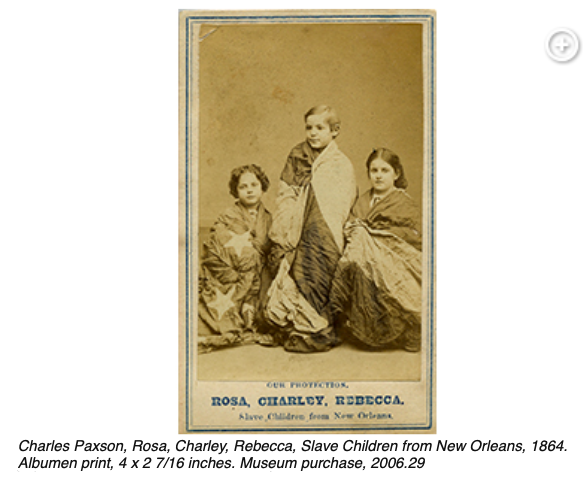
Representative samples:

The exhibit struck me as a kind of DIY exercise, leaving it largely to the viewer to cobble together “critical insight into this transformative and contradictory century.” Regardless, there was a lot of interesting work to look at along the way.

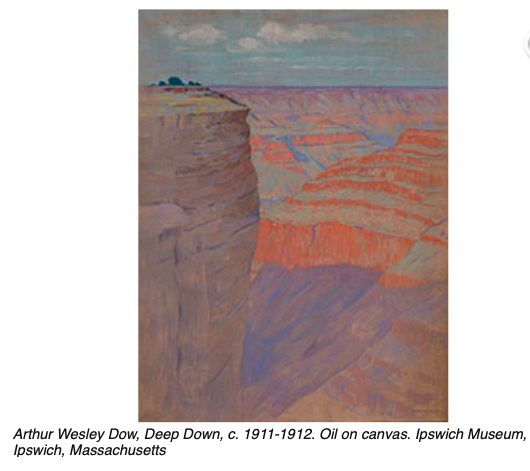
Also great to look at: Arthur Wesley Dow: Nearest to the Divine (through July 31).

Art is the most valued thing in the world…it is the expression of the highest form of human energy, the creative power nearest to the divine. The power is within – the question is how to reach it. – Arthur Wesley Dow

Drawn almost entirely from the Addison’s collection, this exhibition explores the prodigious and multifaceted oeuvre of the Ipswich-born artist, educator, and theoretician, Arthur Wesley Dow. Featuring over 100 works including photographs, prints, drawings, paintings, and ephemera, this exhibition highlights not only the profound beauty of Dow’s groundbreaking artistic contributions across media but reveals his radically anti-academic, intuitive, and inherently democratic approach to artmaking. This approach, transmitted to generations of art students in his classroom, notably Georgia O’Keeffe, and through his influential publication Composition, encourages the artist to transcend faithful representation and channel their emotion and personal vision through a universal “trinity of power” inherent in harmonious design—line, notan (the balance of dark and light), and color.

Representative samples:

For a more professional analysis, you can check out Boston Globe art critic Murray Whyte’s review here.

Last but certainly not least – Past Is Prologue: History in Contemporary Art (through July 31).”The artists assembled in this exhibition mine the past, using American history and the history of art of the western world to explore issues of gender, identity, memory, race, and truth.”

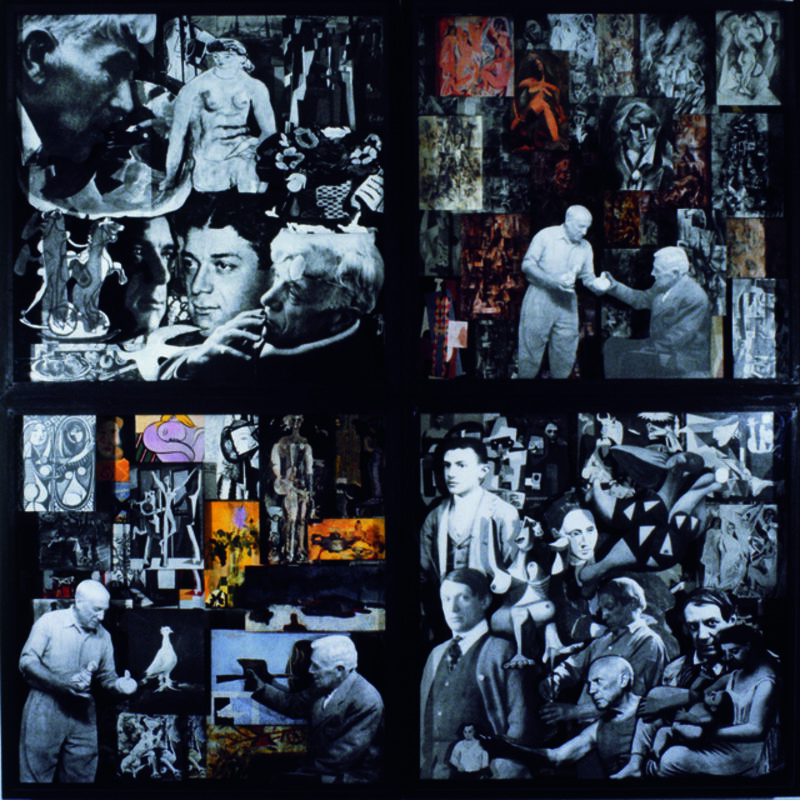
Sarah G. Austin’s Braque, Picasso (1978) was by far my favorite piece in the exhibit (and is also, according to this Facebook post, now part of the Addison’s permanent collection).

It’s a knockout in person.

There’s plenty of time to catch all of the above at the Addison, and it’s well worth a trundle.

Posted in Uncategorized | Tagged , , , , , , , , , , , , | Leave a comment