The World’s Oldest Living Altar Boy (Peggy Noonan Edition)

As the hardworking staff has previously noted, back in the 1960s we were the world’s oldest living altar boy at the Church of St. Thomas More in Manhattan.

And as we also noted, the Roman Catholic Archdiocese of New York intends to croak St. Thomas More and shuffle its parishioners to St. Ignatius Loyola, the Kim Kardashian of the Upper East Side.

We never expected our pleas could save the old parish church, but now comes Wall Street Journal columnist Peggy Noodnik – sorry, Noonan – to the rescue.

From this weekend’s Journal:

Cardinal, Please Spare This Church

BN-GE054_edpNOO_J_20141225133912

The Archdiocese of New York is threatening to close down my little church, a jewel in Catholicism’s crown on 89th Street just off Madison, in Carnegie Hill, on the Upper East Side of Manhattan. This has caused great pain in our neighborhood this Christmas. St. Thomas More Church is where my son made his first holy communion, where he was confirmed. It is where at the presentation of the cross, on Good Friday, everyone in the parish who wants to—and that is everyone in the parish, poor people, crazy people, people just holding on, housekeepers, shopkeepers, billionaires—stands on line together, as equals, as brothers and sisters, to kiss the foot of the cross. It always makes me cry.

None of this is important except multiply it by 5,000, 10,000, a million people who’ve walked through our doors the past 75 years to marry, to bury, to worship.

That’s what we said.

To be sure, Noonan does the to be sure thing: Churches are closing everywhere, the Catholic Church is always in need of money, there are all those settlements and legal fees associated with the clerical abuse scandals, the church must save where it can, and etc.

But . . .

[T]he great mystery at the heart of the threatened closing of St. Thomas is that none of these criteria apply to it. Not one.

St. Thomas More Church is not empty, it is vital, vibrant and alive. The other day at a special Mass, the standing room only crowd spilled out onto the steps. People move into—and stay in—Carnegie Hill just for the church. Almost half the people at Sunday mass take long car and subway rides to worship there. (All this is from a list of facts about the church put together by its desperate parishioners.)

St. Thomas More not only supports itself financially, it gives money back to the archdiocese. It’s not structurally unsound, it has just completed a major and costly refurbishment. It hasn’t lost its school, it has a full, lively, respected preschool in the basement that families are desperate to get into.

And etc.

Bottom line: “The cardinal could sell his grand private mansion in Midtown, just down the street from what has been assessed the most valuable piece of real estate in the city, Saks Fifth Avenue, judged to be worth almost $4 billion. Think of what the cardinal’s mansion would sell or rent for! That would take care of everything. This is what Boston’s Cardinal Sean O’Malley did: sell the cardinal’s estate. He lives now in a small apartment in a modest part of town.”

Uh-huh. We should all live so long, Ms. Noodnik.
Posted in Uncategorized | Tagged , , , , , , , , , , , , , , , , , , , , , | 4 Comments

Christmas Present: Chandler’s ‘The Simple Art of Murder’

Splendid reader Bill sent this response to our recent Grammer Is My Business post about the new book The World of Raymond Chandler: In His Own Words.

Chandler’s essay “the Simple Art of Murder” is the best essay on any topic I have ever read. He makes his points with clarity and meaningful examples, no cliches except where they make sense, and no convoluted, academic writing. He neatly summarizes at [least] half a dozen mystery stories from various authors and, for each, explains where it is good, bad, or both and why. It’s a long but riveting essay, and is also a lesson in how you can effectively make a case with well-reasoned piece. It taught me more about good writing than any course. It has a flow to it that shows how you go from stating your case, to making your case, to concluding and extending your case. Read and study Chandler’s essay and Orwell’s “Politics and the English Language” and you can skip formal “good writing” classes–these two works are the best.

Damn! The hardworking staff hasn’t read The Simple Art of Murder in – what? – 30 years. So we pulled out our Ballantine Books paperback edition from 1972 (95¢) and dived back into Chandler’s famous down these mean streets manifesto.

We’ll spot you the first paragraph from the 1950 essay:

Fiction in any form has always intended to be realistic. Old-fashioned novels which now seem stilted and artificial to the point of burlesque did not appear that way to the people who first read them. Writers like Fielding and Smollett could seem realistic in the modern sense because they dealt largely with uninhibited characters, many of whom were about two jumps ahead of the police, but Jane Austen’s chronicles of highly inhibited people against a background of rural gentility seem real enough psychologically. There is plenty of that kind of social and emotional hypocrisy around today. Add to it a liberal dose of intellectual pretentiousness and you get the tone of the book page in your daily paper and the earnest and fatuous atmosphere breathed by discussion groups in little clubs. These are the people who make bestsellers, which are promotional jobs based on a sort of indirect snob-appeal, carefully escorted by the trained seals of the critical fraternity, and lovingly tended and watered by certain much too powerful pressure groups whose business is selling books, although they would like you to think they are fostering culture. Just get a little behind in your payments and you will find out how idealistic they are.

Sounds an awful lot like today, yeah?

Orwell’s Politics and the English Language coming soon.

Posted in Uncategorized | Tagged , , , , , , | 2 Comments

Five Restaurant Chains That Won’t Be Advertising in the NYT Anytime Soon

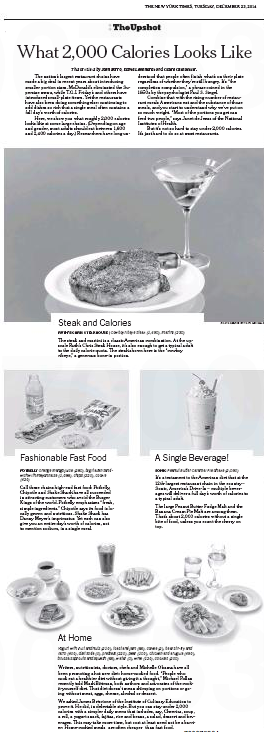
Yesterday’s New York Times featured this article from The Upshot on page 3:


Screen Shot 2014-12-24 at 12.53.02 AM


Call the roll of the departed advertisers: Ruth’s Chris Steakhouse, Potbelly, Chipotle, Shake Shack, Sonic.

If any of them run an ad in the Times in the next six months, the hardmunching staff will gladly eat one of those meals.

After doubling-up on our Lipitor, of course.

Posted in Uncategorized | Tagged , , , , , , , | Leave a comment

Raymond Chandler Watch: Grammar Is My Business

The hardtalking staff is a longtime lover of the works of Dasheill Hammett and Raymond Chandler, who we’ve always thought of as the Homer and Virgil, respectively, of pulp fiction.

Now comes a new book, The World of Raymond Chandler: In His Own Words, edited by Barry Day. Liesl Schillinger’s otherwise workmanlike review in the New York Times includes this:

BOOK2-master180Chandler did not invent the private eye — Dashiell Hammett and a few others got there first. But his vision is the one that caught the public eye and stuck most indelibly in the imagination, like — in one of his aromatic metaphors — “a tarantula on a slice of angel food.”

Yeah . . . except that’s a simile, not a metaphor.

Not to get technical about it. As Chandler himself might say.

Posted in Uncategorized | Tagged , , , , , , , , , | 7 Comments

Whistler Past the Graveyard: America’s Most Artistic Artist

Ever since reading the novel I, James McNeill Whistler by Lawrence Williams in 1972, the hardworking staff has been a fanboy of James Abbott MacNeill Whistler, the 19th century American expatriate artist who embodied “art for art’s (and my) sake.”

(Just for the record, here’s the first – and only – paragraph of the autobiography Whistler himself wrote:

Screen Shot 2014-12-21 at 12.56.06 PM

(Williams dubbed his “autobiography” Second Try.)

While some believe that Whistler is America’s greatest artist (he seems to be in a photo finish with Winslow Homer), can we not agree that the Butterfly is certainly America’s most artistic artist.

From Ann Landi’s piece in this month’s ARTNews:

Whistler: The Original Art Star

A century before Warhol, Whistler treated his own persona as a work of art. In the Peacock Room, he created an installation that expressed his bitterness about the ties between art and money.

In Darren Waterston’s version of James Abbott McNeill Whistler’s famed Peacock Room, an installation called Filthy 09_14_FE_WHISTLER_06_600Lucre (2013–14), at MASS MoCA through January, decay and ruin have ravaged the premises.

Gold stalactites drip from the undersides of shelves; a puddle of gold, looking like glistening urine, pools on the floor; exotic ceramics, similar to those collected by the owner of the original room, are cracked or broken into shards; the shelves on which these objects are displayed are rickety to the point of collapse. And the centerpiece of the room, a copy of Whistler’s painting The Princess from the Land of Porcelain (1863–65) is hideously defaced by a dark, tarry mass that covers the figure’s lovely face and neck.

Whistler’s Peacock Room (blessedly rescued and relocated by artficionado Charles Freer) is Ground Zero in the endless war between art and commerce.

[T]he story of the Peacock Room exposes the tensions that can arise when new money hires outsize egos. In 1876, Frederick R. Leyland, a British shipping magnate, commissioned the architect Thomas Jeckyll to design a display space in his London dining room for his Qing-dynasty porcelain collection. Because Whistler’s portrayal of a Pre-Raphaelite beauty in a peach-colored kimono hung over the mantel, Jeckyll consulted the artist about the room’s color scheme. When Jeckyll fell ill and Leyland left for Liverpool on business, Whistler took charge, adding many more design details, like the gilded peacocks on the shutters.

That went over like the Charge of the Light Brigade.

Leyland was flabbergasted when he saw Whistler’s embellishments, and further outraged by the bill the artist presented for 2,000 guineas (about $200,000 today). He agreed to pay only half of that sum, which prompted the artist to add more decorations, including two savage peacocks facing off against a ground strewn with silver shillings. Leyland threatened to horsewhip him if he ever appeared at the house again, but he kept Whistler’s work intact.

Even worse, Leyland paid Whistler in British pounds, not the guineas artists normally received. Thus:


6a00ccff930f92d75600fad6900da90004


That image aside, Daniel E. Sutherland, whose Whistler: A Life for Art’s Sake is the first biography of the artist in over twenty years, says “You can’t look at most of his work and not be impressed by the delicacy and the beauty of nearly everything he did.” And you can’t look at most of Whistler’s life and not be impressed by how well he marketed himself – from his trademark grey forelock to the butterfly monogram he used as a signature to his outrageous (and costly) feud with John Ruskin.

And yet . . .

N01959With Whistler begins a liberation of painting from storytelling, in particular from the moralizing and tendentious inclinations of the Pre- Raphaelites so popular in Victorian England. His “Nocturnes” prefigure full-blown abstraction, as does his way of titling some of his paintings: the official label for his portrait of his mother is Arrangement in Grey and Black, No. 1 (1871).

Landi’s ARTNews piece also mentions the recent PBS documentary James McNeill Whistler: The Case for Beauty, which dubs him “the original art star.”

Original, absolutely. And with the current flurry of attention, a star once again.

Posted in Uncategorized | Tagged , , , , , , , , , , , , , , , , , , , , , | 4 Comments

Ave Atque Vale, NYT Advertising Column(ist)

It’s the end of an era at the New York Times: The Grey Lady is apparently tearing the sheets with its eight-decades-long advertising column.

From the New York Post:

Times set to drop popular advertising column

(FILES) People walk by the entrance to U

Word is circulating that the New York Times will drop its long-running advertising column, a fixture for decades, as the buyout-taking Stuart Elliott pens his farewell column for the paper on Friday.

Elliott wrote the influential newspaper column for 23 years, breaking the old record of 22 years held by Phil Dougherty, whose tenure ended in 1989 with his death . . .

There has been no internal buzz on an Elliott replacement, leading many insiders and outsiders to conclude that there will be none.

Meanwhile, crosstown at the Times, there was this Stuart Elliott swan song in Friday’s edition.

The Top 5 Changes on Madison Ave. Over the Last 25 Years

Adco-articleLarge

FROM the early 1990s to the mid-2010s — almost a quarter-century of fundamental changes for Madison Avenue, and for those who have covered the advertising industry.

There are profound differences from the past; clearly, the astonishing shift from analog to digital ranks as the most disruptive.

At the same time, there are a rash of similarities that could comfort a time traveler from the days when Mitsubishi was introducing the Diamante to affluent auto buyers; or the idea of populating commercials with hip “dudes” to reach teenage consumers was fresh enough to warrant a feature.

And etc.

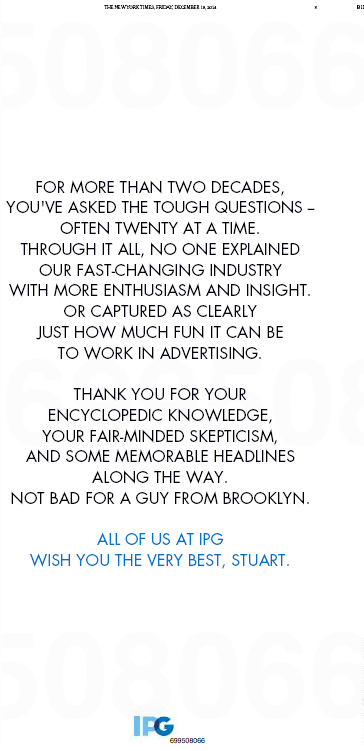
Meanwhile, this ad also ran in Friday’s edition.


Screen Shot 2014-12-20 at 12.32.39 AM


IPG is Interpublic Group, a mega-conglomerate that describes itself this way:

Through our 47,200 employees in all major world markets, our companies specialize in consumer advertising, digital marketing, communications planning and media buying, public relations and specialty marketing.

When an outfit like that pays big money to salute a journalist, you gotta wonder whether he ever actually afflicted the comfortable, yeah? (See: Stuart Elliott, Stockholm Syndrome.)

Just sayin’.

Posted in Uncategorized | Tagged , , , , , , , , , | Leave a comment

‘The World’s Oldest Living Altar Boy’ II (St. Thomas More – or Less – Edition)

As chronicled here not long ago, I was the world’s oldest living altar boy back in the ’60s, thanks to a deal my Mom (aka Jackie’s Agnes) cut with Bishop Furlong at the Church of St. Thomas More in Manhattan.

In return for an “altar boy scholarship” to Fordham Prep, I became an indentured servant to my parish church.

By the time I was 17, the cassock (long black thing) was way too short for me, and the surplice (short white thing) looked like something Britney Spears would wear on tour.

Not a pretty sight.

At the time, my grammar school was St. Ignatius Loyola (on 84th), but my parish was St. Thomas More (on 89th). The latter was much cozier than the former.

St. Iggy’s:


25c


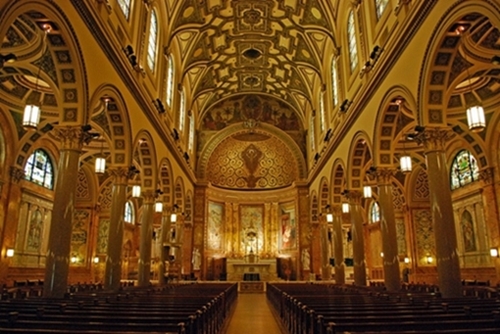
St. Tommy’s:


SONY DSC


Sadly, the former is about to swallow the latter.

From the New York Times:

New York Archdiocese Appears Likely to Shutter Additional Churches

15ARCHDIOCESE2-articleLarge

The sweeping reorganization of the Roman Catholic Archdiocese of New York, set to take effect next year, is likely to involve the merger or the closing of significantly more parishes than was originally announced last month, archdiocese documents show.

Church officials said in November that 112 of the archdiocese’s 368 parishes would be consolidated to create 55 new parishes, the largest realignment of the parish structure in the history of the archdiocese, which stretches from Staten Island to the Catskills. In 31 of those new parishes, one or more of the original churches would no longer be used for regular services, effectively shuttering those churches by August.

According to the Times piece, here’s the consolidation the faithful on Manhattan’s East Side are awaiting:


Screen Shot 2014-12-19 at 1.45.29 PM


The thing is, St.Thomas More isn’t even sick: The parish has “about 3,500 members and Sunday services that are filled with young families. The parish covers its costs and has $1.5 million in cash reserves.”

Beyond that:

The parish has one of the highest per capita donor profiles in the entire archdiocese, Christopher E. Baldwin, a trustee, said. It recently finished an $800,000 round of improvements to the church’s buildings. Its community space hosts a highly regarded nursery school and accommodates some 400 community meetings per year.

When the pastor, Rev. Kevin Madigan, asked why they would shutter a flourishing parish, he said he was told that “since St. Thomas More will eventually close some day, it is better to do it now rather than later, when there is presently a momentum within the archdiocese to merge parishes.”

Good Lord! That’s absurd even by Cathaholic standards.

And a shame. When I was young, St. Thomas More seemed to be where worship happened. St. Ignatius was for ceremony. It’s clear where the Archdiocese’s loyalties lie.

We’ll give the last word to Mr. Baldwin, the trustee at St. Thomas More.

“Closing St. Thomas More reminds me of a man who would eat his leg to fill his belly,” he said. “He may be full for a short period of time, but he soon will again be hungry. And God help him when he gets up to walk, let alone run.”

Amen.

Posted in Uncategorized | Tagged , , , , , , , , , , , , , , | 4 Comments

Quote o’ the Day (Bruins Wild Card – Really? – Edition)

From our Late to the Shooting Party desk

The headscratching staff yields to no man in our admiration for Boston Globe sports scribe Amalie Benjamin, but her game report yesterday cannot go unnoted.

Bruins falter in shootout

Roy’s goal gives Predators a win

NASHVILLE — At other times, in other situations, the Bruins’ 3-2 shootout loss to Pekka Rinne and the Predators would have represented a good outcome. It was a road point against the best goaltender in the NHL, a chance to keep moving up in the 4427f17adf4a4418a3866e47cd2a2ad7-4427f17adf4a4418a3866e47cd2a2ad7-0standings despite facing a team that had gone 11-2-1 at Bridgestone Arena this season.

But for the Bruins, this isn’t a normal time. And this certainly isn’t a normal situation.

Boston, now with two teams (Panthers, Rangers) between it and the final wild-card spot, is in desperate need of two-point games. The Bruins fell just shy on Tuesday night, with a Derek Roy score past Tuukka Rask providing the margin in the shootout.

Wild-card spot? The Bruins are thirty-two games into an 80-game season.

C’mon – let’s not lose our equilibrium here, eh?

Posted in Uncategorized | Tagged , , , , , , , | 1 Comment

NYT: Bostonians Don’t Care How They Look

From our Late to the Spending Party desk

The hardworking staff has been occupied with one thing and another lately, so we missed this piece in the New York Times Sunday Review section.

What People Buy Where

CONSPICUOUS consumption is everywhere, but it’s not the same everywhere. People living in certain cities spend far more than the national average on particular goods and services that they believe will enhance their social standing.

In New York City, favored items include luxury watches and shoes. In Boston, the status signal of choice is tuition to a private school. Clothes are the go-to goods in Dallas. Wearing high-end makeup says you’ve arrived in Phoenix. In San Francisco, one telling sign is women’s sport coats and tailored jackets. And in Washington, D.C., encyclopedias and reference books are top status markers. Go figure.

More fun facts to know and tell about Boston:

• Bostonians spend more on college and private-school tuition, give more money to political and charitable institutions and consume more coffee and books.

• [People] in Boston and Baltimore have us all beat with their fondness for looking natural: They spend 25 percent less than the national average on superficiality.

• Bostonians get the prize for most informed, forking over 40 percent more than the national average for newspapers and magazines.

Helpful graphic:

Screen Shot 2014-12-17 at 12.40.04 AM

Screen Shot 2014-12-17 at 12.40.47 AMBottom line: Bostonians don’t care how they look, as long as they look smart.

That smarts, eh?

Especially the alimony part.

Posted in Uncategorized | Tagged , , , , , , , , , , , | 2 Comments

Round Midnight at the Global Worldwide Headquarters (Guitar-Gently-Weeping Prince Edition)

Hard on the heels of the hardtracking staff’s post about the classic guitar duet between George Harrison and Eric Clapton comes this performance of “While My Guitar Gently Weeps” –  featuring Prince, Tom Petty, Steve Winwood, Jeff Lynne, and Dhani Harrison (the very spit and image of his old man) – at the 2004 Rock and Roll Hall of Fame Inductions.

(Tip o’ the pixel to WBUR Radio Boston’s Alex Kingsbury)


Damn. If Prince isn’t the son Jimi Hendrix never had, he’ll do until someone better comes along.

Posted in Uncategorized | Tagged , , , , , , , , , , , | 3 Comments