
Tuesday’s Boston Globe Obituaries page featured a yin-yang farewell to a couple of 1960s American cultural revolutionaries.

Start with the decade’s music revolution (obit here):
Richie Havens, 72, folk singer who opened Woodstock with stunning set
NEW YORK — Richie Havens, who marshaled a craggy voice, a percussive guitar, and a soulful sensibility to play his way into musical immortality at Woodstock in 1969, improvising the song ‘‘Freedom’’ on the fly, died Monday at his home in Jersey City, N.J. He was 72.
The cause was a heart attack, his agent, Tim Drake, said.
Mr. Havens embodied the spirit of the ’60s — espousing peace and love, hanging out in Greenwich Village, and playing gigs from the Isle of Wight to the Fillmore (both East and West) to Carnegie Hall. He surfaced only in the mid-1960s, but before the end of the decade many rock musicians were citing him as an influence. His rendition of ‘‘Handsome Johnny’’ became an anti-Vietnam War anthem.
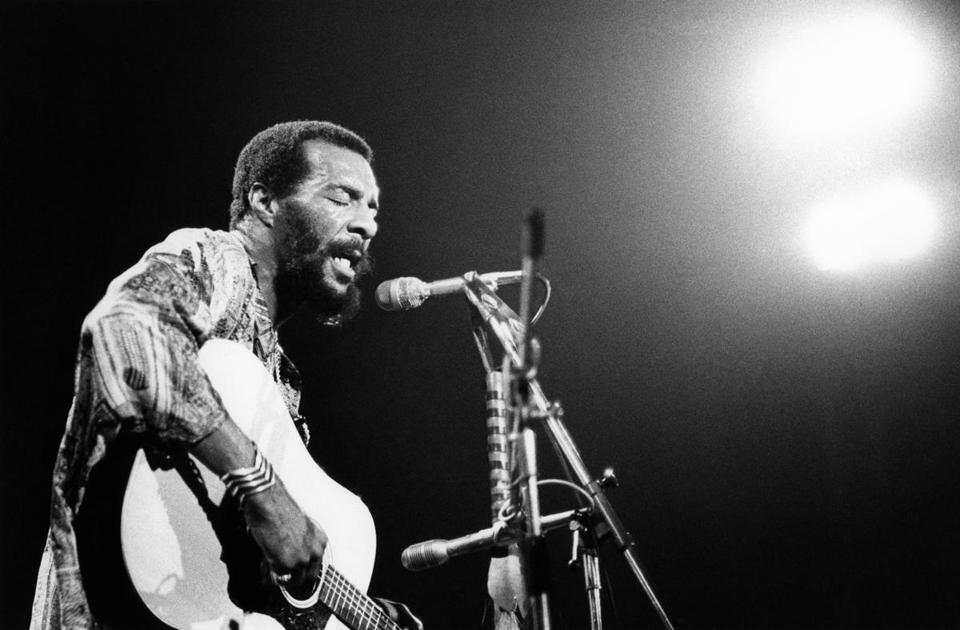
And here it is, with Havens punishing his guitar and flexing his metronomic left foot (“without my left foot, my right hand doesn’t work,” Havens told WBUR’s Tom Ashbrook in a 2005 interview).
Then proceed to the ’60s fashion revolution.
Murray Pearlstein, 84; founded Louis Boston boutique
Murray Pearlstein, the Boston retailer who transformed Louis Boston from a haberdashery and suit shop to an internationally known high-fashion boutique, died at his home in Santa Fe Sunday. He was 84. The cause of death was complications of cancer, said his son, Steven Pearlstein.
Mr. Pearlstein is credited with pushing Boston’s sartorial boundaries and introducing shoppers to some of the most sought-after fashion lines from designers the world over.
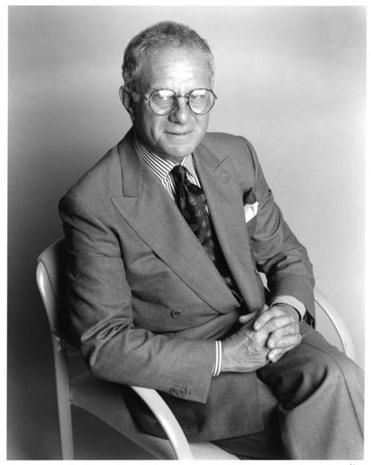
Pearlstein changed everything when he “began bringing European merchandise into the mix, especially high quality, off-the-rack men’s suits.”
As the Globe obit reports:
“He went to Italy in the 1960s and worked with people like [Italian designer] Luciano Barbera to develop suits that would hang on the rack that men could buy immediately, as opposed to a made-to-measure garment,” said [his daughter Debi] Greenberg. “That was a big transformation, and he was definitely part of that.”
Richie Havens was no fashion plate. And Murray Pearlstein was no hippie. But they’re joined at the hip of the 1960s.

 Campaign Outsider