
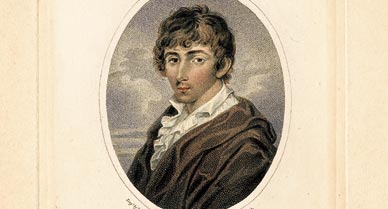
 If you liked last Saturday’s All Things Considered story about the 18th century Shakespeare forger William-Henry Ireland (as well you should have), you’ll love the book excerpt of Doug Stewart’s The Boy Who Would Be Shakespeare in the June edition of Smithsonian magazine.
In 1795, William-Henry Ireland created an Avon cottage industry of forged Shakespearean manuscripts – from deeds to letters to contracts with actors to “a love poem to the Bard’s fiancée, Anne Hathaway, complete with a lock of hair.”
Smithsonian lede under the headline “The Greatest Shakespeare Hoax:”
In the spring of 1795, a parade of London notables—scholars, peers, a future bishop, England’s poet laureate—called at the curio-filled home of an antiquarian named Samuel Ireland. They had come to see some papers that Ireland’s 19-year-old son, William-Henry, said he had found while rummaging in an old trunk. Scribbled in faded ink on yellowed paper, they included letters, poetry and other compositions apparently written and signed by William Shakespeare. Until now, nothing in the Bard’s own hand was known to survive, except four signatures on legal documents. Most astonishing of all was part of an unknown play purportedly by Shakespeare—a thrilling new addition to the playwright’s canon.
The play – Vortigern – was actually produced at the 3500-seat Drury Lane theater in 1796. The reaction – as with everything about this tale – was fascinating.
Do yourself a favor and read the Smithsonian piece.

 Campaign Outsider