
The hardworking staff has long admired the journalistic work of New York Times reporter C.J. Chivers (rhymes with shivers) during his years as a relentlessless war correspondent (Afghanistan, Libya, Syria), a tireless champion of military veterans, and – most recently – a firsthand witness to the drone war in Ukraine.
That last topic is much in the news lately in the wake of this week’s stunning New York Times Ukraine war report with a quintuple byline (Marc Santora, Lara Jakes, Andrew E. Kramer, Marco Hernandez and Liubov Sholudko).
A Thousand Snipers in the Sky: The New War in Ukraine
Drones have changed the war in Ukraine, with soldiers adapting off-the-shelf models and swarming the front lines.
When a mortar round exploded on top of their American-made Bradley infantry fighting vehicle, the Ukrainian soldiers inside were shaken but not terribly worried, having been hardened by artillery shelling over three years of war.
But then the small drones started to swarm.
They targeted the weakest points of the armored Bradley with a deadly precision that mortar fire doesn’t possess. One of the explosive drones struck the hatch right above where the commander was sitting.
“It tore my arm off,” recounted Jr. Sgt. Taras, the 31-year-old commander who, like others, used his first name in accordance with Ukrainian military protocols.
Scrambling for a tourniquet, Sergeant Taras saw that the team’s driver had also been hit, his eye blasted from its socket.
The two soldiers survived. But the attack showed how an ever-evolving constellation of drones — largely off-the-shelf technologies that are being turned into killing machines at breakneck speed — made the third year of war in Ukraine deadlier than the first two years combined, according to Western estimates.
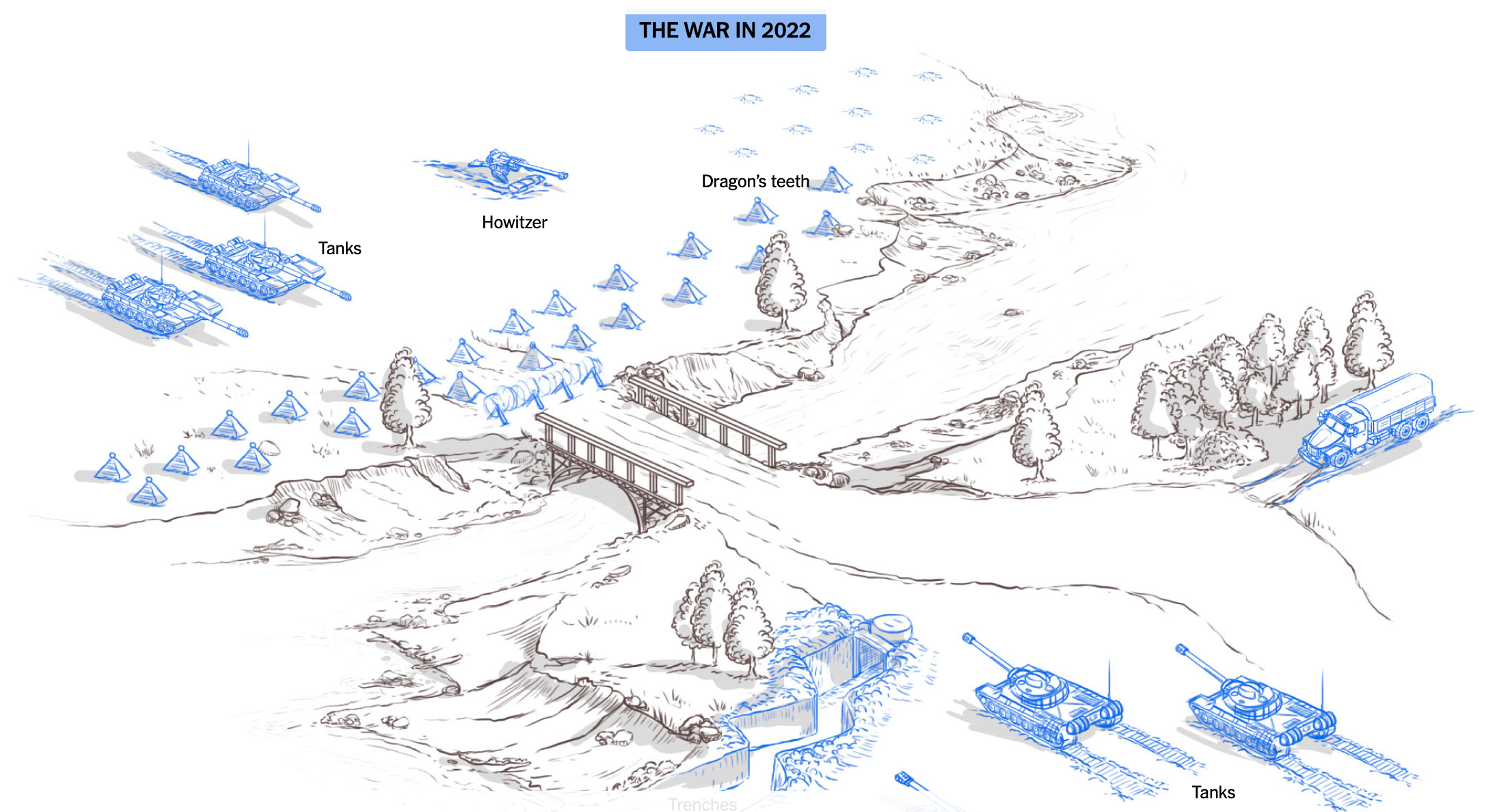
According to one of those estimates, drones now “inflict about 70 percent of all Russian and Ukrainian casualties,” for those of you keeping score at home.
This week’s Times piece also includes eye-popping video, still photography, and graphics (you really should check it out). News outlets ranging from The Bulwark to Slate have name-checked the report, but we’ve yet to see – or hear – anyone cite Chivers’ riveting first-person account of first-person-view drones (FPVs) on the front lines of the Ukraine-Russia war in the Times Magazine two months ago.
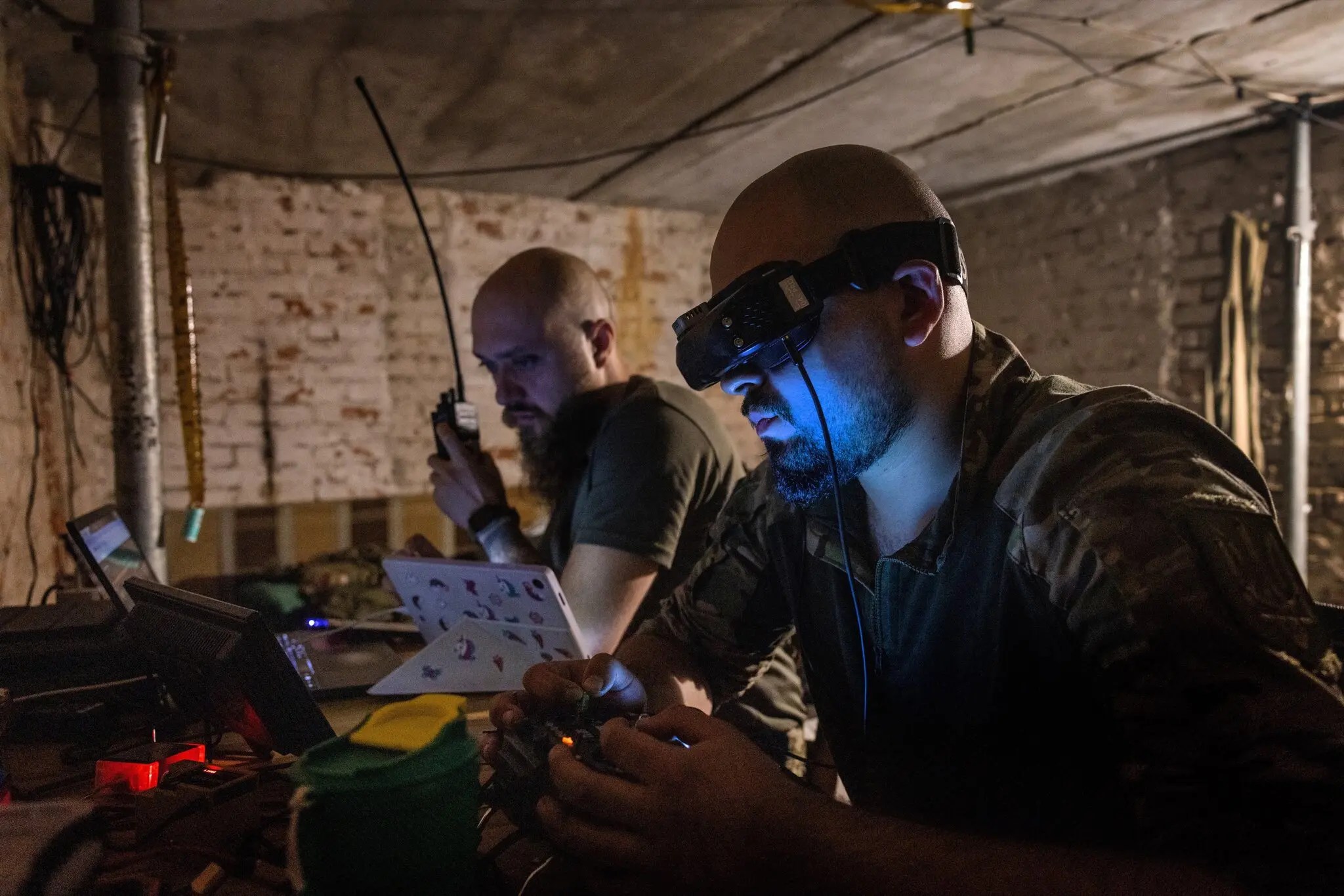
The suicide drone beelined toward a strip of forest separating two agricultural fields. A remotely piloted quadcopter with a wingspan narrower than that of a duck, a camera in its nose and an antenna protruding from its tail, it crossed into Russian airspace unchallenged minutes before. An armor-piercing warhead hung from its underside. Now, about 18 miles south of Belgorod, it descended toward cropland with about five minutes of battery power remaining. It was time to hunt.
Several miles away, in the basement of an abandoned home inside Ukraine, the drone’s pilot, who uses the name Prorok, Ukrainian for “Prophet,” clutched the miniaircraft’s controller with both hands and gazed into goggles displaying its live video feed. His team leader, who uses the name Buryi, or “Brown,” sat to his right, monitoring the flight on the bright screens of two tablets while communicating with a distant lieutenant via a laptop. Minutes earlier, a bomb-laden quadcopter flown by another team slammed against a howitzer hidden in the tree line. Prorok and Buryi’s mission was to assess damage, find survivors and kill them.
Spoiler alert: Prorok and Buryi wound up killing four Russian infantrymen and destroying a $3 million Russian T-80 tank . . . all with a $400 repurposed toy.
As the piece notes, “Chivers reported from the front lines and from drone workshops in Ukraine and reviewed footage of thousands of drone attacks.” Props also to Times photographer/videographer David Guttenfelder, who was with Chivers on the front lines throughout.
And first.

 Campaign Outsider