
Headline in Sunday’s dead-tree edition of the New York Times:
Nowhere To Go, Except Room 516
The lede:
ON Jan. 4, 2010, Raymond Fok was changing trains on his way to kidney dialysis treatment when he collapsed on the Canal Street subway platform. Emergency medical technicians examined him and took him by ambulance to the nearest hospital, New York Downtown, near the foot of the Brooklyn Bridge. Workers in the emergency room recorded that Mr. Fok’s speech was slurred and that he was lurching from side to side when he walked . . .
Once his condition had stabilized, the hospital moved him to a regular room on the fifth floor, where staff members expected to treat him for 7 to 10 days before discharging him to a sub-acute-care center for rehabilitation, the usual regimen for stroke victims.
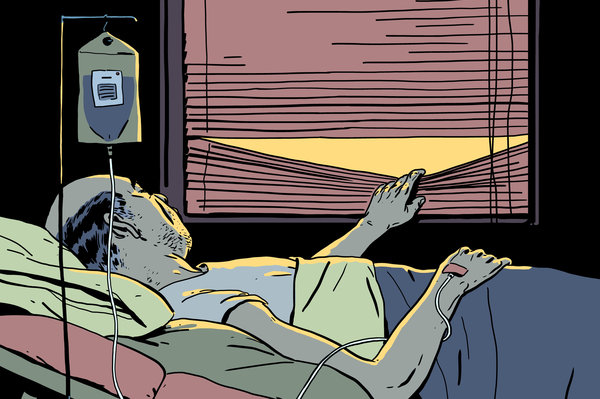
Nineteen months later, Mr. Fok, 58, greeted a reporter from his bed in Room 516, eager to have a visitor. In the previous year and a half, perhaps 100 or more patients had come and gone from the room’s other bed, but Mr. Fok had gone nowhere. “Yes, I remember you,” he said. “John, right?”
The price of his treatment: $1.4 million.
And who was paying for it?
“The government,” Mr. Fok guessed, though he was not sure. “The hospital is losing money.”
The narrative that follows is absolutely compelling, as are the financial details:
ON Aug. 17, after one year, seven months and 13 days, Mr. Fok returned to his apartment in Bensonhurst, carrying 21 filled prescriptions and his hemi walker. For the $1.4 million in services that Downtown had provided, total reimbursement to the hospital from Medicaid was $114,000, [the hospital’s president] said.
Just one more reason people should pay the Times to keep doing what it’s doing.

 Campaign Outsider