
Easy Street artist Shepard Fairey has settled his legal dustup with the Associated Press over the image he used as the basis of his celebrated “Hope” poster of Barack Obama.
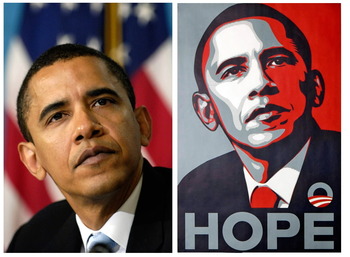 From The Angle blog at the Boston Globe:
Fairey had initially denied using the copyrighted 2006 AP photo as the basis for his image, but was forced to admit in 2009 that he used the picture. After changing his story, the graffiti artist then claimed that he changed the work enough that he shouldn’t have to pay the AP.
Under yesterday’s settlement, Fairey will collaborate with AP photographers on a series of future works and will refrain from using AP photos in the future without permission. The two sides also reached an undisclosed financial settlement.
From the always thought-provoking Dan Kennedy:
 @dankennedy_nuDan Kennedy
Shepard Fairey’s lies and/or mistakes deal a blow to fair use: he settles on terms favorable to AP.http://nyti.ms/hfZ9ef
But here’s something else:
Will Fairey now cease and desist in his efforts to do to Baxter Orr what Fairey said the AP unfairly did to him?
In 2008 Orr appropriated Fairey’s signature “Obey Giant” image to create a SARs parody titled “Protect.”
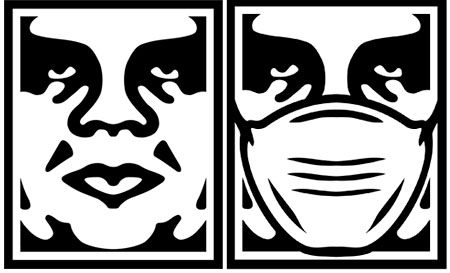 Via the Austin Chronicle:
On April 23 [2008], Orr received a signed cease-and-desist order from Fairey’s attorneys, telling him to pull Protect from sale because they allege it violates Fairey’s trademark. Orr calls this hypocrisy. “It’s ridiculous for someone who built their empire on appropriating other people’s images,” he said. “Obey Giant has become like Tide and Coca-Cola.”
Or the Appropriated – sorry – Associated Press.
The hardsearching staff hasn’t found any reports that Fairey has withdrawn his cease-and-desist demand.
So we’re asking:
Hey, Shepard. Time to fold?

 Campaign Outsider
Guess this is what Fairey gets when he goes into petard manufacturing and then goes out to test them himself.
Time will tell, as the really smart newspeople say.
Agreed, as will it tell regarding Dan Kennedy’s assessment as it being a blow to the fair use doctrine.
What we cannot see from the agreement, however, is how much of a factor the judge was in directing the settlement.
The fact that Fairey had admitted his copyright infringement may have played as significant role in Fairey’s prospects of winning anything, and the judge was pushing the out-of-court settlement. Judges often do that when it is clear that the conclusion is forgone. Judges do not like to waste time.
As in many civil settlements, the defendant may have finally realized that the costs of moving forward and losing were real and of a much higher dollar cost, and the plaintiff realized that even if they won, they would not be allowed to collect more on a judgment that could bankrupt the defendant. The judicial prodding may have turned on the lights.
With the settlement, Kennedy’s concerns of a wounded fair-use doctrine are moot because the fair-use issue was never heard. If the issue is not heard and decided, there can be no legal conclusions drawn. The fair-use questions remain unlitigated.
In other words, nothing has changed. The Photoshop method is alive and well, but it is still subject to legal scrutiny for fair-use issues. Copyrights must be respected as before.
No legal grain of sand has shifted.